Business
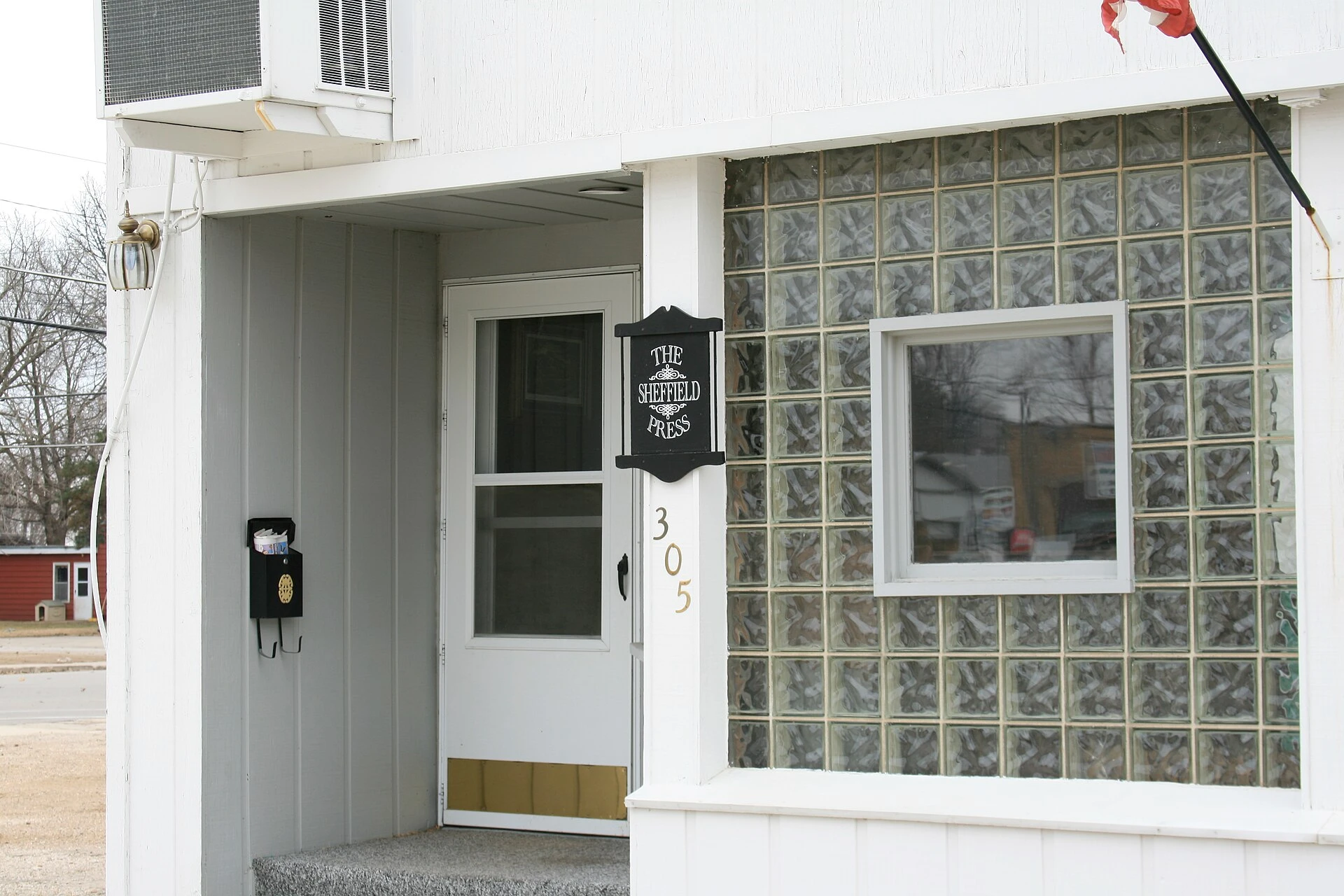
Free weeklies like The Sheffield Press endure by covering everything locally

Free weeklies survive when they become the most complete record of a place, not the loudest one. The Sheffield Press in Sheffield, Iowa, shows that model in miniature, with a narrow county beat, a public tip line, and social pages built around coverage of everyday local life. It is the same survival logic that keeps papers like The Chronicle of Glens Falls finding readers even as larger dailies collapse.
Hyperlocal coverage is the product
The Sheffield Press’s X account says it is "covering the town of Sheffield, Iowa and Franklin County," and it invites people to send news tips or stories by message. The same account lists PO Box 36 in Sheffield, Iowa 50475, plus phone number 641-456-2585 ext. 129, which gives the paper a simple, direct front door for the community. Its Facebook page says the paper is based in Sheffield, IA and covers Sheffield, Chapin, Hampton, Rockwell, and Franklin, a defined footprint that keeps the reporting mission anchored to one county and its nearby towns.
That footprint matters because the audience is not abstract. The Facebook page shows 1,148 likes, a small number by metro-news standards but a meaningful one in a place where local coverage is built on recognition, repetition, and trust rather than scale. IndustryNet also lists The Sheffield Press as a newspaper publisher in Sheffield, IA, which places the paper in the ordinary commercial infrastructure of local business, not as a legacy institution floating above the town.
The town itself gives the paper its relevance
Sheffield’s history gives The Sheffield Press a built-in reason to cover the town as a living civic project. The City of Sheffield says the city was established in 1876, and a city Facebook post said Sheffield would celebrate its 150th birthday on June 27. For that anniversary, columnist Carol Sensor wrote about Sheffield’s early years, a reminder that a tiny paper can be part newsroom, part memory keeper, and part organizer of local milestones.
That kind of coverage is not decorative. In a town founded in 1876, a paper that follows the anniversary calendar, the early history, and the current civic rhythm is doing the work that larger outlets often abandon first: noticing who the town is, not just what happened to it. The Sheffield Press’s public pages suggest that this identity work is part of the product itself, because the paper’s job is to stay close enough to cover the town in real time and in retrospect.
Archives show why the local paper still matters
Iowa’s newspaper ecosystem has deeper roots than any one weekly. The State Historical Society of Iowa says hundreds of Iowa newspaper titles from 1836 to the present are preserved in its newspaper collections, and the University of Northern Iowa’s Iowa historical newspapers guide describes a directory of digital archives for hundreds of historical and modern Iowa newspapers. That archival breadth matters because local papers are often the only continuing record that ties a town’s present life to its past.
Sheffield’s own archival trail underscores that point. NewspaperArchive says Sheffield, Iowa newspaper archives date back to 1976, which is recent compared with the city’s 1876 founding but still long enough to show continuity across several decades of local change. When a weekly survives, it does more than publish this week’s notices: it becomes a searchable record for family history, civic history, and the routine events that rarely make it into state or national coverage.
What still works when bigger papers thin out
The Sheffield Press points to a survival model built on a few practical pieces that can still hold a local paper together:
• A clearly bounded geography, with Sheffield and Franklin County at the center and nearby towns folded into the beat.
• A direct reader pipeline, through message tips, a post office box, and a phone extension that make the paper easy to reach.
• A small but visible audience, measured not by national reach but by a Facebook page with 1,148 likes and a recognizable local identity.
• A continuity trail, from the city’s 1876 founding to anniversary coverage and archival listings dating back to 1976.
That model is efficient because it concentrates attention where readers actually live. A county-seat meeting, a school story, a birthday celebration, or a local obituary all matter more when one paper is expected to catch them all, and when people know exactly where to send the tip.
The hard part is whether the model can be replicated without exhausting the people who run it
The Sheffield Press looks durable because it stays small and specific, but that same narrowness is also its pressure point. A paper with one phone number, one postal box, one social-media footprint, and a handful of towns to cover can stay relevant only if the people behind it keep doing the unglamorous work that larger staffs once split among reporters, editors, ad sellers, and office staff.
That is the real anatomy of survival for free weeklies in shrinking news markets. Hyperlocal coverage can still attract readers, community trust can still carry the brand, and simple distribution can still lower costs, but the model depends on relentless labor that is hard to scale without burning out the owners who do absolutely everything.
Sources
- [1]nytimes.com
- [2]x.com
- [3]facebook.com
- [4]industrynet.com
- [5]history.iowa.gov
- [6]guides.lib.uni.edu
- [7]newspaperarchive.com