Health
French study links preservative additives to higher blood pressure risk
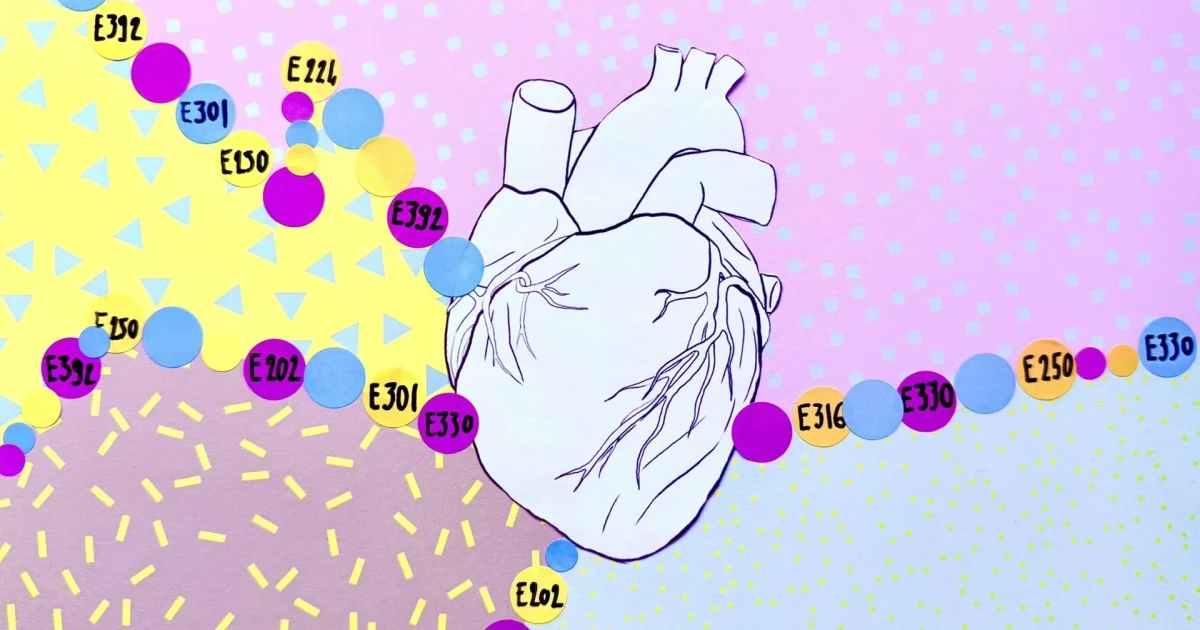
Packaged meals, shelf-stable sauces and ready-to-drink products are where many consumers encounter preservative additives day after day, and a large French study found that heavier exposure to those ingredients was tied to higher risks of hypertension and cardiovascular disease. The strongest signal came not from one product, but from the overall additive load in the diet.
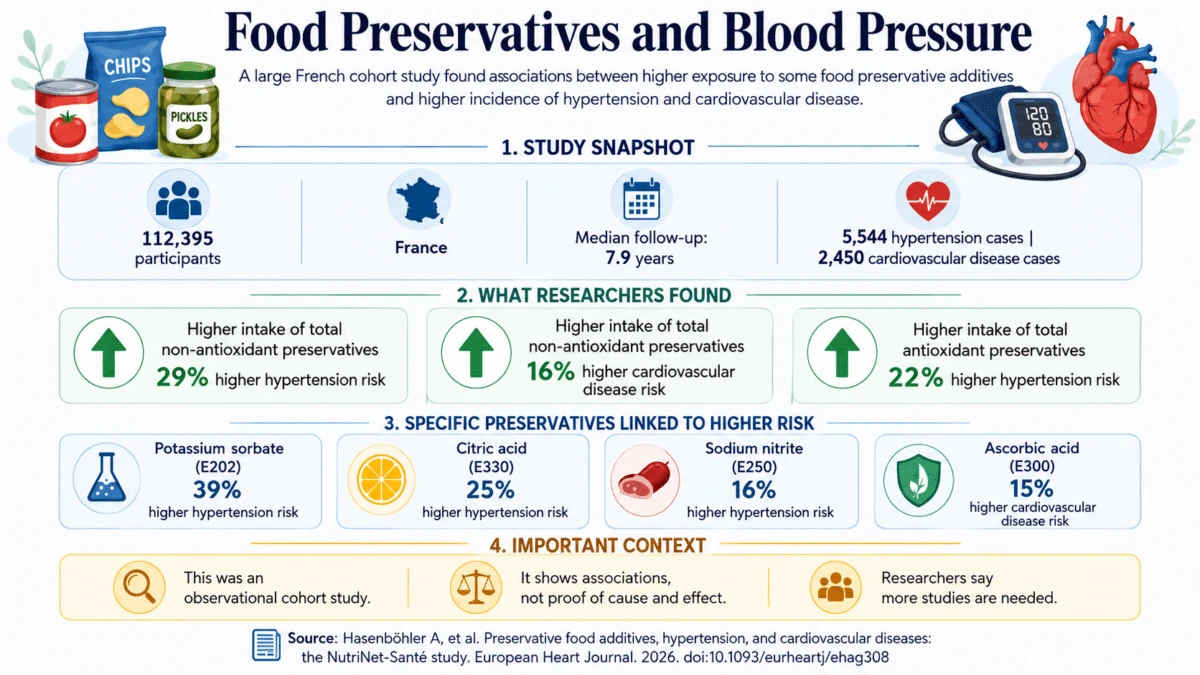
Researchers followed 112,395 adults in the NutriNet-Santé cohort in France from 2009 to 2024, with a median follow-up of 7.9 years. Participants, 78.7% of them women with a mean age of 42.8 years, completed repeated 24-hour dietary records, up to 96 per person, including commercial brands. The team then estimated additive exposure using multiple composition databases and laboratory assays of food matrices.
The clearest findings involved preservatives. Total non-antioxidant preservatives were associated with a 29% higher risk of hypertension and a 16% higher risk of cardiovascular disease. Total antioxidant preservatives were associated with a 22% higher risk of hypertension. Among the 17 most common preservative additives consumed by at least 10% of participants, eight were linked with higher incidence of hypertension and one was linked with higher cardiovascular disease after multiple-test correction.

The study also showed how widespread these substances are in the modern food supply. Researchers reported that 99.5% of volunteers had consumed at least one food preservative within the first two years of follow-up, underscoring how difficult it can be to avoid them if packaged foods make up a regular part of the diet. The European Society of Cardiology said the preservatives are used in hundreds of thousands of industrially processed foods and that consumers encounter them through thousands of foods and drinks.
Still, the findings do not prove the additives caused disease. The analysis was observational, which means other lifestyle or dietary factors could have influenced the results even with long follow-up and repeated measurements. That matters for public health messaging: the study strengthens concern, but it does not settle causation.
Even so, the authors said the pattern could justify re-evaluation of regulations governing these additives if the results are confirmed. That would shift more scrutiny onto the ingredient lists that often get less attention than sugar, salt and calories, even as repeated low-dose exposure may accumulate over years.
Sources
- [1]sciencedaily.com
- [2]academic.oup.com
- [3]escardio.org
- [4]pubmed.ncbi.nlm.nih.gov
- [5]acc.org
- [6]jamanetwork.com