Science
Freshwater Reservoir Discovered Beneath Great Salt Lake
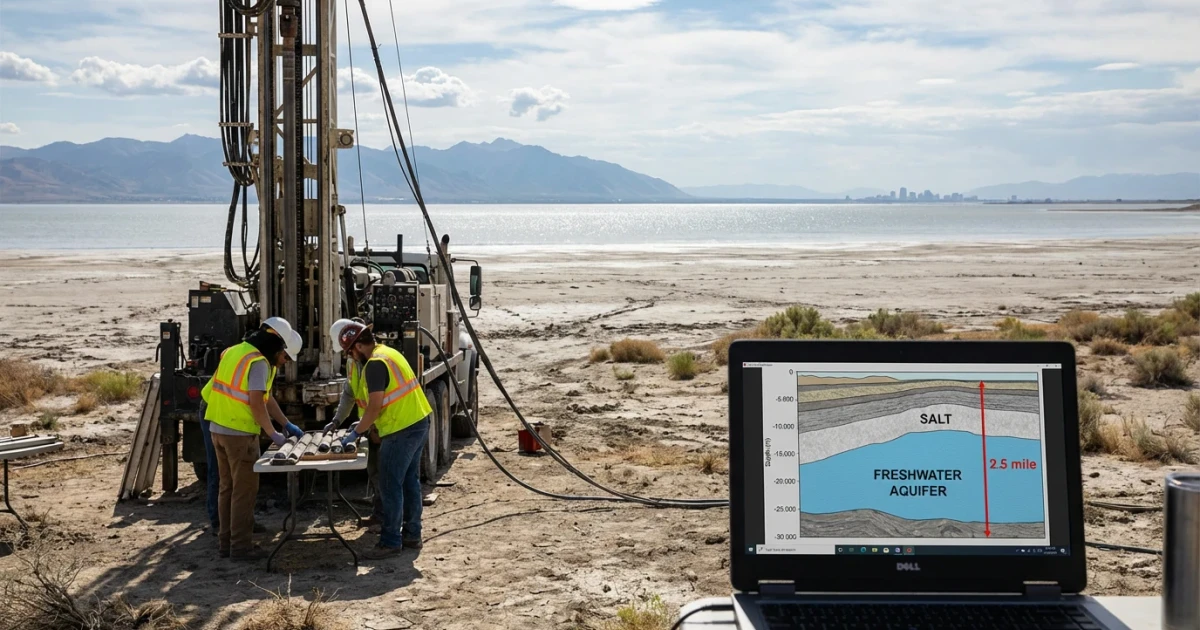
University of Utah scientists have made a significant discovery beneath the Great Salt Lake: a vast freshwater reservoir extending an estimated 2.5 miles deep below the lakebed. The finding, reported by KSL.com and echoed by other regional outlets, could have major implications for Utah’s water resources, environmental management, and ongoing hydrological research.
New Insights Into the Lake's Subsurface
The research team, led by the University of Utah, utilized advanced geophysical methods to identify the freshwater deposit, which sits well below the lake’s famously saline surface waters. According to the initial KSL.com report, the reservoir’s size and depth—stretching 2.5 miles thick—surprised scientists, who say it could be one of the largest known subsurface freshwater bodies in the region. The discovery adds complexity to the hydrology of the Great Salt Lake, which has long been a subject of scientific study due to its shrinking surface area and increasing salinity.
Potential Implications for Water Management
While the University of Utah's official announcement cautions that much is still unknown about the reservoir’s capacity, recharge rate, and water quality, experts note that the discovery could ultimately inform new resource management strategies. The Great Salt Lake’s declining water levels have caused environmental and economic concerns, making any new freshwater sources particularly noteworthy for state planners and conservationists. However, researchers stress that extracting water from such a system would require careful study to avoid unintended ecological consequences, given the lake’s critical role in regional climate and wildlife habitats.
Scientific Context and Next Steps
This finding builds on prior research into the groundwater systems of the Great Salt Lake Basin. According to the U.S. Geological Survey, groundwater interactions beneath the lake are complex, with multiple aquifers feeding and receiving water from surface and subsurface sources. The newfound reservoir’s depth and isolation suggest it may have been accumulating for millennia, but further testing is needed to determine its age, purity, and connectivity to other water systems. The University of Utah team plans to conduct additional sampling and modeling in collaboration with state agencies and hydrologists.
- The reservoir lies approximately 2.5 miles below the lakebed, making it unusually deep for a freshwater deposit in this region.
- Early studies will focus on the reservoir’s recharge rate and whether it is hydrologically connected to the Great Salt Lake or its surrounding aquifers.
- Any future consideration of use will require extensive environmental review due to the lake’s ecological significance.
Broader Significance
The discovery of this freshwater reservoir underscores just how much remains to be learned about the subsurface hydrogeology of Utah’s iconic lake. As drought and water scarcity concerns grow across the West, new findings like this one may provide critical insights into groundwater resources and how they interact with surface water systems. For now, researchers emphasize that the main priorities are mapping the reservoir, assessing its stability, and understanding its role within the broader ecosystem.
The coming months will see continued collaboration between university scientists, state officials, and federal agencies as they work to unravel the reservoir’s secrets and determine its potential value for Utah’s future.