Science
Full Flower Moon Captivates Skywatchers Worldwide
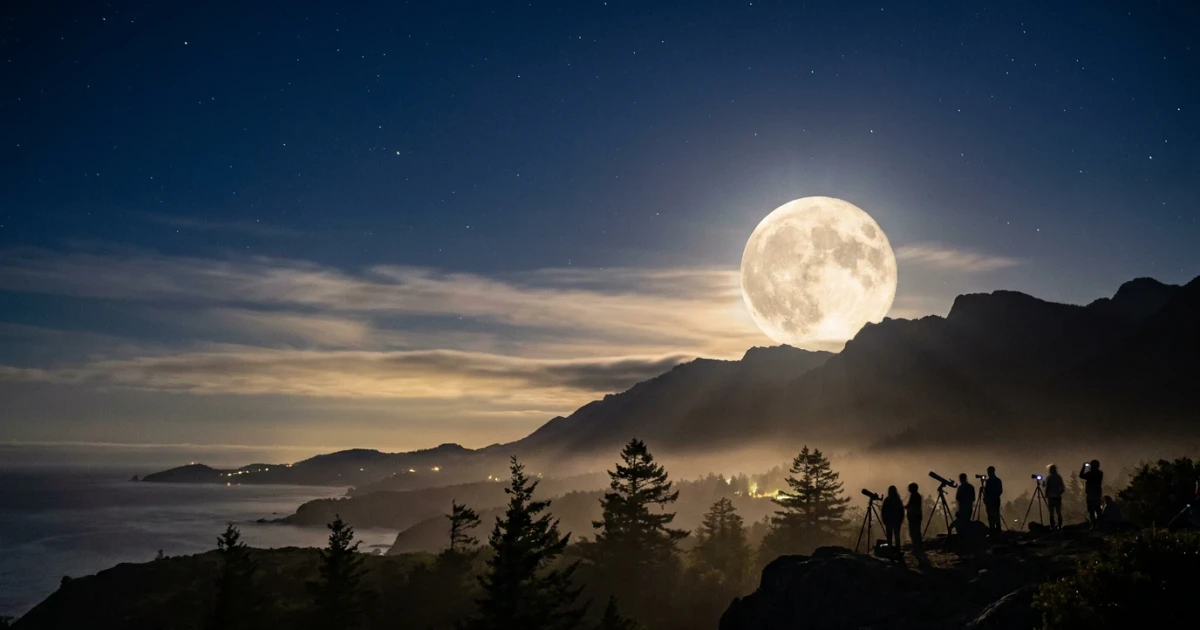
The May full 'Flower Moon' graced skies around the globe this week, offering a celestial spectacle that drew the attention of skywatchers and photographers alike. This year’s event was noteworthy not only for its radiant beauty but also for being a micromoon, a phenomenon where the full moon appears slightly smaller in the night sky due to its position at apogee, the farthest point from Earth in its orbit.
Global Views of the Flower Moon
Forbes showcased stunning images from cities across continents, with the 'Flower Moon' shining brightly over iconic skylines and rural landscapes alike. The full moon’s soft, silvery glow was especially prominent where skies were clear, providing an optimal backdrop for night photographers and moon enthusiasts. This lunar display marked the fifth full moon of the year and is traditionally known as the 'Flower Moon,' a name rooted in Native American traditions referencing the abundance of spring blooms in May.
Why This Moon Was a Micromoon
Unlike the so-called supermoons, which occur when the moon is closest to Earth and appears larger and brighter, the May Flower Moon was classified as a micromoon. According to NASA, a micromoon occurs when the moon is at or near its farthest distance from Earth—known as apogee—making it appear up to 14% smaller and 30% dimmer than a supermoon. This year’s Flower Moon provided a unique opportunity for observers to compare the differences in the moon’s apparent size throughout the year.
- The lunar calendar shows that micromoons occur roughly once or twice a year.
- May’s full moon reached its peak illumination at approximately 6:53 p.m. UTC, as listed by the U.S. Naval Observatory.
- Despite its slightly smaller size, the full moon remains a striking sight and can be observed without special equipment.
The Science and Significance of the Flower Moon
The Flower Moon derives its name from the seasonal growth of flowers in the Northern Hemisphere. According to the International Meteor Organization's lunar calendar, this name is just one of many traditional full moon monikers, each reflecting the natural changes and agricultural cycles throughout the year.
This month's full moon also drew interest for its timing in relation to other astronomical events. As reported in Forbes and highlighted by multiple astronomical sources, two full moons are expected in the month of August, a relatively rare event known as a 'blue moon.' The Flower Moon thus kicks off a season of notable lunar occurrences for 2026.
Viewing Experiences and Public Engagement
Despite being a micromoon, public fascination was undimmed. Social media was awash with photos and anecdotes from observers in cities and rural areas, all sharing their perspectives on the Flower Moon’s subtle yet enchanting appearance. As noted by Forbes, the global nature of the event enabled a sense of shared wonder, connecting people across time zones and continents through a common celestial experience.
Looking Forward
The next significant lunar event is set for June, with a 'Strawberry Moon' on the calendar. Skywatchers interested in tracking lunar phases and planning their observations can consult detailed full moon statistics and interactive lunar calendars online. Whether it’s a supermoon or micromoon, each full moon offers its own unique beauty and opportunities for exploration.
As the 2026 lunar cycle continues, astronomers and enthusiasts alike will be watching the skies for the next luminous display, each one a reminder of the rhythms and wonders of our solar system.