World
G7 leaders warn U.S. could cut off access to AI models
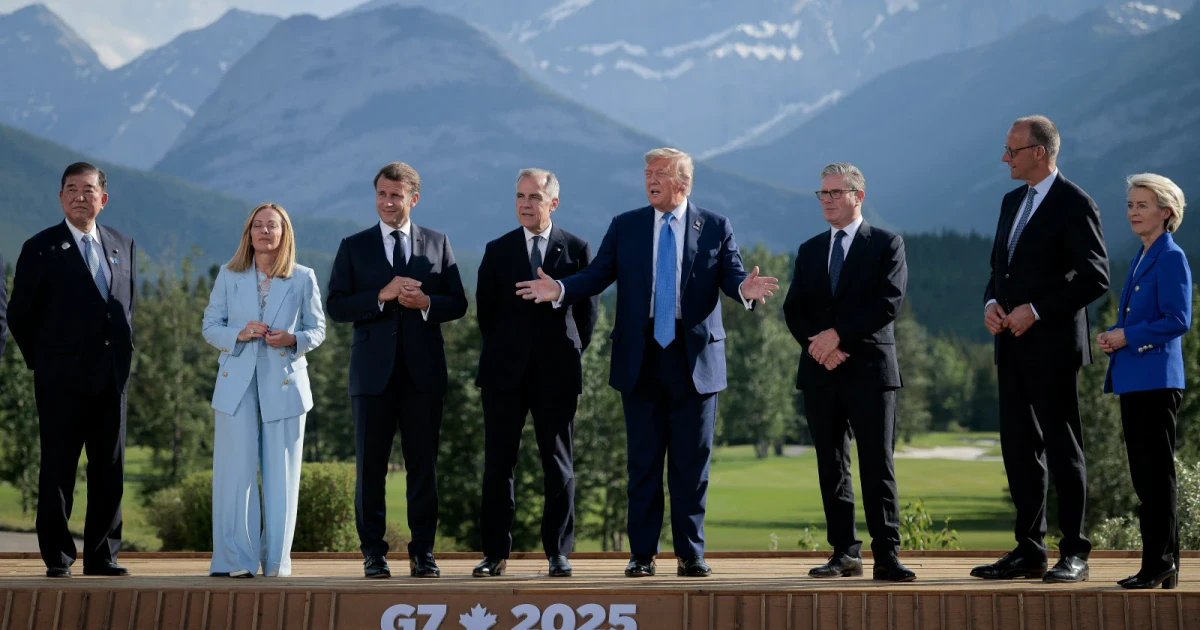
The sudden shutdown of Anthropic’s most advanced models gave G7 leaders a concrete warning: access to frontier AI can be cut off overnight. French President Emmanuel Macron and Indian Prime Minister Narendra Modi raised that concern in Evian-les-Bains, where leaders weighed how allied governments can rely on U.S. AI systems without leaving critical infrastructure exposed to Washington’s decisions.
Anthropic disabled access on Friday, June 13, 2026, to Fable 5 and Mythos 5 after a Trump administration order blocked foreign nationals from using them for national-security reasons. Anthropic said it had to “abruptly disable” access for all customers to comply, and users reported being unable to reach the models the next day. The move was described as the first time export controls had been applied to AI models themselves rather than only to the chips that power them, a sign that frontier AI is now being treated as a strategic asset alongside semiconductors and cloud capacity.
The blackout followed another clash between Anthropic and the Trump administration over the company’s refusal to let the U.S. military use its models for fully autonomous weapons systems. After that dispute, the Pentagon placed Anthropic on a blacklist as too dangerous for government use, sharpening the sense that AI access is becoming a geopolitical lever, not just a commercial service.
At the G7 summit, held June 15 to June 17, officials discussed a “trusted partners” arrangement that could give select countries or companies access to leading U.S. AI models. People familiar with the talks said the idea was raised with U.S. Commerce Secretary Howard Lutnick at a dinner on Monday, June 15. Supporters see the plan as a practical workaround to the new restrictions and a way for G7 countries to strengthen cybersecurity defenses against rivals such as China.
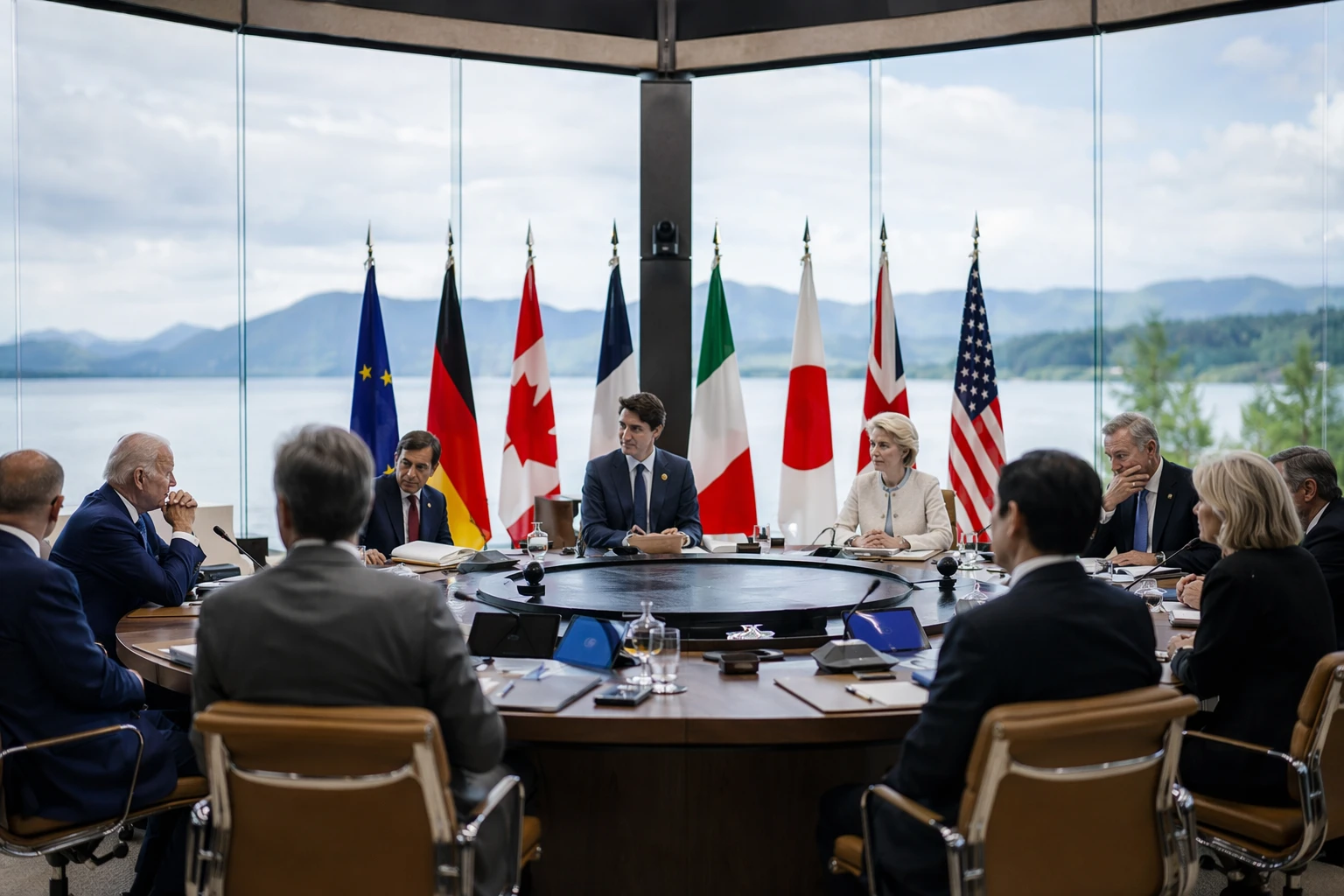
The broader fight is about digital sovereignty. France and India entered the summit with an Innovation Roadmap 2030, a joint India-France working group on AI governance, and a new India Chair on AI, Innovation and Culture at Université Paris-Saclay. Macron said France and India believe in “true partnership in cooperative AI,” a formulation that captures the effort to keep cross-border collaboration open even as export controls tighten.
Canada also put the issue in stark terms. Prime Minister Mark Carney said the Anthropic episode showed the need to “build out and diversify,” adding that sovereignty requires “unhindered access to AI.” That argument echoed a larger pattern across June, as the European Union, the United States and Canada each unveiled competing AI and digital-infrastructure strategies, with Europe pressing ahead on chip manufacturing, cloud capacity and open-source systems to reduce dependence on mostly U.S. tech giants. AI executives from Anthropic, OpenAI, Google DeepMind and Mistral AI were expected in Evian, underscoring how governments and companies are now negotiating the same question: whether the world will depend on American frontier models, or build alternatives before the next cutoff comes.
Sources
- [1]techcrunch.com
- [2]usnews.com
- [3]time.com
- [4]deccanherald.com
- [5]techpolicy.press
- [6]cnbc.com