US News
Gallup study finds social media platforms shape views on democracy
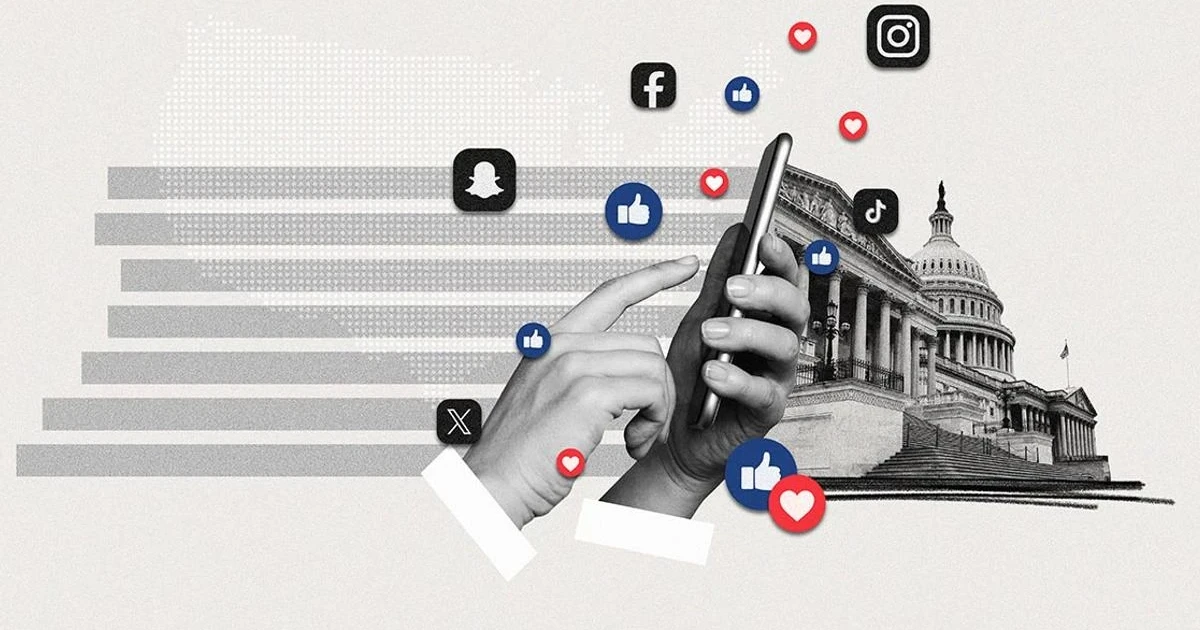
Gallup’s latest analysis pushes past the familiar claim that social media simply weakens democracy. The sharper finding is that different platforms are associated with different democratic attitudes, from trust in Americans’ commitment to democracy to beliefs about collective power and shared national identity.
Platform design appears to matter more than a simple screen-time story
The June 16 Gallup analysis finds that regular users of X, formerly Twitter, and Snapchat are the most likely to say Americans are committed to democracy. Regular Facebook users also lean more positive, though not as strongly, while TikTok and YouTube users show some evidence of stronger belief in collective power, but not consistently across all measures.
The picture is not uniformly optimistic. Instagram users do not differ meaningfully from non-users on pro-democratic social attitudes, and regular Reddit users are often more skeptical than people who do not use the platform. In other words, the democratic effects Gallup is measuring are not evenly distributed across the social media landscape.
The study focuses on the attitudes that help hold democracy together
Gallup says the platform-specific findings center on core social attitudes that underpin a healthy democracy: whether people think their fellow citizens are committed to democracy, whether they see a common national identity, and whether they believe citizens together can shape outcomes. Those are not abstract measures. They are the psychological building blocks of participation, trust, and willingness to accept democratic rules even when one’s side loses.
That framing matters because it moves the discussion beyond “social media is bad” and toward a more useful question: which platforms are reinforcing civic confidence, and which are feeding skepticism? Gallup’s results suggest the answer depends on where people spend their time and what kind of social environment each platform creates around them.
The differences hold even after accounting for who uses each platform
One of the most important findings is statistical rather than rhetorical. Gallup says these platform differences persist even after accounting for users’ demographic and political characteristics, as well as their use of multiple social media platforms. That means the patterns are not just a reflection of age, party identification, or the fact that many Americans use several apps at once.
That does not prove that a platform itself causes a specific political attitude, but it does strengthen the case that platform design and audience culture may be doing something distinct. X and Snapchat may reward different kinds of civic expression than Reddit, while Facebook’s broader social graph may leave users somewhat more positive about democratic norms. TikTok and YouTube may be especially capable of amplifying a sense of collective power, but the inconsistency across measures suggests that this effect is uneven rather than settled.
The broader Gallup project shows why the issue is politically consequential
The platform-specific results come from Gallup’s Democracy for All Project, a partnership with the Charles F. Kettering Foundation that Gallup describes as its most extensive annual study of how Americans experience democracy. The most recent survey drew on more than 20,000 U.S. adults, with a margin of sampling error of plus or minus 0.9 percentage points. That scale gives the findings unusual weight in a field where small samples often blur the differences between platforms.
The broader project also shows how fragile public confidence has become. Gallup’s Democracy for All research hub says only 25% of Americans say the people’s role in the democratic process is working well, while 37% say it is working poorly. Against that backdrop, even modest shifts in trust, efficacy, and civic identity matter because they can shape whether people vote, engage, organize, or simply withdraw.
Heavy use still cuts both ways
Gallup’s earlier March 31 report adds another layer to the story. Heavy social media users were more likely than non-users to believe ordinary citizens have power to create change, to feel represented and listened to, and to think civic participation is effective. At the same time, they were less likely to say democracy is the best form of government, and more likely to express views that depart from democratic norms.
The same report found that 57% of heavy social media users said democracy is the best form of government, compared with more than 70% among people who use social media an hour or less each day. That gap is large enough to suggest that intensity of use still matters, even if platform differences explain more than the old blanket critique allows.
Why the findings matter now
Taken together, Gallup’s two reports point to a more complicated democratic economy inside social media. Some platforms appear more likely to sustain faith in democratic commitment, others seem to leave attitudes unchanged, and at least one, Reddit, skews more skeptical. The result is less a single social-media effect than a fragmented civic environment shaped by product design, user norms, and the kinds of political talk each platform rewards.
That is also why the Kettering Foundation says the project is aimed at identifying ways to strengthen democratic engagement and bridge divides. As the foundation puts it, “Democracy cannot be fully realized without the commitment and participation of all.” Gallup’s latest findings suggest that commitment is now being shaped differently, platform by platform, in ways that matter for the future of public life in the United States.
Sources
- [1]cbsnews.com
- [2]news.gallup.com
- [3]gallup.com
- [4]kettering.org