US News
Gambling overtakes reading as Americans' leisure habits shift away from books

Gambling has moved ahead of reading as a leisure habit, and Rose Horowitch says that shift points to a "postliterate world" in which fewer adults are reading books of any kind. Her August cover story for The Atlantic, titled "The Age of Reading Is Over," argues that the change is not just about books fading from shelves but about attention being pulled toward scrolling, AI-mediated content and other forms of fast-moving entertainment.
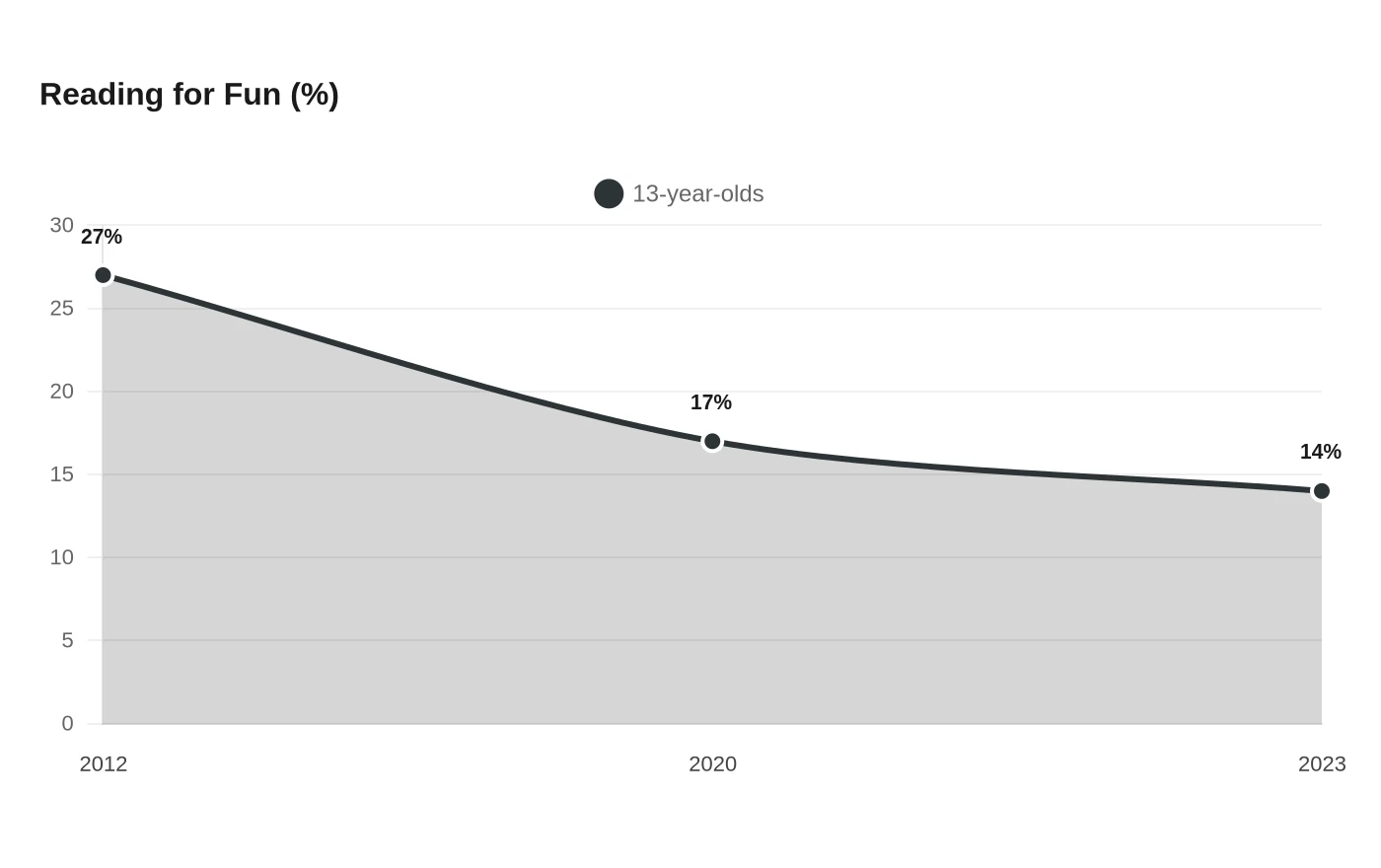
The decline is visible earliest among adolescents. Federal data cited by the National Endowment for the Arts show that in 2023, 14 percent of 13-year-olds read for fun almost every day, down from 17 percent in 2020 and 27 percent in 2012. That drop matters because habits formed in middle school often shape whether reading remains part of daily life into adulthood.

A 2025 study in iScience strengthens the picture with a longer view. Using American Time Use Survey data from more than 236,000 Americans between 2003 and 2023, the researchers found that daily reading for pleasure in the United States fell by more than 40 percent over two decades. The share of Americans reading for pleasure on an average day dropped from 28 percent in 2004 to 16 percent in 2023, and the paper noted that the downward trend had been building since the 1940s.
That time-use data also helps explain why gambling and other digital pastimes now sit in the same frame as reading. The Bureau of Labor Statistics classifies leisure to include reading, games, internet use for personal interest, music and arts and cultural events. In practice, that means book time is competing not just with television or work, but with card games, computer games and the endless feed of personal internet use that can fill the same spare minutes.
Horowitch, a staff writer who drew wide attention for her 2024 essay "The Elite College Students Who Can't Read Books," is using the new numbers to frame a national attention economy in which reading has to compete with games, internet use for personal interest and other rapid forms of media. The iScience study found the decline cut across demographics, suggesting the shift is not confined to one age group or education level.
Sources
- [1]cbsnews.com
- [2]msn.com
- [3]arts.gov
- [4]cell.com
- [5]ucl.ac.uk
- [6]bls.gov
- [7]theatlantic.com