Business
German industrial orders rise 1.9% in May, beating forecasts
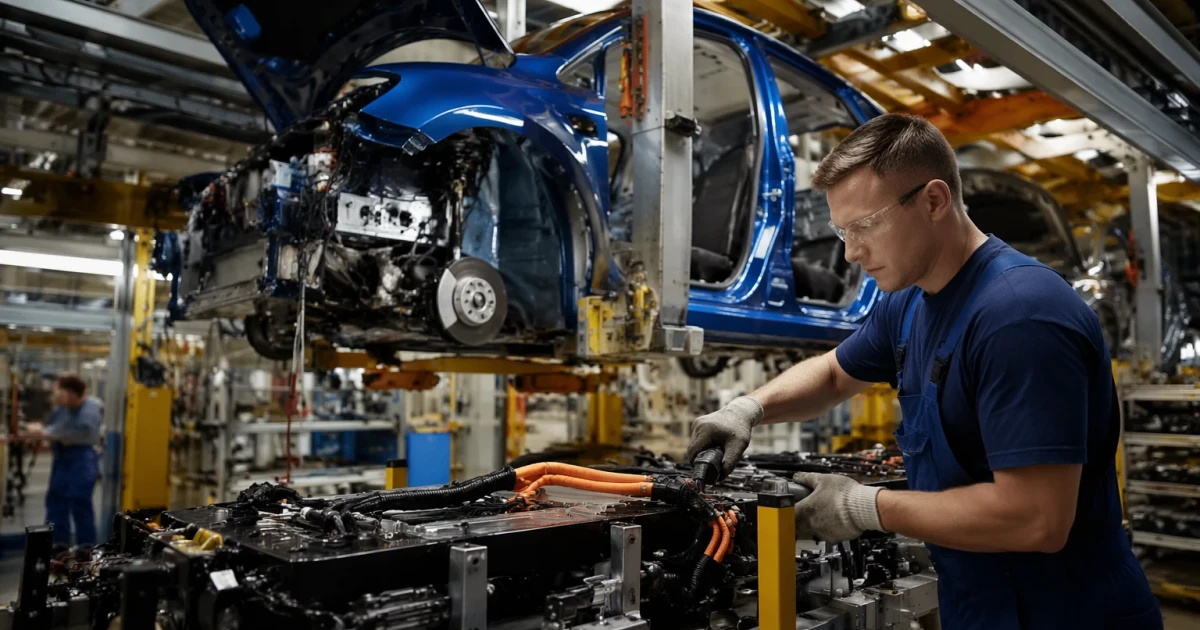
German manufacturing new orders rose 1.9% in May, a stronger reading than expected and a modest sign that Europe’s biggest economy is not stuck in a deeper industrial slump. Destatis said the increase was seasonally and calendar adjusted, and that orders excluding large-scale deals still climbed 1.0% from April, showing the month was not driven entirely by one-off headline distortions.
The biggest lift came from the manufacture of other transport equipment, including aircraft, ships, trains and military vehicles, where new orders jumped 85.0% because of several large contracts. Even so, the broader trend remains uneven. Destatis revised April’s monthly decline to 3.2% from an initially reported 3.8% drop, and the three-month comparison for March through May was still 0.2% below the previous three months overall. Strip out large-scale orders, however, and the same three-month measure was 4.1% higher.
That mixed picture helps explain why economists treated the May gain as encouraging but not decisive. A Commerzbank economist said the order trend supports the idea of a recovery, while an ING economist said Germany’s manufacturing sector appears to have escaped recent geopolitical disruptions with only a limited setback. The backdrop matters: supply-chain fears and Middle East conflict have threatened production and logistics across Europe, yet German manufacturers have so far handled those pressures better than many observers feared.
The scale of the sector makes even a modest improvement important. Destatis says industry and manufacturing account for about 2.1 trillion euros in sales and employ 7.5 million people, so swings in factory demand can feed quickly into growth, hiring and investment plans. May orders were also 6.2% higher than a year earlier, a sign that year-on-year momentum is at least positive even after a soft spring.
The broader data picture is still far from a clean turnaround. Destatis said the stock of orders in manufacturing rose 0.4% in April and stood at 8.8 months, suggesting work still sits in the pipeline even as new demand fluctuates. Producer prices for industrial products were 2.2% higher in May than a year earlier, a reminder that cost pressures have not disappeared. For Germany, the latest order report points to an industrial floor that may be stabilizing, but not yet to a strong or self-sustaining rebound.
Sources
- [1]money.usnews.com
- [2]destatis.de