Business
Germany weighs income-tax cuts, higher rates for top earners

Lars Klingbeil is trying to sell two tax reforms at once: lower income taxes for many workers and higher burdens for the best-paid households. That contradiction sits at the center of Germany’s latest coalition fight, where the finance minister has put forward one package worth about €10 billion and another worth about €20 billion, with the larger version reaching relief of up to €20 billion.
Both options would ease the tax load on workers, but they would ask top earners to contribute more, and one financing idea would raise the levy on wealthy households, including through changes to inheritance tax. The political logic is clear. Klingbeil is trying to show movement on cost-of-living pressure without abandoning the Social Democratic Party’s redistributive instincts, while also giving coalition partners something tangible to negotiate over. The question is whether this is a serious rewrite of the tax system or a bargaining chip designed to force trade-offs inside the coalition.

The stakes are high because the coalition agreement already promised lower income tax for people on low and middle incomes later in the legislative period, while leaving the solidarity surcharge in place for top earners and businesses. The federal government has also said it wants to reform income tax on January 1, 2027, to permanently ease the burden on low- and middle-income households. Klingbeil’s packages are meant to turn that broad pledge into a financing plan that can survive coalition math.
Recent reporting has put the target group for relief around workers earning roughly €2,500 to €4,000 gross a month. That is a politically useful band: broad enough to reach households feeling squeezed by inflation and taxes, but narrow enough to claim the money is aimed at the middle class rather than a blanket giveaway. The larger the package, however, the more it depends on politically sensitive offsets such as higher taxes on wealth.
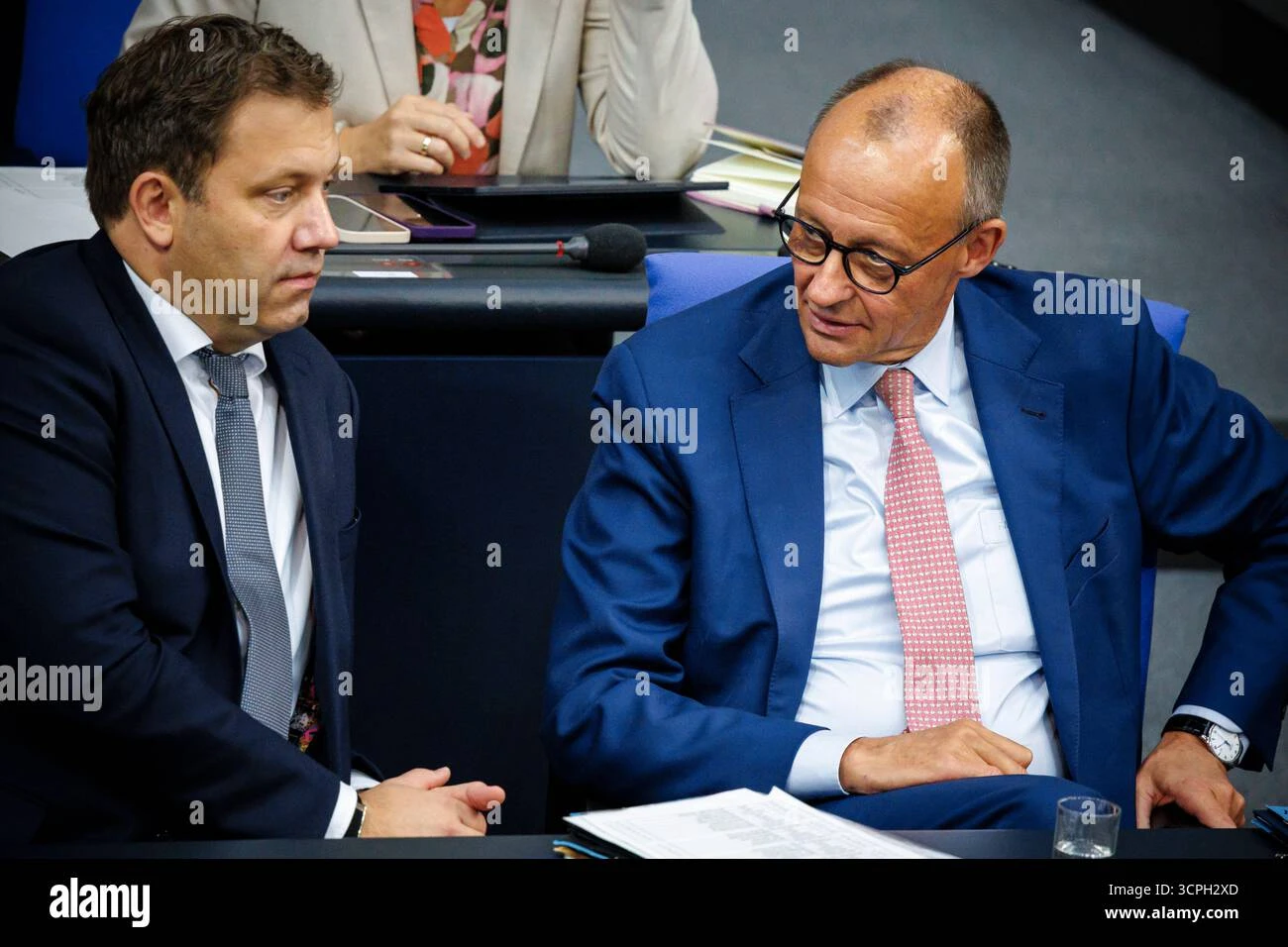
The timing also matters for Europe’s largest economy. The European Commission has said Germany’s average income-tax burden for a single earner is about 15%, while social security contributions are around 34%, a reminder that labour is already heavily taxed. Relief could support consumption and confidence in a weak economy, but top-end tax hikes are likely to meet resistance from the Christian Democratic Union, the Christian Social Union and Chancellor Friedrich Merz, who has pushed back against new taxes on the wealthy.

That leaves Klingbeil in a narrow lane between campaign promise and coalition compromise. If the proposal advances, it will show whether Germany can cut taxes for workers without deepening the fiscal strain, and whether the government is willing to shift more of the burden upward in the name of fairness.
Sources
- [1]thefinancialexpress.com.bd
- [2]aol.com
- [3]deutschland.de
- [4]bundesregierung.de
- [5]economy-finance.ec.europa.eu
- [6]oecd.org
- [7]bloomberg.com
- [8]newsworm.de
- [9]ad-hoc-news.de