Science
Giant Deep-Sea Creature Discovered in Pacific Abyss
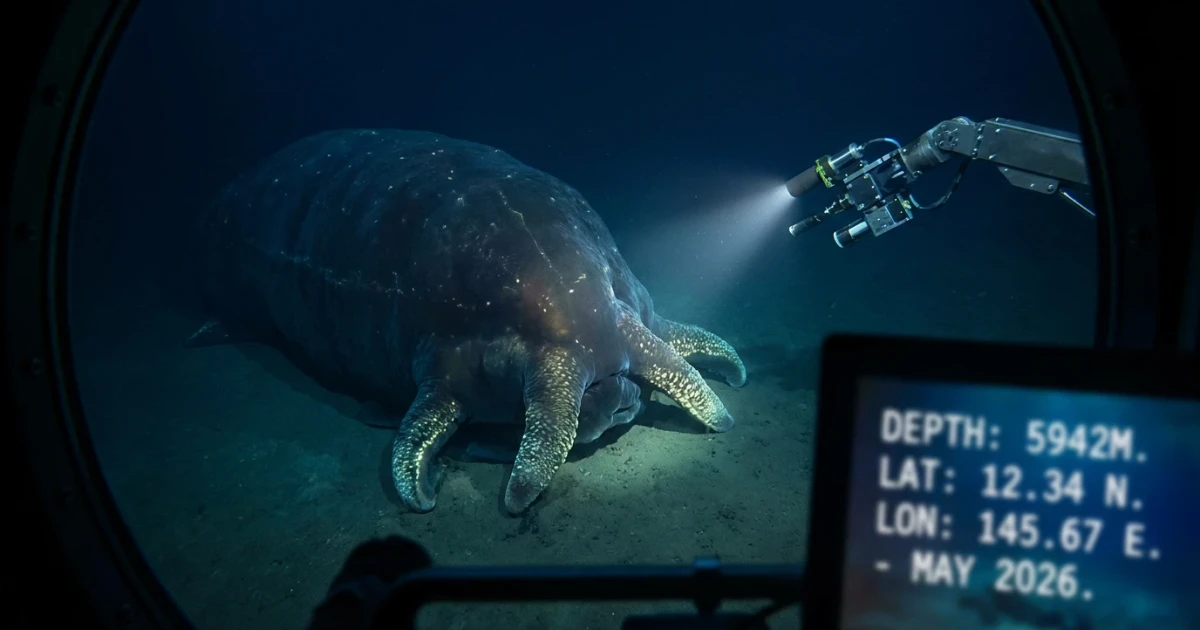
Scientists have discovered a massive new species of sea cucumber nearly 6,000 meters beneath the Pacific Ocean, shedding fresh light on the extraordinary biodiversity of Earth's deep-sea environments.
Discovery at Extreme Depths
The new creature, described as a 'giant' holothurian and named after a mythological sea god, was found during a recent expedition to the Pacific abyss. The research team, operating nearly 6 kilometers below the ocean's surface, reported the find as one of the largest specimens ever recorded at such depths. The identification expands our scientific understanding of the creatures living in the ocean's most inaccessible regions. For readers interested in the breadth of deep-sea discoveries, the Australian Marine Labs' Deep Sea Creatures Data Collection offers extensive data on abyssal species, specimen measurements, and locations.
Holothurians: Giants of the Abyssal Plain
Holothurians, commonly known as sea cucumbers, are echinoderms that play a crucial role in the deep-sea ecosystem by recycling organic matter on the seafloor. According to the Global Biodiversity Information Facility (GBIF), these animals are distributed in every ocean, but few reach the size or depth of this latest discovery. The specimen, encountered at almost 6,000 meters, joins only a handful of known giant holothurians capable of surviving such crushing pressures and cold, dark conditions.
- Depth recorded: Nearly 6,000 meters (about 19,700 feet)
- Habitat: Pacific abyssal plain, characterized by extreme pressure and low temperatures
- Size: Described as 'giant' relative to typical sea cucumbers
Unique Adaptations for Survival
Deep-sea holothurians like this new species exhibit special adaptations for life at depth. The NOAA Ocean Explorer's explainer details how abyssal creatures withstand high pressures and low light, developing robust physiological mechanisms and, in some cases, bioluminescence. The 'giant' holothurian's large size may offer advantages in energy storage and substrate feeding over vast stretches of the nutrient-poor seafloor.
Comparisons With Known Species
One of the most recognized deep-sea holothurians is Enypniastes eximia, sometimes called the 'headless chicken monster,' which inhabits similar depths but is generally smaller than the new giant. This latest discovery adds to a growing list of deep-sea holothurian species, many of which are cataloged in global databases for biodiversity research.
Scientific Implications and Future Research
The discovery underscores how much remains unknown about the deep-sea biome. Each new species found at these extreme depths provides valuable insights into evolutionary adaptation and the resilience of life on Earth. Ongoing expeditions and advances in submersible technology are expected to reveal even more about these mysterious habitats in the years ahead.
As researchers continue to analyze specimens and genetic material from the Pacific abyss, the scientific community anticipates further revelations about the diversity, physiology, and ecological roles of giant deep-sea creatures. Such discoveries not only broaden our understanding of marine biology but also highlight the importance of conserving fragile deep-ocean ecosystems.