Business
Global chip sell-off rattles markets, Nasdaq futures plunge over AI doubts
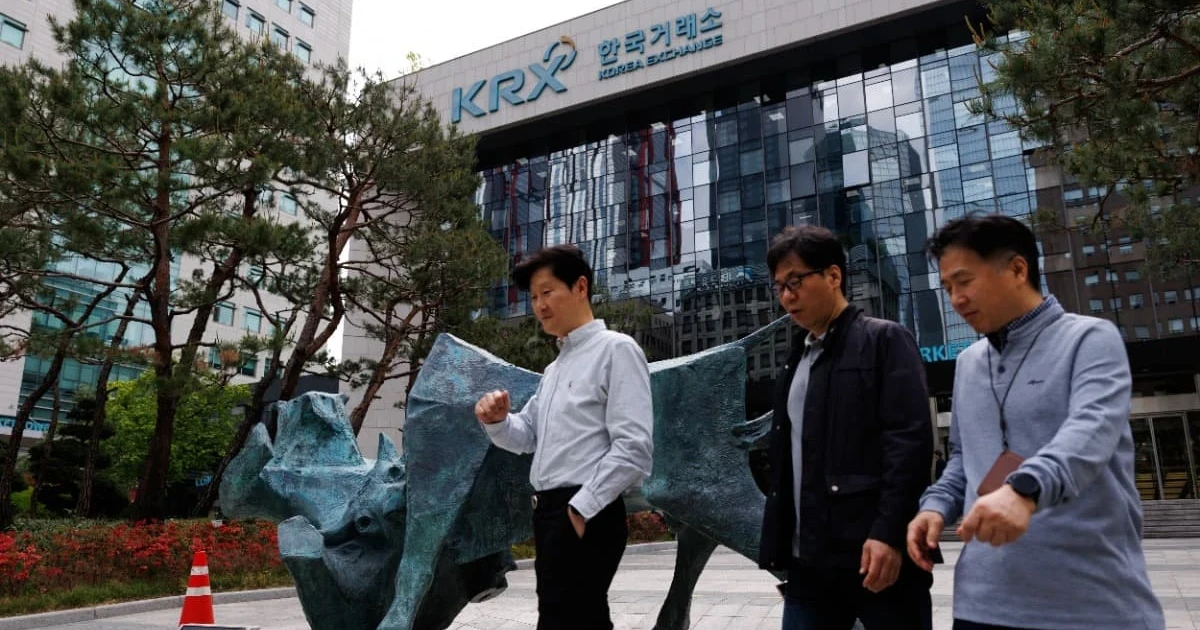
A global chip rout turned into a direct challenge to the AI trade on Tuesday, with Nasdaq futures falling more than 2% as memory-chip makers from South Korea to Wall Street lost ground. In Seoul, the Kospi Composite dropped about 10% and triggered circuit-breaker measures, an unusually sharp reversal for a market that had been one of the world’s hottest in 2026 on the back of AI-related stocks.
The pressure centered on Samsung Electronics and SK Hynix, two of Asia’s most important chipmakers and among the hardest-hit names in the sell-off. Their declines rippled through the rest of the region, then into Europe, where stocks were lower and S&P 500 futures pointed to a sharp fall. The moves suggested that investors were not simply trimming a few crowded positions; they were reassessing whether the market has pushed AI spending and earnings hopes ahead of what the companies can actually deliver.
In the United States, the damage was large enough to reshape the entire tech complex. The Nasdaq 100 was on pace to erase more than $1 trillion in market value as technology heavyweights and chip stocks tumbled. That followed a weak session for the sector on Wall Street and underscored how closely the index has come to depending on a narrow group of winners tied to the buildout of artificial intelligence.
The latest slide also revived a second concern: financing. Futures tracking the tech-heavy Nasdaq fell more than 2% amid worries about imminent U.S. rate hikes and debt-backed corporate spending on AI. Higher borrowing costs can make the capital-intensive race to expand data centers, buy chips and build AI infrastructure harder to justify, especially if revenue growth does not keep pace.

The sell-off comes after an earlier June semiconductor rout had already wiped out roughly $1.3 trillion to $1.4 trillion in market value, according to market reports, as investors questioned stretched valuations and AI revenue guidance. Tuesday’s drop widened those doubts from a sector-specific warning into a broader market event.
For investors, the distinction now is critical. A short-term correction would show up as buyers quickly stepping back into chip leaders, stabilization in futures, and no material deterioration in earnings outlooks. A deeper repricing would likely bring more guidance cuts, weaker demand signals, and a fresh discount on the assumption that AI infrastructure spending can keep outrunning fundamental returns.
Sources
- [1]news.google.com
- [2]finance.yahoo.com
- [3]nytimes.com
- [4]money.usnews.com
- [5]cnbc.com
- [6]biz.chosun.com