Business
Global M&A hits record $4.9 trillion as AI drives deals

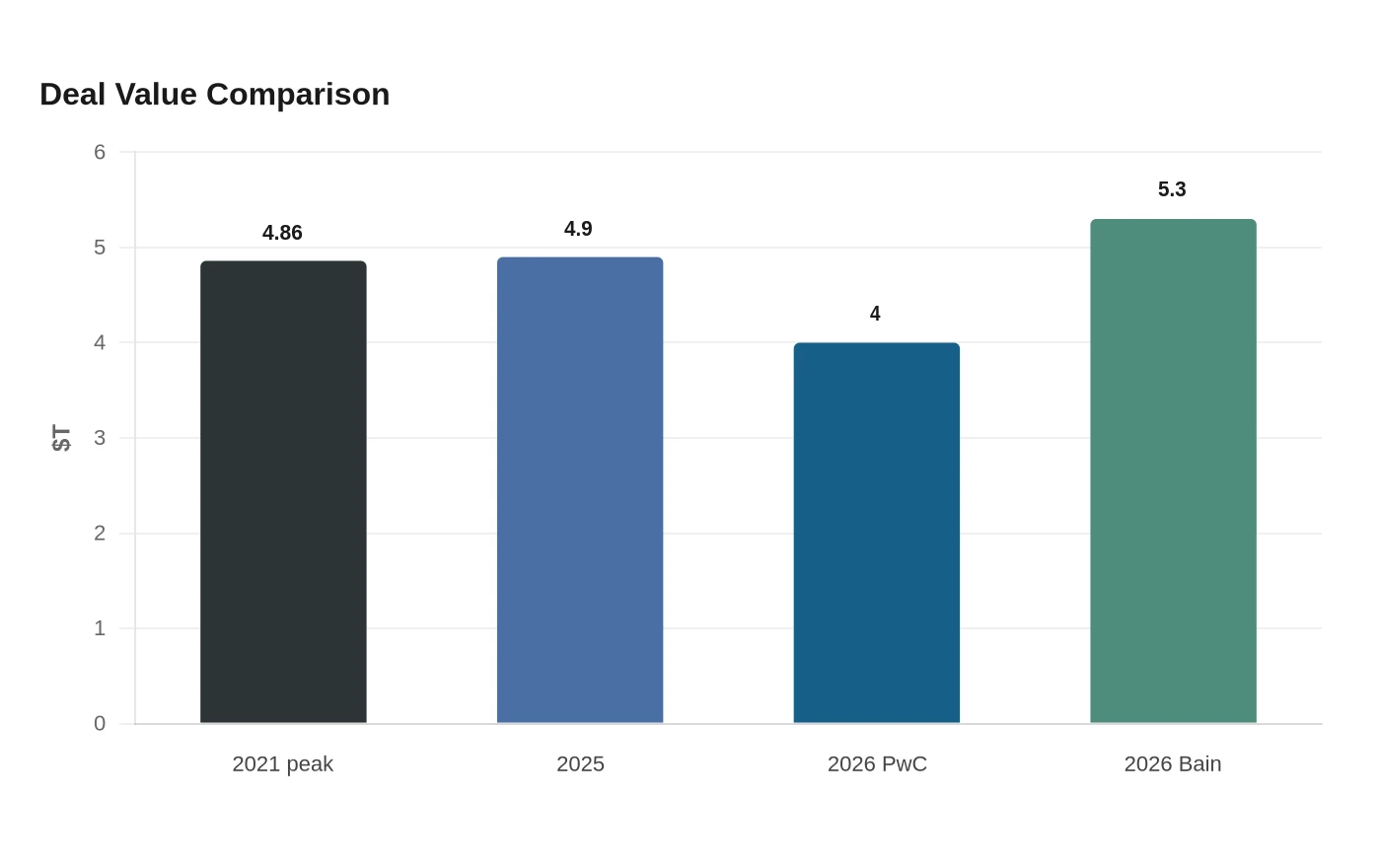
Global dealmaking surged nearly 40% to a record $4.9 trillion in 2025, topping the previous annual peak of $4.86 trillion set in 2021. The momentum carried into 2026, with global merger-and-acquisition value reaching $2.4 trillion in the first five months, up 41% from a year earlier.
The scale of the boom is now concentrated in the largest transactions. On June 23, PwC said global deal value was on track to reach $4 trillion in 2026, with megadeals above $5 billion making up almost half of total value so far this year. Bain & Company was even more bullish, projecting that 2026 could top $5.3 trillion and saying the market was headed for its second-highest year ever. Bain also said deals worth more than $10 billion rose 52% in number and 53% in value year over year, a sign that the market is being pulled upward by a small number of very large transactions.

AI is doing more than giving bankers a new narrative. Stanford HAI’s 2025 AI Index said corporate AI investment reached $252.3 billion in 2024, private AI investment climbed 44.5%, and AI-related mergers and acquisitions increased 12.1% from the prior year. Total investment in AI has grown more than thirteenfold since 2014, giving the current wave of dealmaking a hard capital base rather than just a theme trade.
That capital is flowing unevenly. PwC said AI is intensifying a K-shaped market, with power and data centers hot while software has cooled as buyers reassess disruption. That split shows where acquirers believe durable value will sit: in the infrastructure that powers AI, not just in the applications built on top of it. It also helps explain why consolidation is moving fastest in asset-heavy businesses where scale, energy access and compute capacity matter most.
The question now is whether the market is repricing around a long-term shift or chasing the same scarcity premium in different forms. Bain called out a new “winner’s paradox” for acquirers that must execute ambitious M&A while also funding AI transformations at the same time. If deal value keeps rising because buyers are paying up for data centers, power, and other AI infrastructure, the boom may still have room to run. If capital keeps narrowing into a handful of megadeals while software weakens further, the frenzy starts to look less like broad conviction and more like fear of missing out.
Sources
- [1]nytimes.com
- [2]cnbc.com
- [3]pwc.com
- [4]bain.com
- [5]hai.stanford.edu
- [6]morganstanley.com