Business
GM joins Tesla in building batteries for utilities and data centers
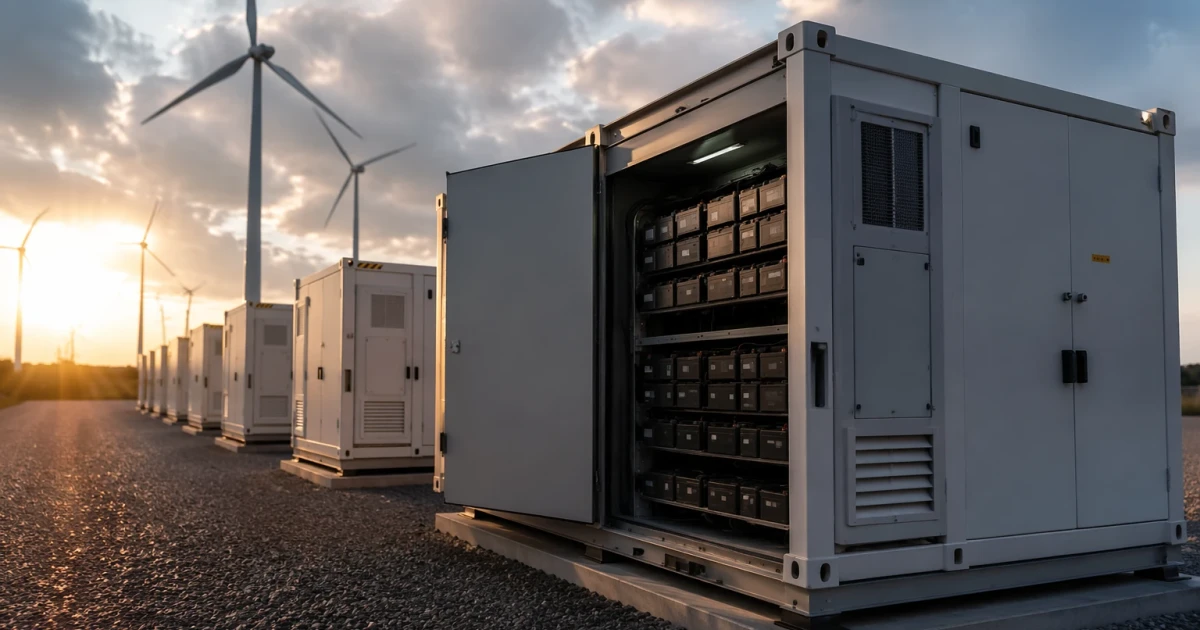
General Motors is moving deeper into stationary batteries just as demand rises from AI data centers, utilities and a grid under strain. The Detroit automaker is following Tesla into a market where the prize is not cars but large battery systems that store electricity when supply is cheap and release it when demand spikes.
GM Energy has already shown the business can grow fast. In October 2025, the unit said sales of its charging and energy products had quintupled since January, with 30% month-over-month revenue growth and seven out of 10 GM EV customers buying at least one GM Energy product. The company’s consumer lineup includes the GM Energy PowerBank, the GM Energy Storage Bundle and the Vehicle-to-Home system, all aimed at turning the home into a small power network that can back up outages and manage costs.
The bigger opportunity now sits beyond the garage. In July 2025, GM signed a non-binding memorandum of understanding with Redwood Materials to speed deployment of energy storage systems using both new U.S.-manufactured GM battery cells and second-life battery packs pulled from GM EVs. The plan is built around a market that Redwood has been courting through Redwood Energy, its new business focused on low-cost stationary storage for AI data centers and other applications. For GM, that is a direct bet that the energy transition is not only about moving vehicles off gasoline, but also about managing electricity more profitably at grid scale.
GM’s battery roadmap is shifting with that market. In May 2025, GM and LG Energy Solution said Ultium Cells would commercialize lithium-manganese-rich prismatic cells in the United States by 2028, with pre-production expected to begin by late 2027 at an LG Energy Solution facility. GM said those LMR cells could deliver 33% higher energy density than the best-performing LFP cells at comparable cost, a crucial advantage in stationary storage where size, cost and durability decide whether projects pencil out.
By June 2026, GM was also developing sodium-ion battery chemistry for grid-scale deployment, another signal that the company sees electricity infrastructure as a growth engine in its own right. That shift comes as GM continues to throw off sizable profits from its core auto business, reporting $2.7 billion in net income attributable to stockholders and $12.7 billion in EBIT-adjusted profit for full-year 2025. The strategic message is clear: for GM, the next industrial market may be as much about storing power for utilities and data centers as it is about selling vehicles.
Sources
- [1]nytimes.com
- [2]cnbc.com
- [3]cbtnews.com
- [4]wardsauto.com
- [5]esgtoday.com
- [6]investor.gm.com
- [7]gmenergy.gm.com
- [8]gm.com