World
Gojek founder Nadiem Makarim sentenced to 10 years for corruption

The Central Jakarta Corruption Court sentenced Nadiem Makarim to 10 years in prison on Tuesday and ordered him to pay a 1 billion rupiah fine plus 809.6 billion rupiah in restitution. If he does not repay the restitution, he faces an additional five years behind bars.
The conviction stems from the procurement of Google Chromebooks for schools under Indonesia’s education digitalization program, which ran from 2019 to 2022. Prosecutors said Makarim used his ministerial powers to enrich himself and pushed the education ministry toward the laptop purchase while Google was considering an investment in Gojek’s parent company. They had sought an 18-year sentence, a 1 billion rupiah fine and 5.6 trillion rupiah in restitution, making the court’s punishment far lighter than the state’s demand.

Makarim, 41, built his reputation long before entering government. He founded Gojek in 2010 and later served as Indonesia’s education minister from 2019 to 2024, making him one of the country’s most recognizable figures at the intersection of technology, business and public policy. That background gives the verdict unusual weight: it is not only a graft case against a former minister, but also a judgment on the credibility of the startup elite that came to symbolize Indonesia’s modern, reform-minded establishment.
The case lands at a delicate moment for Southeast Asia’s largest economy. Indonesia’s sovereign outlook was cut to negative by Moody’s in February 2026 and by Fitch Ratings in March 2026, both citing weaker governance, policy uncertainty and eroding predictability. MSCI has also raised transparency and information-flow concerns about the country’s stock market. Against that backdrop, the verdict is likely to be read by investors as more than a single criminal ruling. It is another test of whether Indonesian institutions can enforce anti-corruption law without deepening doubts about political motivation or policy stability.
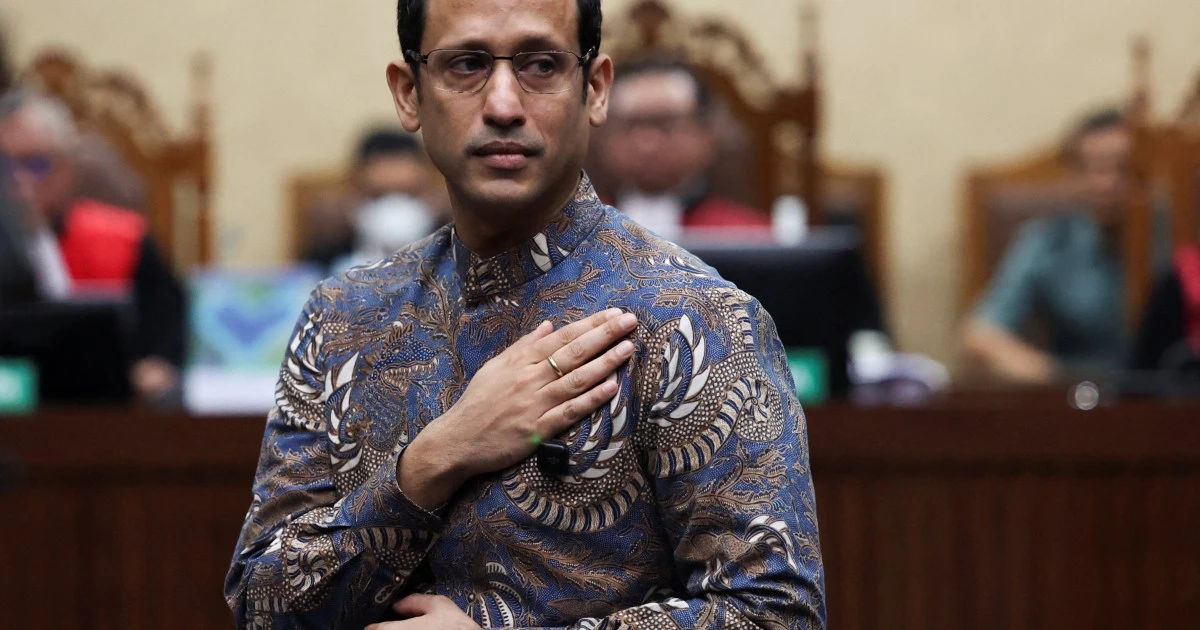
Supporters outside the court booed as the decision was read. Makarim has maintained his innocence and said the case was politically motivated, a claim echoed by some academics and rights activists. For Indonesia’s business and political class, the outcome sharpens a broader question that has grown harder to avoid: whether the country’s celebrated tech entrepreneurs can move into public office without carrying the reputational risks of the corruption allegations that now surround one of their best-known names.
Sources
- [1]y94.com
- [2]cnbc.com
- [3]dealstreetasia.com
- [4]en.antaranews.com
- [5]fitchratings.com
- [6]money.usnews.com
- [7]channelnewsasia.com
- [8]straitstimes.com
- [9]en.wikipedia.org