Politics
GOP sees political boost as gas prices fall after Trump-Iran deal
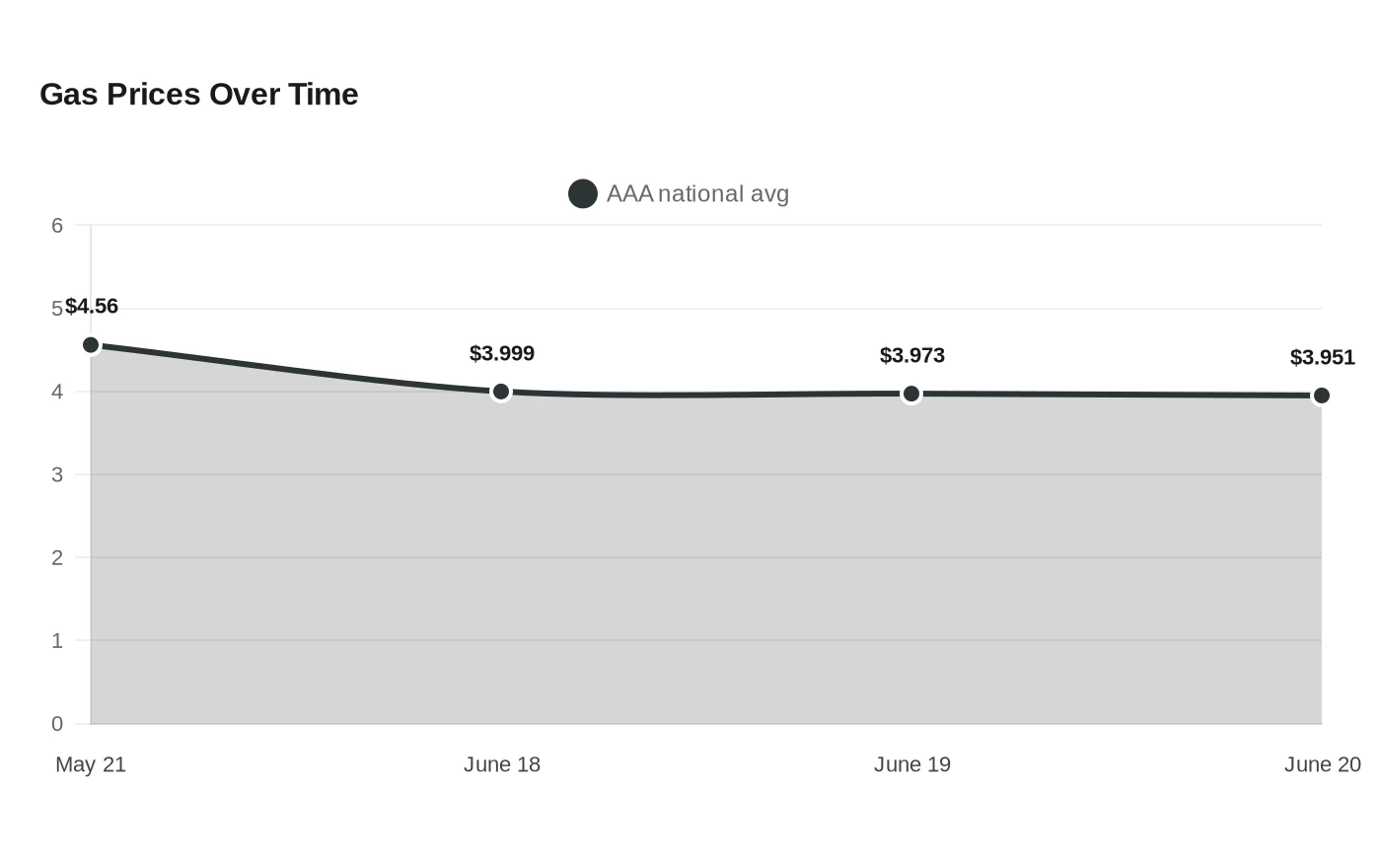
Republicans who spent months fearing that an Iran war and stubborn gasoline prices would drag down their 2026 midterm prospects now see a sharper political opening. AAA put the national average at $3.951 on June 20, after it hit $3.999 on June 18 and $3.973 on June 19, a steady slide from $4.56 on May 21.
The shift followed a June 15 framework under which U.S. and Iranian officials agreed to end the war and reopen the Strait of Hormuz, the narrow waterway that carries a major share of global oil shipments. Crude prices fell more than 4% to a three-month low after the announcement, and gas prices soon moved lower as Donald Trump signed the deal.
For Republicans, the political logic is straightforward: months of elevated fuel costs had turned foreign policy into a kitchen-table issue, especially after spring coverage in The Hill described growing GOP anxiety over higher pump prices and Trump’s refusal to promise relief. POLITICO reported on June 16 that Republicans hoped the deal could ease pressure at the pump, even as some feared voters had already settled on a sour view of the economy.
The relief may not last long enough to erase that damage. The Associated Press reported on June 15 that oil and gas supplies could take months to return to normal, and the U.S. Energy Information Administration said wholesale gasoline prices were expected to rise about 50% in 2026 compared with its February pre-conflict outlook. Analysts have also warned that reopening the strait would not quickly restore prewar pricing.
State-by-state prices show why the issue still cuts differently across the country. Vermont’s average was $4.22 on June 18 and $4.192 on June 19, after the state averaged $4.43 on June 4 with prices ranging from $4.06 to $4.69. That gap explains why some drivers, especially in higher-cost states, still feel the squeeze even as the national average slips under $4 and Republicans look for any break that can be sold as proof that de-escalation pays.
The political question now is whether voters reward lower prices and lower war fears quickly enough to matter, or whether the damage from months of anxiety has already hardened. Some GOP senators and Trump allies have criticized the agreement as details emerged, leaving the party to argue not just that the deal mattered, but that it arrived soon enough.
Sources
- [1]news.google.com
- [2]aaa.com
- [3]gasprices.aaa.com
- [4]eia.gov
- [5]axios.com
- [6]reuters.com
- [7]apnews.com
- [8]politico.com