US News
Government Shutdown Threat Grows Amid ICE Funding Deadlock
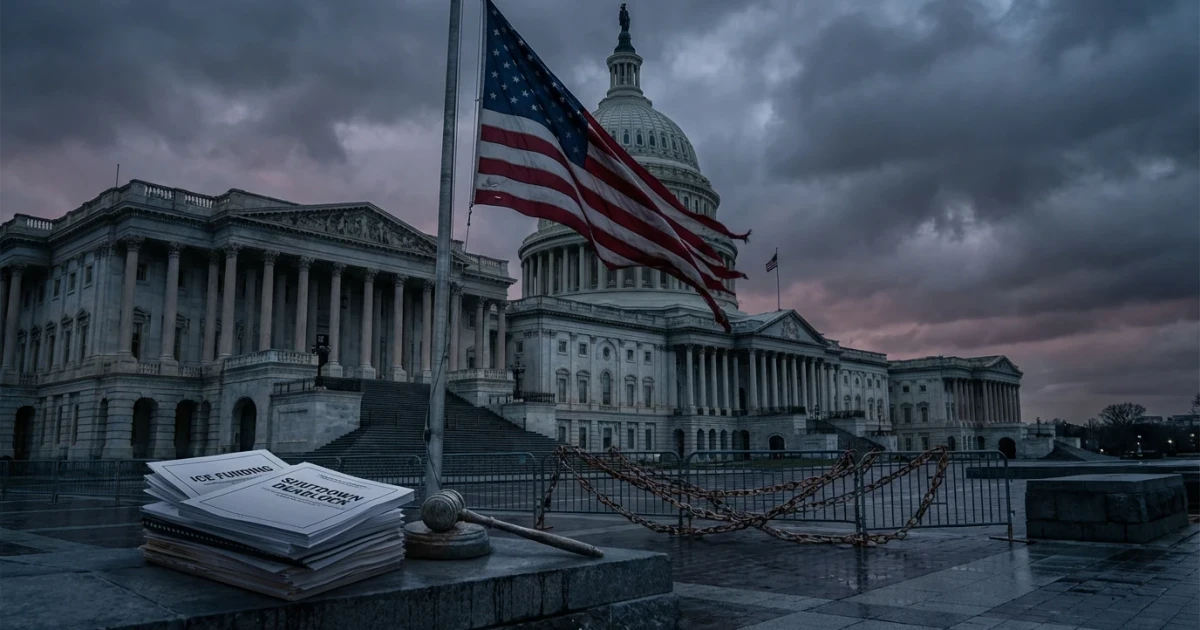
A partial federal government shutdown is drawing closer as stalled negotiations over funding for U.S. Immigration and Customs Enforcement (ICE) continue to divide lawmakers. With the Department of Homeland Security (DHS) at the center of the impasse, officials and budget analysts are warning of significant disruptions if Congress cannot resolve funding disagreements before the deadline.
ICE Negotiations at an Impasse
According to reporting from The Washington Post, bipartisan talks over ICE’s operational budget have hit a standstill, with disagreements over detention bed counts and enforcement priorities complicating the passage of a DHS appropriations bill. Lawmakers remain split on whether to increase or cap the number of immigrants detained by ICE, an issue that has become a flashpoint in wider immigration debates.
- The Department of Homeland Security oversees several agencies, including ICE, Customs and Border Protection (CBP), and the Federal Emergency Management Agency (FEMA).
- The DHS FY 2024 Budget in Brief shows ICE requested increased funding for enforcement and removal operations, while some in Congress seek stricter limits.
Potential Impacts of a Partial Shutdown
If Congress does not pass a new appropriations measure or a continuing resolution, funding lapses could force parts of DHS to halt non-essential operations. Essential personnel, such as border agents and detention officers, would continue working, but many support staff could be furloughed, and routine agency functions delayed.
- Previous shutdowns have led to tens of thousands of furloughs across DHS, with ripple effects on case processing and enforcement, according to a GAO report on government shutdowns.
- Backlogs in immigration courts and delays in processing asylum and deportation cases are expected if agency funding lapses.
- ICE’s official statistics show an average daily detained population exceeding 30,000, highlighting the scale of operations at risk.
Economic and Operational Consequences
Federal budget experts emphasize that shutdowns have measurable impacts on both agency performance and the broader economy. The non-partisan Congressional Budget Office’s monthly budget review shows past shutdowns have delayed spending, reduced economic growth, and disrupted public services.
The Congressional Research Service notes that even brief shutdowns can lead to a backlog in agency missions, lost productivity, and increased costs as agencies ramp back up after funding resumes.
What Happens Next?
With the deadline approaching, attention is focused on whether negotiators can strike a compromise or pass a short-term measure to keep ICE and other DHS agencies funded. If no agreement is reached, the partial shutdown would mark another chapter in a series of funding standoffs that have become increasingly common in recent years.
Analysts warn that the stakes are high for immigration enforcement, border security, and essential federal services that millions of Americans rely on. As Congress debates the future of ICE funding, both the practical and political consequences of a shutdown are coming into sharper focus.