Technology
Governors Address AI’s Expanding Role in Criminal Justice
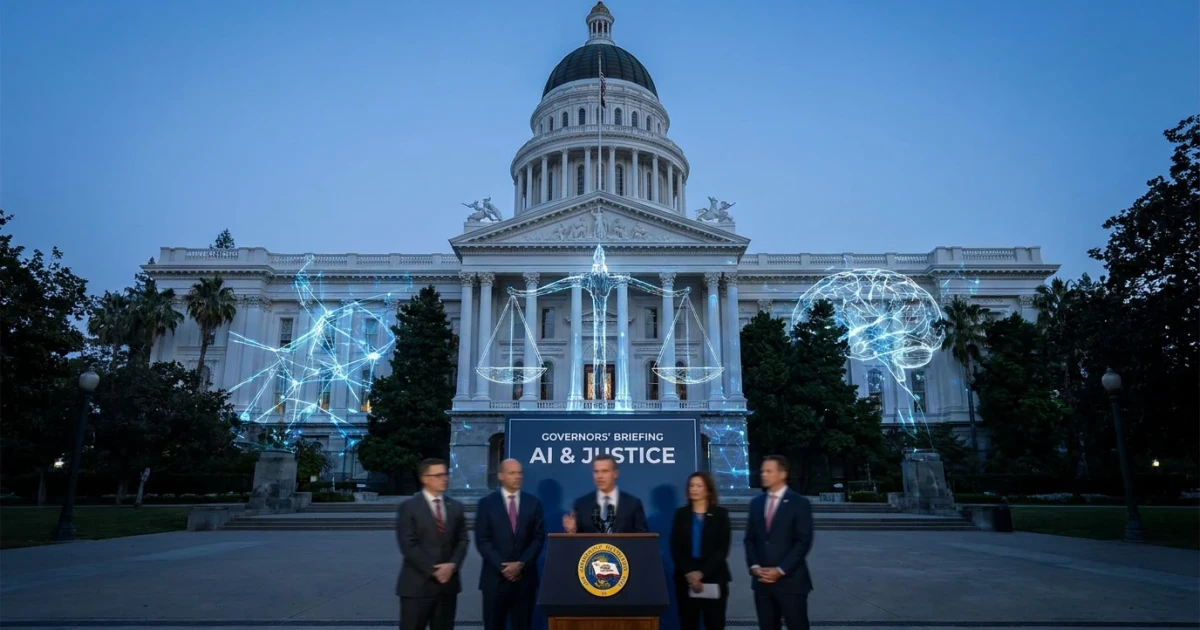
Artificial intelligence (AI) is rapidly reshaping the criminal justice system across the United States, prompting governors and state leaders to examine both the opportunities and challenges presented by this emerging technology. A recent briefing from the National Governors Association (NGA) brought these issues to the forefront, outlining current applications, policy concerns, and the path forward for states navigating the intersection of AI and justice.
AI Adoption Grows in Law Enforcement and Courts
States are increasingly deploying AI-powered tools in law enforcement, courtrooms, and corrections. According to the Bureau of Justice Statistics, police departments and other agencies are implementing predictive policing models, automated license plate readers, and facial recognition technologies to assist investigations and resource allocation. Meanwhile, courts nationwide are exploring algorithmic risk assessment tools designed to inform decisions on bail, sentencing, and parole.
- AI is helping law enforcement analyze large volumes of crime data to identify potential hotspots and patterns.
- Court systems are piloting algorithms that estimate the likelihood of reoffending, aiming to reduce bias and improve pretrial release outcomes.
- Correctional departments are using AI to optimize inmate management and rehabilitation efforts.
This increased adoption reflects the growing belief that AI can enhance efficiency and accuracy in the justice process. However, the NGA briefing also emphasized the importance of ensuring these tools are used responsibly and transparently.
Governors Confront Policy and Ethical Challenges
While AI offers potential benefits, the NGA briefing highlighted several policy and ethical questions facing state leaders. Among the most pressing are concerns about algorithmic bias, data privacy, and the transparency of AI decision-making. Research from the Urban Institute has shown that some risk assessment tools may inadvertently perpetuate racial disparities if not properly designed and monitored.
- Ensuring AI systems are free from bias and regularly audited is a major focus for policymakers.
- States are debating legislation to regulate the use of facial recognition and predictive policing technologies, seeking to balance public safety with civil liberties.
- Transparency and explainability of algorithms are top priorities, so that those affected can understand how decisions are made.
The NGA briefing called for states to adopt clear guidelines and oversight mechanisms. Many governors are working with legislators, law enforcement, and civil rights groups to shape policies that protect rights while leveraging AI’s advantages.
Collaboration and Innovation Drive State Responses
The NGA underscored the value of collaboration in addressing AI’s impact on criminal justice. States are partnering with universities, technology providers, and federal agencies through initiatives like the Office of Justice Programs’ AI and Machine Learning in Criminal Justice Initiative. This collaboration supports research, pilot programs, and the development of best practices for responsible AI use.
Additionally, the National Conference of State Legislatures is tracking and analyzing state-level legislation, highlighting a trend toward more robust regulatory frameworks. States like California, Illinois, and Massachusetts have already implemented or considered laws governing the use of biometric data and algorithmic decision-making in justice settings.
Looking Ahead: Accountability and Public Trust
As AI becomes more deeply embedded in the criminal justice system, the NGA briefing concluded that accountability and public trust must remain central to policy development. Ongoing training for law enforcement, public education campaigns, and transparent public reporting on AI outcomes are all recommended strategies to ensure that technology serves justice without compromising fairness or equity.
Governors and state leaders face the challenge of harnessing AI’s potential while safeguarding individual rights and promoting public confidence. The continued exchange of ideas and data will be critical as states shape the future of criminal justice in an AI-driven era.