US News
Governors Island blends harbor history, parks and climate future
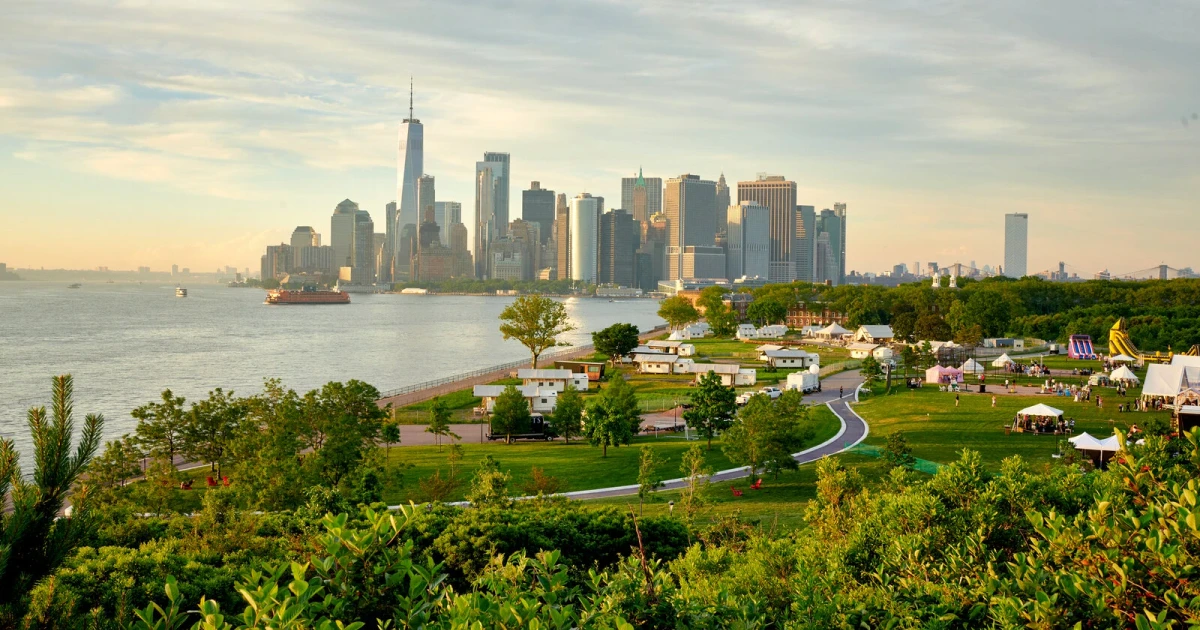
Governors Island compresses New York’s past and future into 172 acres of harbor land that sits just 10 minutes by ferry from Lower Manhattan and Brooklyn. It is a place of parks, cultural events and wide harbor views, but also a place where Fort Jay, Castle Williams and Dock 102 keep the city’s military history in plain sight.
A harbor escape shaped by the city
The island’s appeal starts with access. For a place that feels removed from the pace of Manhattan, it is close enough to reach quickly from both Lower Manhattan and Brooklyn, which gives it a rare role in a dense city: a public landscape that functions like an easy day trip without leaving New York Harbor. Jane Pauley’s tour of the island captures that contrast between open space and urban proximity.
That geography matters because Governors Island is not a park in the abstract. It is a 172-acre island positioned at the edge of the nation’s largest city, where access to water, wind and open sky is part of the experience. Its seasonal public use makes the island feel distinct from the rest of the city, with ferry service as the gatekeeper and the harbor itself as the setting.
From military post to public ground
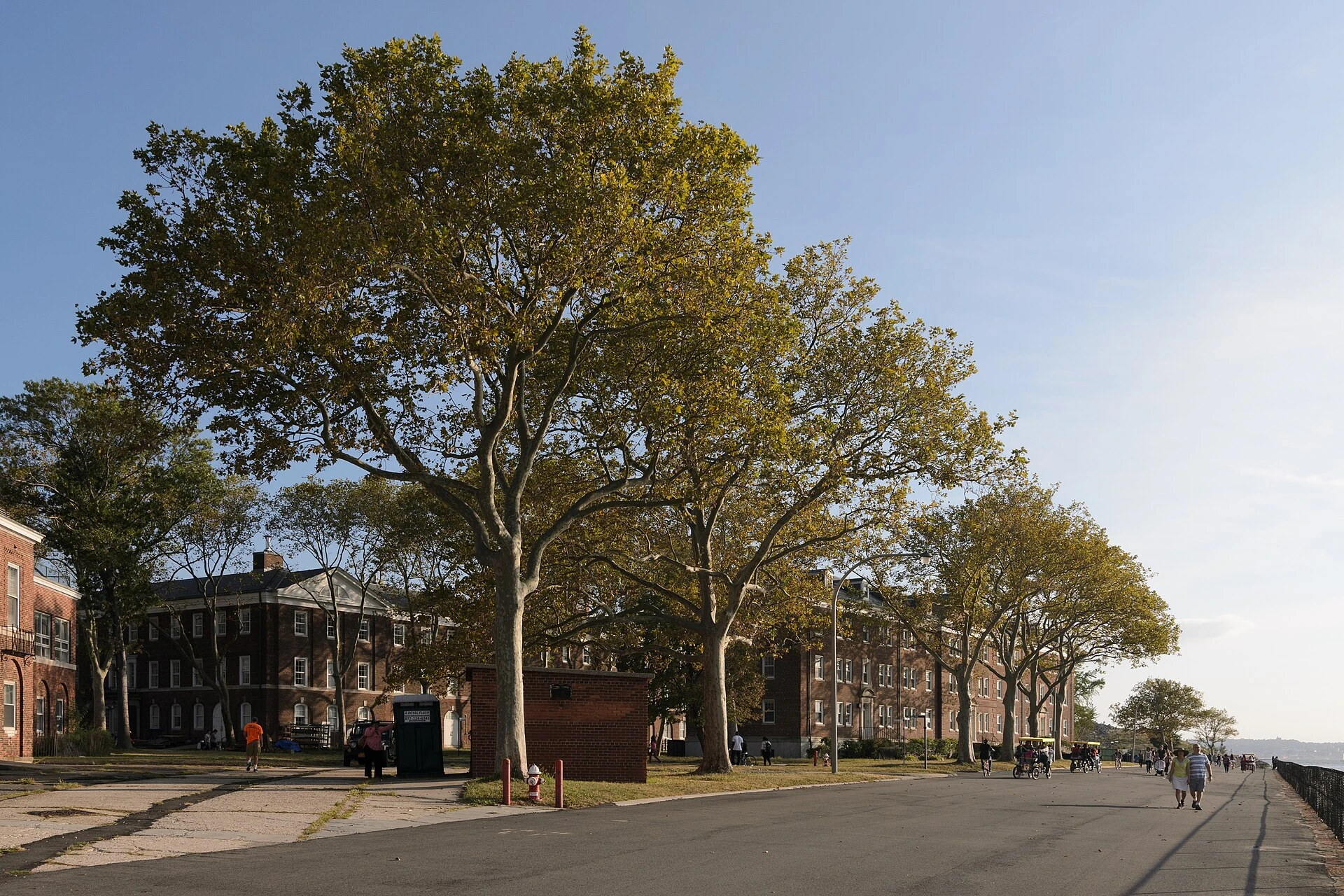
Governors Island’s public life rests on a long military history. From 1794 to 1966, the U.S. Army presence on the island played a vital role in New York City’s social, political and economic life. After that, the island served as headquarters of the U.S. Coast Guard from 1966 to 1996, extending its federal role for another generation.
The modern island took shape in 2003, when it was transferred to two public stewards. Twenty-two acres became Governors Island National Monument, administered by the National Park Service, while the remaining 150 acres were placed under the City of New York through The Trust for Governors Island. That split still defines the island today: one part is preservation, the other is public landscape and future development.
The core sites that anchor the island
Governors Island National Monument contains the structures that make the island’s history legible on foot. Fort Jay, Castle Williams and Dock 102 sit within the 22-acre monument, and each one marks a different piece of the harbor-defense system that once protected New York. Together they turn the island into a lesson in how the city secured itself by land and water.
Fort Jay was named in 1798 for John Jay, and the fort and its grounds were conveyed to the federal government in 1800. Fort Jay and Castle Williams were erected between 1796 and 1811 as part of New York Harbor’s defensive network, when fortified positions around the harbor were essential to the city’s security. The stonework is not decorative history; it is infrastructure built for war, then absorbed into the city’s civic memory.
Castle Williams is the most striking of the remaining works. The circular red-sandstone fort was designed and erected between 1807 and 1811 and completed in 1811, making it one of the clearest surviving examples of early 19th-century coastal defense. It later served as barracks and then as a prison, and after rehabilitation the National Park Service opened it to the public for the first time in 2011.
A park landscape with room for public life
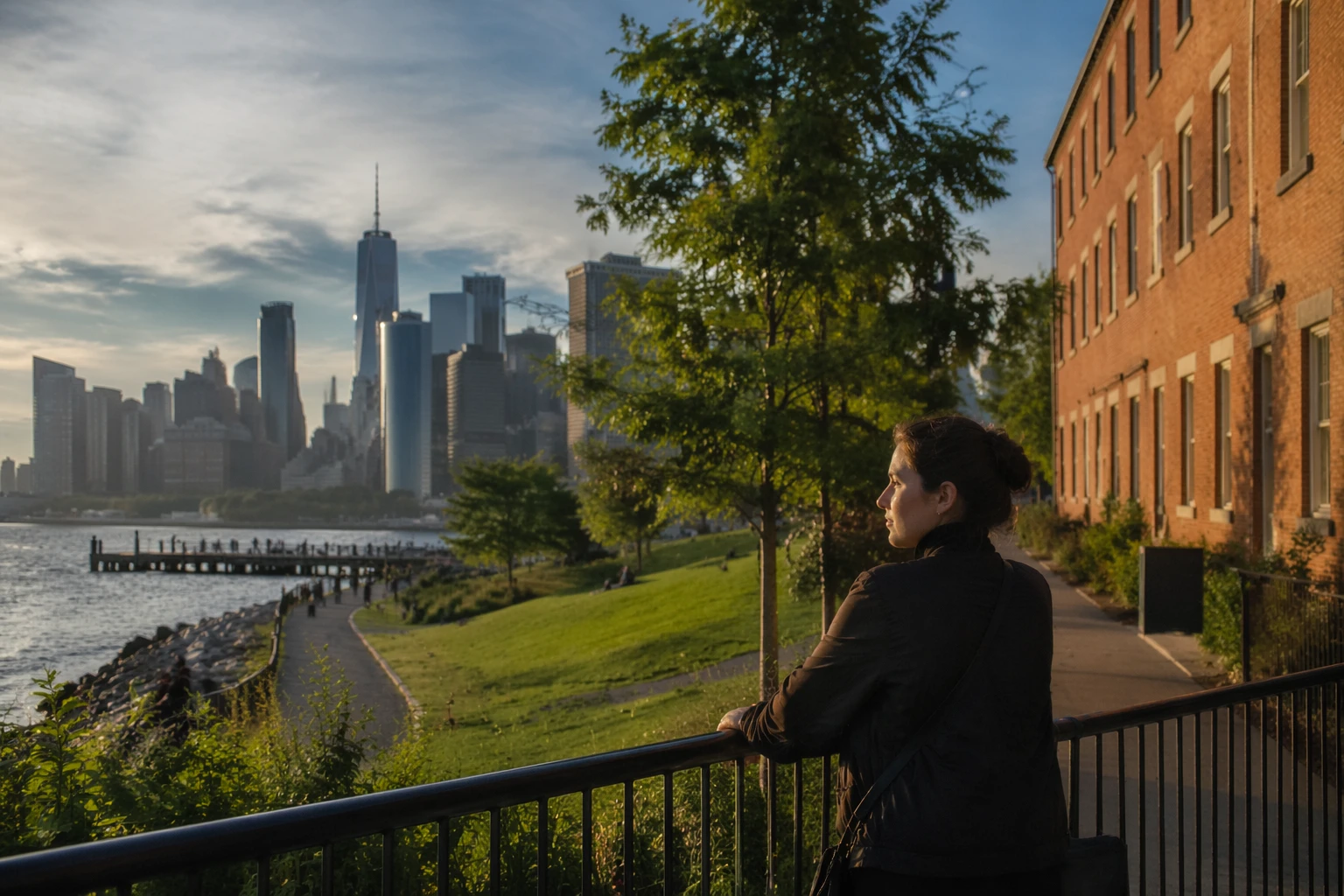
The island’s appeal is not limited to its fortifications. Its parks and event spaces have made it one of the city’s most unusual public destinations, a place where visitors can move from military walls to lawns, harbor views and cultural programming in a single visit. That mix gives Governors Island a civic role that few other places in New York can match.
The scale helps. At 172 acres, the island is large enough to hold distinct uses without losing its sense of openness, and the 150 acres managed by The Trust for Governors Island provide the room for that broader public life. The result is a landscape that does something cities rarely manage well: it combines preservation, recreation and room for new civic ideas on the same site.
The climate future taking shape on the island
The newest chapter is the New York Climate Exchange, announced in 2023 as a planned 400,000-square-foot campus on Governors Island. It is designed to focus on climate research, education and jobs, placing a forward-looking institution inside a place already shaped by adaptation and reuse. The location is not incidental: a former military outpost in New York Harbor is being asked to host part of the city’s climate response.
That makes Governors Island more than a scenic stop. It is becoming a model for how urban public space can absorb new purpose without erasing older layers of use. In a city where shoreline pressure, dense development and unequal access to nature are now permanent policy questions, the island shows how public land can serve as both refuge and laboratory.
How to experience the island
Start with the ferry ride, because the trip itself sets the rhythm. The island’s proximity to Lower Manhattan and Brooklyn makes it simple to reach, but the transition across the harbor changes the scale immediately, from street noise to open water and from traffic to fort walls. Once there, the 22-acre monument gives the clearest reading of the island’s past, while the larger 150-acre landscape extends the visit into parks and views.
The most direct path is to connect the pieces in order: Fort Jay, Castle Williams and Dock 102 first, then the broader public grounds, then the harbor edge. That sequence captures what makes Governors Island unusual in New York City: it is both a preserved military site and a living public space, with a climate campus planned for its next act.
Sources
- [1]cbsnews.com
- [2]nps.gov
- [3]nyc.gov