Science
Gravitational-wave data reveal distinct black hole populations, study finds
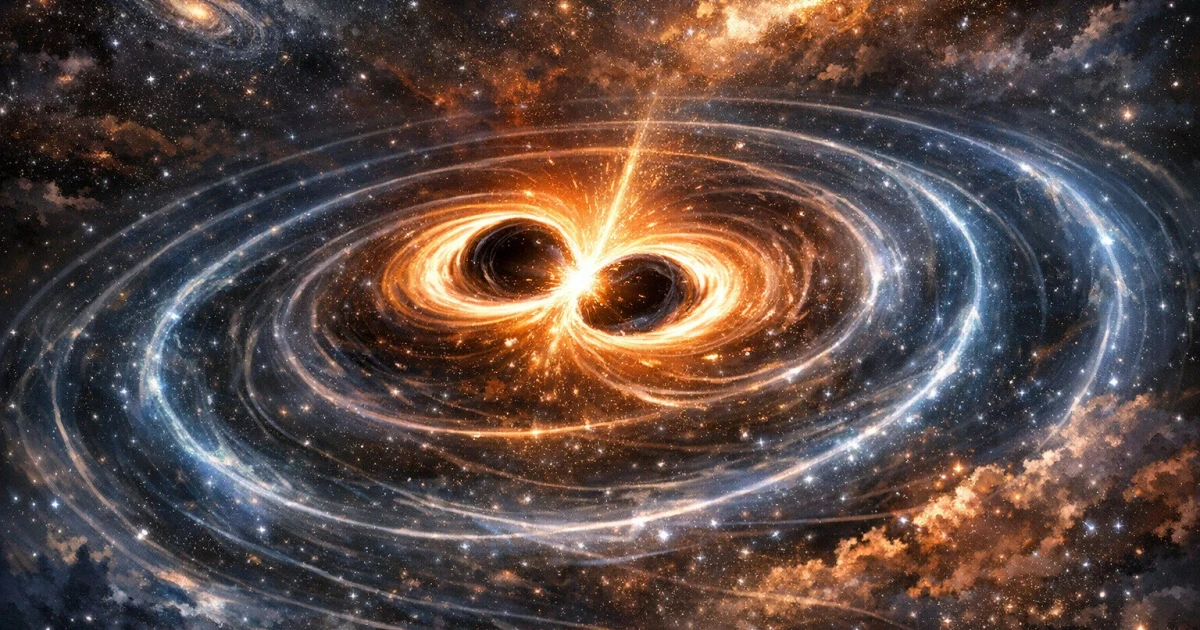
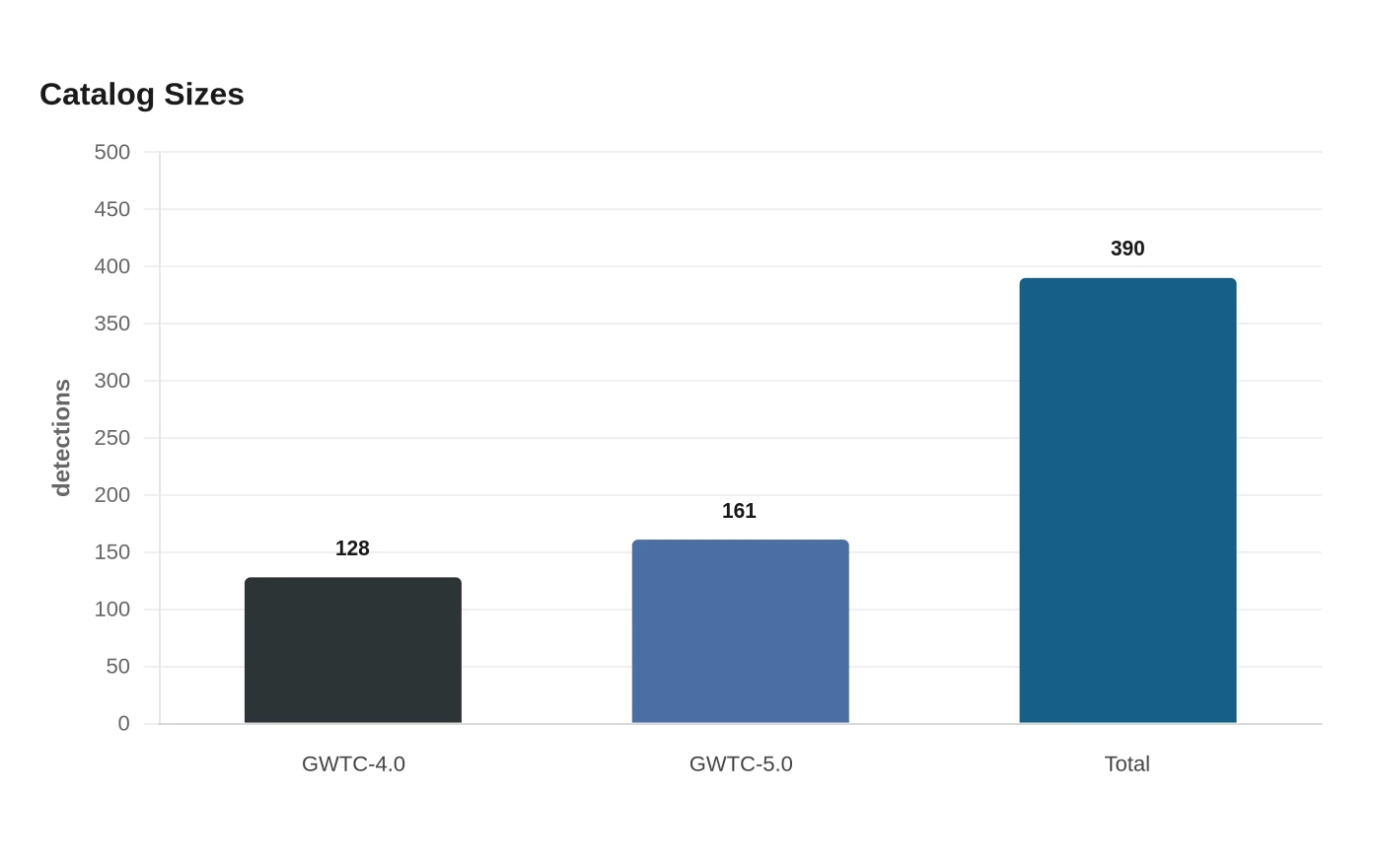
The LIGO-Virgo-KAGRA Collaboration's GWTC-5.0 release, dated May 26, 2026, added 161 new significant compact-binary signals from the second half of the fourth observing run, O4b, and pushed the total number of gravitational-wave detections to 390. Two new analyses of gravitational-wave data point to hidden structure inside that catalog, including a subset of unusually massive systems that may be the products of earlier collisions rather than the direct collapse of massive stars.
The catalog is now large enough to split
The second half of the fourth observing run, O4b, ran from April 2024 through the end of January 2025. The larger catalog lets researchers look for patterns that were invisible when it was much smaller.

GWTC-4.0, which covered observations from May 24, 2023 to January 16, 2024 during O4a, had already added 128 new confident gravitational-wave signals, including GW231123, likely the highest-mass binary black-hole merger observed to date. The new work builds on that growing record and asks whether the mergers in it are all being made the same way.
Two independent methods point to the same split
One of the clearest signals comes from the Massachusetts Institute of Technology, where Cailin Plunkett and Salvatore Vitale reanalyzed 155 binary black-hole pairs from GWTC-4. Their paper first appeared on arXiv on January 12, 2026 and was published in Physical Review Letters on July 6, 2026. Using two well-measured spin parameters, the team estimated that about 14 percent of merging black holes may be second-generation black holes, meaning they were formed in earlier mergers before entering the catalog again as part of a new binary.
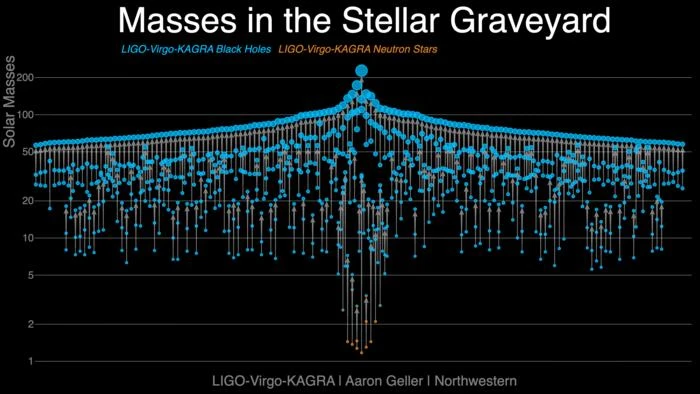
A separate team at Monash University, led by Sharan Banagiri, took a different approach. Instead of imposing a fixed number of groups, the Monash analysis used a more open-ended method that let the data determine how many subpopulations existed, and it drew on nearly 400 gravitational-wave detections from LIGO and Virgo. Its conclusion matched the larger message of the MIT study: binary black-hole mergers are not coming from a single formation channel, but from several.
Both analyses landed on the same general boundary between ordinary black holes and a heavier, stranger subset, making the split look like a real feature of the universe rather than a mathematical artifact.
Why spin is the clue that changes the story
The physics behind the result is straightforward, even if the inference is not. Black holes created when massive stars collapse should usually inherit little spin, because stellar collapse tends to shed angular momentum. Black holes built from previous mergers should retain much more of it, and in the MIT analysis those second-generation remnants could spin at about 70 percent of the maximum possible spin.
Spin is one of the most useful markers for tracing origin. In the MIT analysis, the heavier systems were consistent with fast, randomly oriented spins, which fits a merger-origin scenario. The evidence was less definitive in some cases, so the authors urged caution, but the broader pattern still points toward a population of black holes with a past life before the merger that brought them into the record.
The accepted version of the paper goes further and quantifies the population it is trying to explain. It reports a global peak in the hierarchical-merger rate at a primary mass of 15.7 solar masses, with uncertainty bounds of plus 3.2 and minus 1.1 solar masses. Hierarchical mergers may occupy a measurable part of the black-hole mass distribution.
Star clusters are part of the formation map
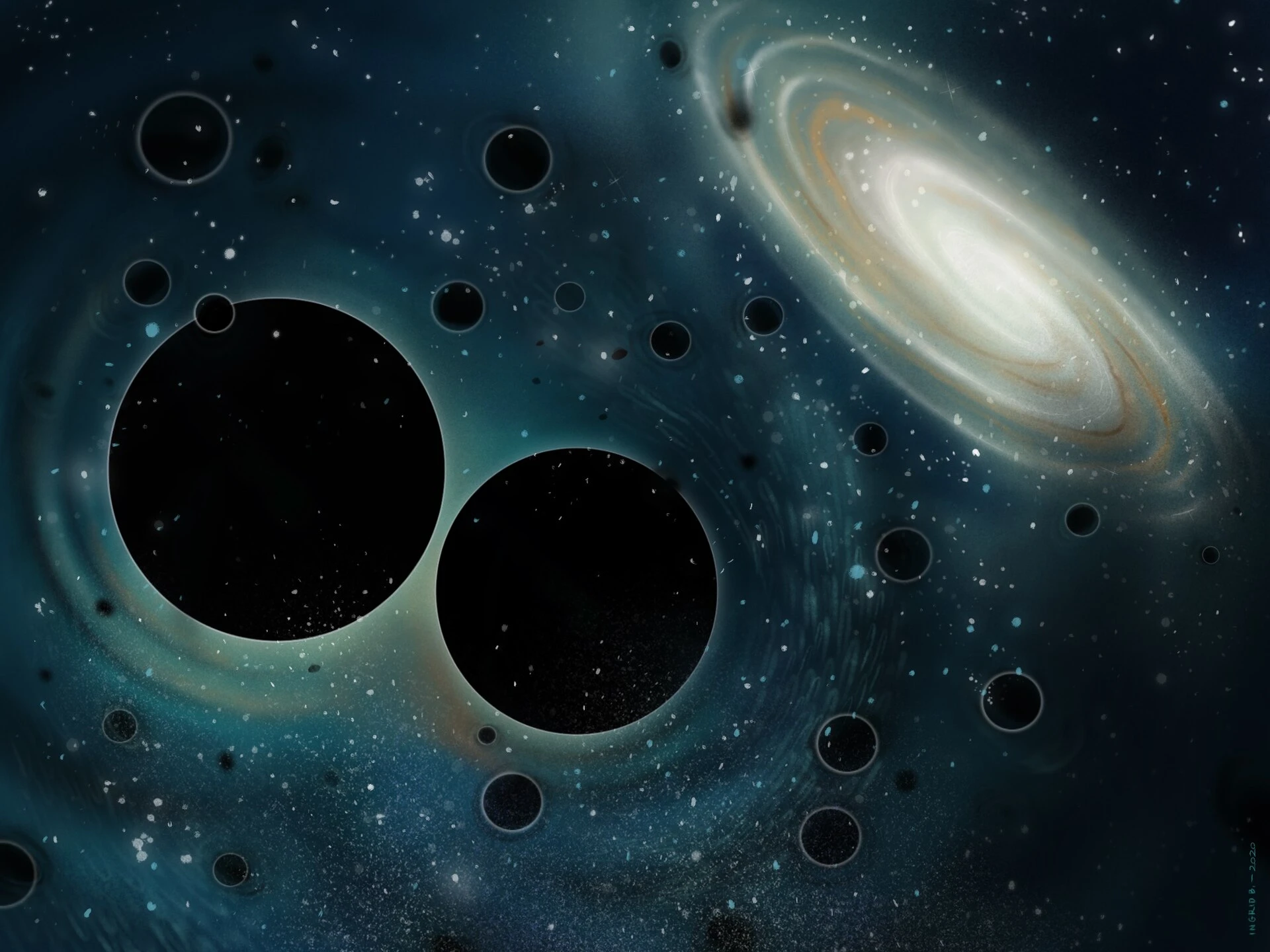
The implications reach beyond the black holes themselves. If some mergers are producing second-generation remnants, then dense stellar environments must be rearranging and recapturing black holes often enough for those remnants to collide again. That points directly to star clusters as a major setting for gravitational-wave sources, because crowded environments give black holes more chances to encounter one another and form new binaries.
The accepted PRL version finds that the hierarchical-merger population likely reflects contributions from both near-solar-metallicity and metal-poor star clusters. Metallicity shapes how massive stars lose mass before collapse, which in turn affects the mass and spin of the black holes they leave behind. The catalog may be recording multiple cluster histories in the same gravitational-wave signal stream.
What the next catalogs may reveal
This work turns a long list of detections into a map of formation channels. If black holes arise through several distinct pathways, future catalogs will not just count more mergers, they will sharpen the boundaries between first-generation systems, hierarchical mergers, and the dense-cluster environments that produce them. That should help scientists test how black holes grow, how often they are recycled through repeated collisions, and how frequently the heaviest systems owe their mass to a prior merger rather than to the death of a single star.
Sources
- [1]phys.org
- [2]ligo.org
- [3]news.mit.edu
- [4]physics.mit.edu
- [5]monash.edu
- [6]arxiv.org
- [7]journals.aps.org