Politics
Greater Idaho and Cascadia push to redraw Pacific Northwest borders
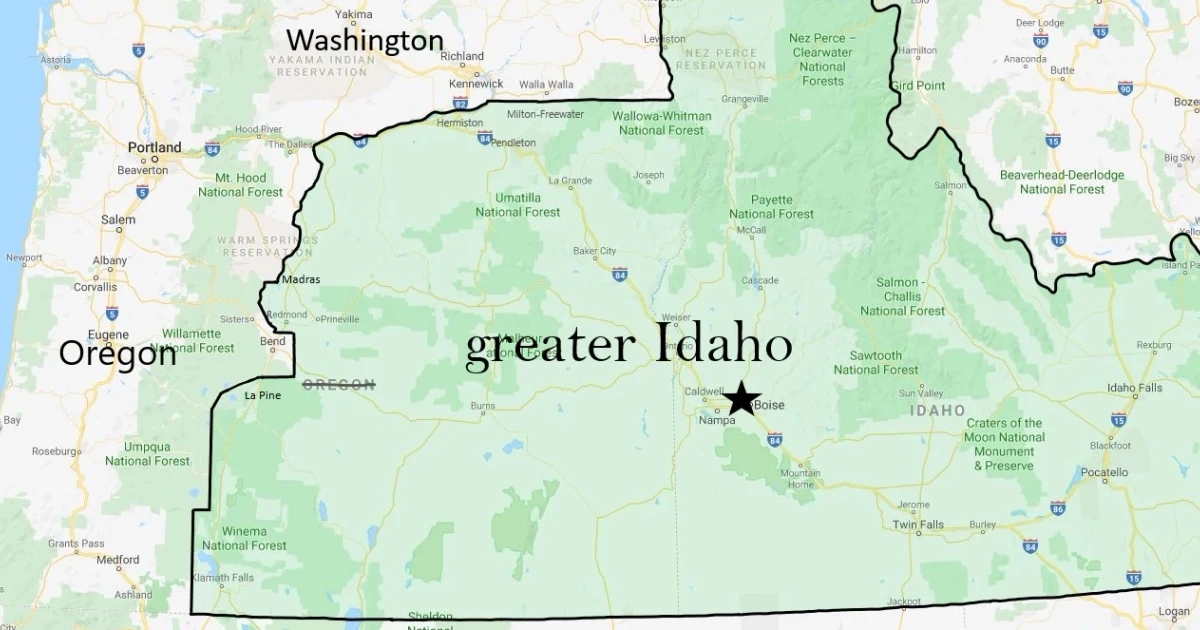
Idaho border maps and Cascadia flags are signaling the same thing: a growing belief that Oregon and Washington no longer function as a single political community. What looks like a fight over lines on a map is really a fight over representation, cultural belonging and who gets to control the institutions that govern daily life.
Greater Idaho turns county votes into a border strategy
Greater Idaho is the clearest example of this impulse. The campaign says it began putting votes to counties in 2020, and by its own count 13 counties have passed measures supporting the idea. Its goal is not a symbolic gesture but a specific redraw: shifting the Oregon-Idaho border far enough west to bring 14 full eastern Oregon counties and 3 partial ones into Idaho.
The movement’s pitch is rooted in geography and identity. Supporters argue that the Oregon-Idaho line was established 163 years ago and no longer reflects the region’s present-day cultural divide. In their telling, eastern Oregon is politically and culturally closer to Idaho than to the population centers that dominate Oregon’s state government, which is why they say counties can become part of Idaho through a negotiated process.
That argument is not just rhetorical. In 2023, the Idaho House of Representatives passed a memorial inviting the Oregon Legislature to begin border talks. The memorial did not move the border, but it gave the campaign a formal legislative foothold and showed that the idea has crossed from activist branding into statehouse procedure.
Cascadia is broader than secession
Cascadia operates on a different scale and with a wider ideology. It is not just a secession movement, but a collection of movements that have included a Cascadian federation, a single market, bioregional identity and greater autonomy for Oregon, Washington and British Columbia. In other words, Cascadia is as much about reimagining regional governance and economic life as it is about separation from existing states or countries.
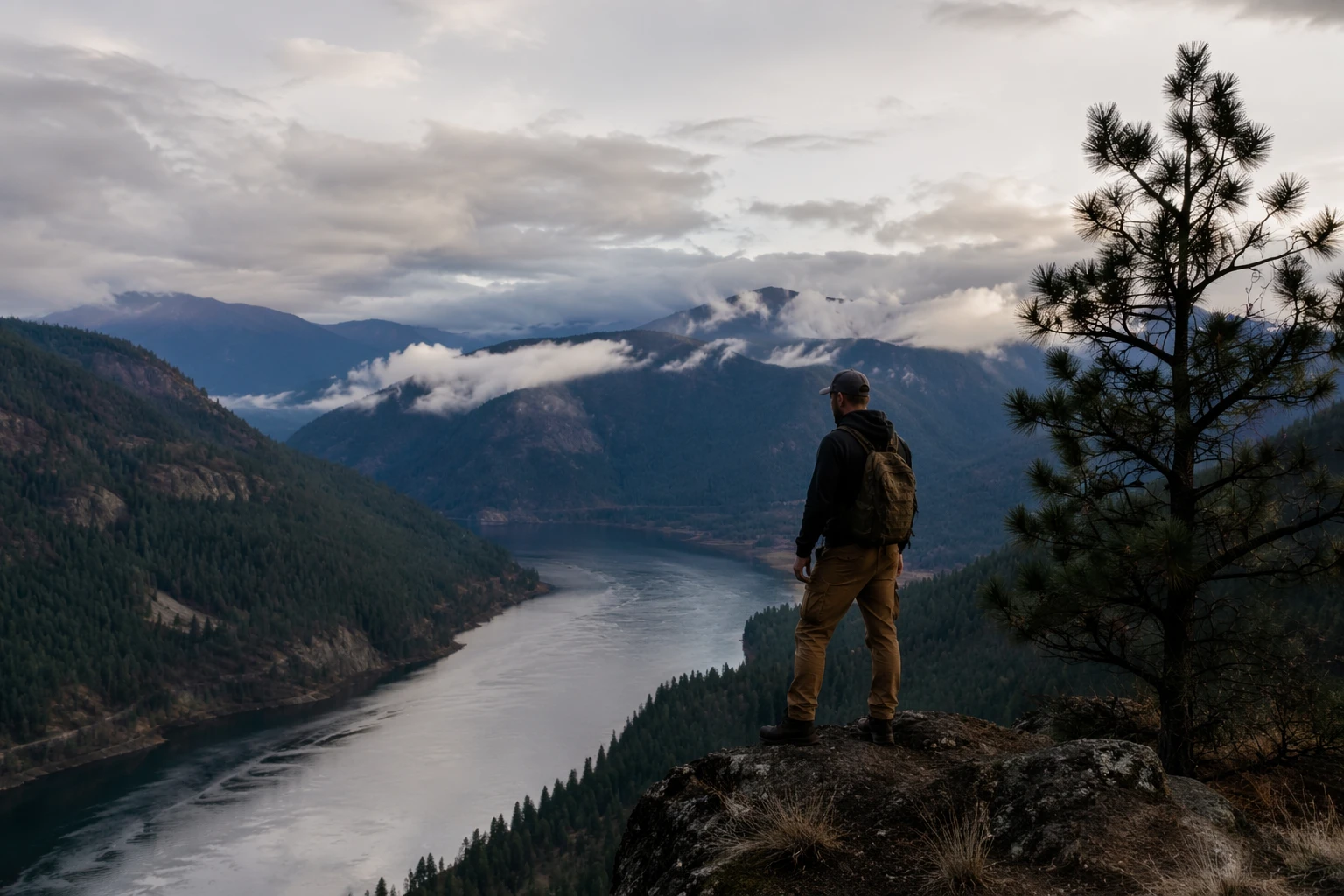
Its geographic logic is also distinctive. The Cascadia bioregion is often described through the watersheds of the Columbia, Fraser, Snake and Klamath rivers, a definition that treats ecological systems as the foundation for political identity. That framing helps explain why Cascadia has appealed to people who see the Pacific Northwest as a coherent region with shared climate, labor markets, transportation networks and cultural habits, even when its state governments do not act in concert.
Where Greater Idaho proposes to move a state line, Cascadia asks a larger question: whether political belonging should follow existing borders at all. That makes it a useful barometer of the same underlying fracture. Both movements are a reaction to the sense that state capitals are increasingly distant from the values and priorities of outlying regions.
What the law allows, and why that matters
The legal path for changing state boundaries is real, but narrow. Congressional Research Service material says state boundaries can be changed through interstate compacts between state legislatures with congressional approval. That means any serious border shift would require agreement not just from local voters or activists, but from both states involved and from Congress.
That is a high bar for a reason. State lines are deeply tied to representation, taxation, courts, education policy and the distribution of public resources. Changing them is not like redrawing a county map. It affects who votes in which elections, which laws apply, where public employees answer, and how political power is apportioned.
The deeper institutional question is whether highly polarized voters can still share the same state institutions. The current debate is a symptom of a broader American problem: even where secession is not realistically on the table, frustration with governance can produce a demand to escape the political community altogether. That makes the legal complexity important, because the harder it is to alter a boundary, the more the demand tends to express itself as protest, symbolism or a long-running campaign rather than an imminent constitutional change.
The history behind the rhetoric
Greater Idaho and Cascadia both draw strength from a larger American story in which borders have changed and disunion has not always been unthinkable. Greater Idaho explicitly argues that state lines have been relocated many times in American history through interstate compacts and congressional approval, presenting its proposal as a continuation of an established constitutional practice rather than an act of rebellion.
Secession, by contrast, carries a much darker national memory. The Confederacy was the last major U.S. secession attempt, and it formed before the Civil War. That history matters because it sets the outer boundary of the debate: state boundary adjustments can be lawful and negotiated, but secession remains tied to the country’s most destructive political rupture.
This distinction helps explain why border movements attract attention even when they are unlikely to succeed. They sit between constitutional mechanism and civilizational anxiety. One side imagines a cleaner map; the other hears a warning that democracy itself is coming apart at the seams.
Why these ideas resonate now
The appeal of Greater Idaho and Cascadia is not just ideological. It is rooted in a feeling of estrangement that has become more visible across the Pacific Northwest. Eastern Oregon conservatives who back Greater Idaho are responding to what they see as a mismatch between their values and the priorities of Oregon’s urban and metropolitan leadership. Cascadia supporters, for their part, are often responding to a similar mismatch, but from the opposite direction: a desire for a regional identity that feels more coherent than the state and national systems now in place.
That is why these movements should be read less as quirky map-making than as a barometer of national fracture. They reveal how far political identity can drift from inherited borders, and how quickly local grievances can harden into projects for constitutional change. The border may not move soon, but the pressure behind these campaigns says a great deal about the strain on American federalism itself.
Sources
- [1]nytimes.com
- [2]greateridaho.org
- [3]en.wikipedia.org
- [4]congress.gov
- [5]encyclopedia.com