Science
Green Fireball Lights Up Pacific Northwest Sky
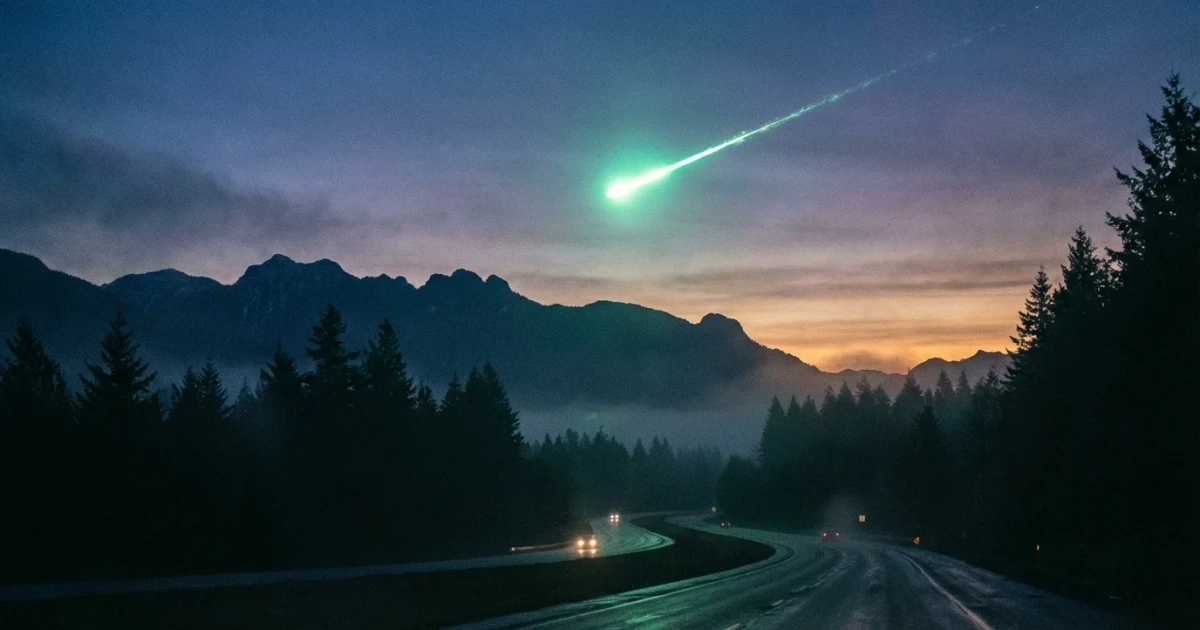
Residents across the Pacific Northwest were treated to a dazzling spectacle early Monday morning as a bright green fireball blazed across the skies near Portland, Oregon. The phenomenon, captured on dashcam video and widely shared on social media, occurred around 6:06 a.m., according to local reports.
Dashcam Footage Captures Rare Meteor Event
The vivid green streak, described as a fireball—a particularly bright meteor—was visible for several seconds as it descended towards the horizon. Dashcam video footage circulating online showed the fireball illuminating the pre-dawn sky, prompting awe and curiosity among commuters and early risers in the region.
- The event was first reported in the skies around Portland, with additional sightings likely across the broader Pacific Northwest.
- Fireballs like this are often the result of small meteoroids entering Earth’s atmosphere and burning up due to friction.
What Causes a Green Fireball?
The striking green color seen in the fireball is typically produced when meteoroids containing nickel or magnesium vaporize upon entry into the atmosphere. The bright coloration can also be influenced by atmospheric composition and the speed of the object. According to the American Meteor Society (AMS), green fireballs are not uncommon, but their vividness and visibility depend on the meteoroid’s composition and trajectory.
Fireball Sightings and Reports
Events like this are regularly documented by both amateur astronomers and official agencies. The AMS Fireball Event Reports database allows the public to submit and review sightings, with each event mapped by location and time. Official government sensors also track bolides and fireballs, and their data can be reviewed in the NASA CNEOS Fireball and Bolide database.
- Fireballs are defined as meteors brighter than Venus, and they can sometimes be visible in daylight.
- On average, several thousand fireballs occur in Earth’s atmosphere every day, but most go unseen due to their occurrence over oceans or unpopulated areas.
Frequently Asked Questions
Many curious skywatchers wonder if fireballs like this one result in meteorites reaching the ground. According to NASA’s Planetary Defense FAQ, most fireballs disintegrate at high altitudes and rarely result in fragments that reach Earth’s surface. Only the largest and most robust objects survive the journey through the atmosphere.
What’s the Difference Between a Meteor and a Fireball?
In astronomical terms, a meteor is the streak of light produced when a meteoroid enters the atmosphere, while a fireball is a particularly bright meteor. If fragments survive and reach the ground, they are called meteorites.
Looking Ahead
While the green fireball over the Pacific Northwest was a fleeting moment, events like this continue to fascinate and remind us of our place in the solar system. For those interested in tracking fireball activity, resources like the AMS Event Reports and the International Meteor Organization’s fireball data offer real-time observation and reporting tools.