World
Guadalajara Faces Cartel Violence Challenges as World Cup Nears
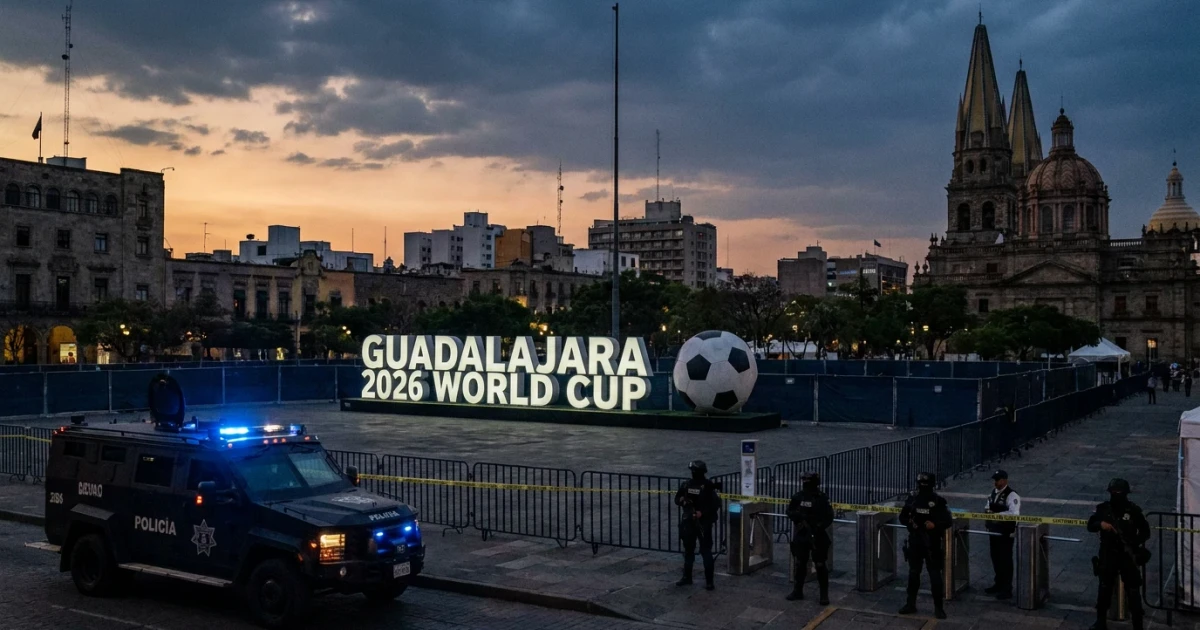
Guadalajara, one of Mexico’s most vibrant cities, is preparing to welcome thousands of international visitors for the 2026 FIFA World Cup. Yet, as excitement builds, the city is also confronting the deep-rooted legacy of cartel violence that has shaped daily life and public perception in recent years.
Balancing Global Attention and Local Realities
Guadalajara’s selection as a host city for World Cup matches marks a moment of pride and opportunity. However, as EL PAÍS English reports, the city’s history with organized crime and violence remains a central concern for both residents and officials. High-profile criminal incidents, particularly those attributed to the Jalisco New Generation Cartel (CJNG), have often put Guadalajara in global headlines, challenging efforts to showcase the city’s hospitality and cultural vibrancy.
- According to Encuesta Nacional de Victimización y Percepción sobre Seguridad Pública (ENVIPE), public perception of insecurity in Guadalajara remains higher than the national average in Mexico.
- Official crime data from the Secretaría de Seguridad y Protección Ciudadana highlights that Jalisco, the state where Guadalajara is located, continues to report elevated rates of violent crime, including homicides and kidnappings, often linked to cartel activity.
Trends in Cartel Violence
Recent years have seen fluctuations in violence across the region. Data from the Fiscalía General del Estado de Jalisco shows that while some crime indicators have stabilized, intentional homicide rates remain a persistent concern. The Mexico Peace Index reports that Jalisco’s homicide rate, although lower than some neighboring states, is still above the national average, and organized crime remains a significant driver of insecurity.
Academic analysis, such as the Justice in Mexico 2023 Organized Crime and Violence Report, notes that the CJNG’s presence in Guadalajara has led to cycles of violence, including targeted assassinations, disappearances, and clashes with law enforcement. These patterns have, over time, impacted both local communities and broader perceptions of safety.
Impact on Public Life and Perceptions
Residents of Guadalajara have adapted to the realities of living amid cartel influence, with many expressing resilience but also caution. The ENVIPE survey indicates that a significant portion of the population restricts daily activities, such as going out at night or allowing children to play in public spaces, due to security concerns. At the same time, local leaders emphasize ongoing efforts to improve safety and restore confidence ahead of the World Cup.
International scrutiny has prompted intensified security measures. State and city officials are coordinating with federal authorities to bolster police presence, deploy surveillance technology, and implement rapid-response protocols at key venues. These efforts aim not only to protect visitors during the tournament but also to demonstrate Guadalajara’s commitment to long-term peace and stability.
Looking Ahead
As the World Cup approaches, Guadalajara stands at a crossroads. The city’s ability to balance the demands of global events with the realities of local security will shape both its international reputation and the daily lives of its residents. While challenges persist, the convergence of attention, resources, and civic resolve offers an opportunity for progress.
For more detailed statistics and ongoing updates on crime and safety in Jalisco, readers can explore the UNODC Crime and Criminal Justice Statistics and World Bank homicide rate datasets.
Ultimately, the spotlight on Guadalajara during the World Cup will test the city’s resilience and the effectiveness of its efforts to overcome a legacy of violence, with the eyes of the world watching every step.