World
Guinea bans raw gold exports to boost domestic refining

Guinea moved to stop raw gold exports and force all domestic gold to be smelted, certified and processed inside the country before it leaves for foreign buyers. President Mamadi Doumbouya announced the ban on June 19 after meeting industrial, semi-industrial and artisanal gold producers, along with gold buyers and purchasing centers, in a bid to keep more value added, jobs and revenue at home.
The decision lands in one of West Africa’s most important gold economies. Guinea’s Ministry of Mines and Geology said combined gold exports from industrial and artisanal operators reached 22,142 kilograms in the first quarter of 2026, a figure that shows how much trade now hinges on the sector. The World Gold Council ranks Guinea as Africa’s sixth-largest gold producer, and the World Bank said gold exports rose 10% in 2023, helping push GDP growth to 7.1% that year.
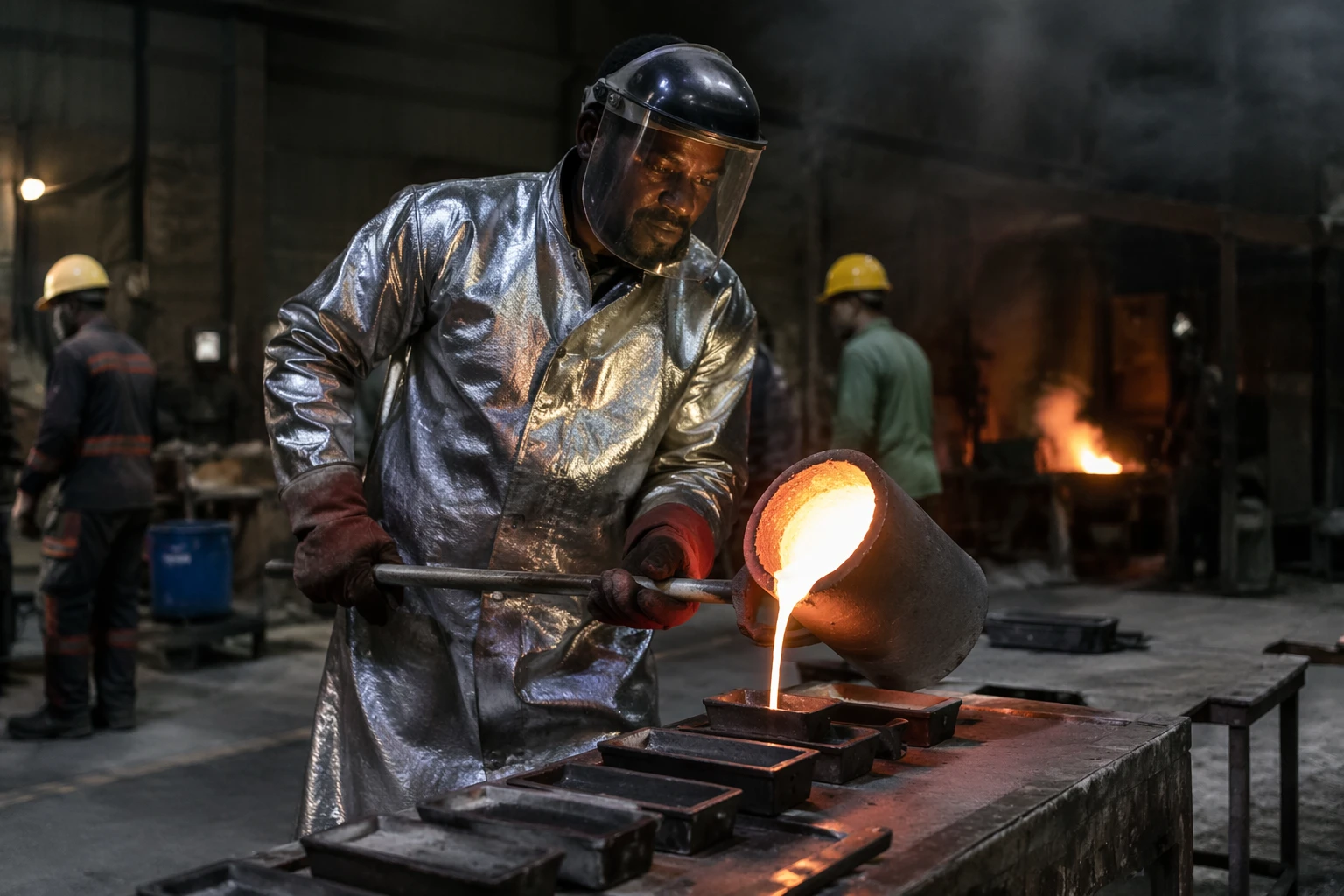
The government is trying to turn that mineral wealth into a larger industrial base. At the center of that effort is the Nimba Gold Refinery in Conakry, which officials and reports have positioned as a key domestic processing facility. Published capacity figures for the project vary sharply, with references to an initial 250 tonnes a year and a full-scale target of 730 tonnes a year, a spread that reflects both ambition and uncertainty about how quickly the country can build the machinery, logistics and oversight needed to handle its output.


That gap matters because the new rule depends on more than a decree. Guinea will have to police a trade that stretches from industrial mines to informal artisanal production, verify certification, and ensure export controls are enforced at ports and border posts. The World Bank has warned that mining can be a major source of revenue and export earnings while also carrying environmental risks and crowding out the non-mining sectors that support broader job creation. Guinea’s ban is a direct test of whether resource-sovereignty rhetoric can survive the practical demands of refining, governance and compliance. If the state cannot process gold at scale and enforce the rules consistently, the policy could become another reminder that adding value at home is easier to announce than to deliver.
Sources
- [1]bbc.com
- [2]mining.com
- [3]ecofinagency.com
- [4]worldbank.org
- [5]presidence.gov.gn
- [6]reuters.com