Politics
Haines to lead Carnegie after declassifying Russia buildup before invasion

Avril Haines will become the next president of the Carnegie Endowment for International Peace on September 28, 2026, taking over from Mariano-Florentino Cuéllar as the think tank’s eleventh leader. Carnegie said Cuéllar will step down in July 2026 after nearly five years in office, a period that saw the institution broaden its work on climate and global order, artificial intelligence, democracy, and India and South Asia, while also opening the Carnegie Russia Eurasia Center in Berlin after the closure of the Carnegie Moscow Center following Russia’s invasion of Ukraine.
Haines arrives with a résumé built at the top of the national-security system. She served as U.S. director of national intelligence from 2021 to 2025, becoming the first woman to hold that post, after earlier serving as principal deputy national security adviser in the Obama White House and deputy director of the CIA. Her move to Carnegie extends a familiar Washington pattern, one in which veterans of intelligence and security agencies help shape the public debate on foreign policy from inside major policy institutions.
Her selection also draws attention to the role Haines played before Russia’s full-scale assault on Ukraine. In the months before the February 24, 2022 invasion, she helped devise a strategy of declassifying evidence of Russia’s military buildup in an effort to persuade skeptical European allies that Vladimir Putin was preparing to attack. Haines later described that approach as “strategic unclassification,” a bid to use intelligence disclosure as a geopolitical tool at a moment when allied confidence mattered as much as troop movements.
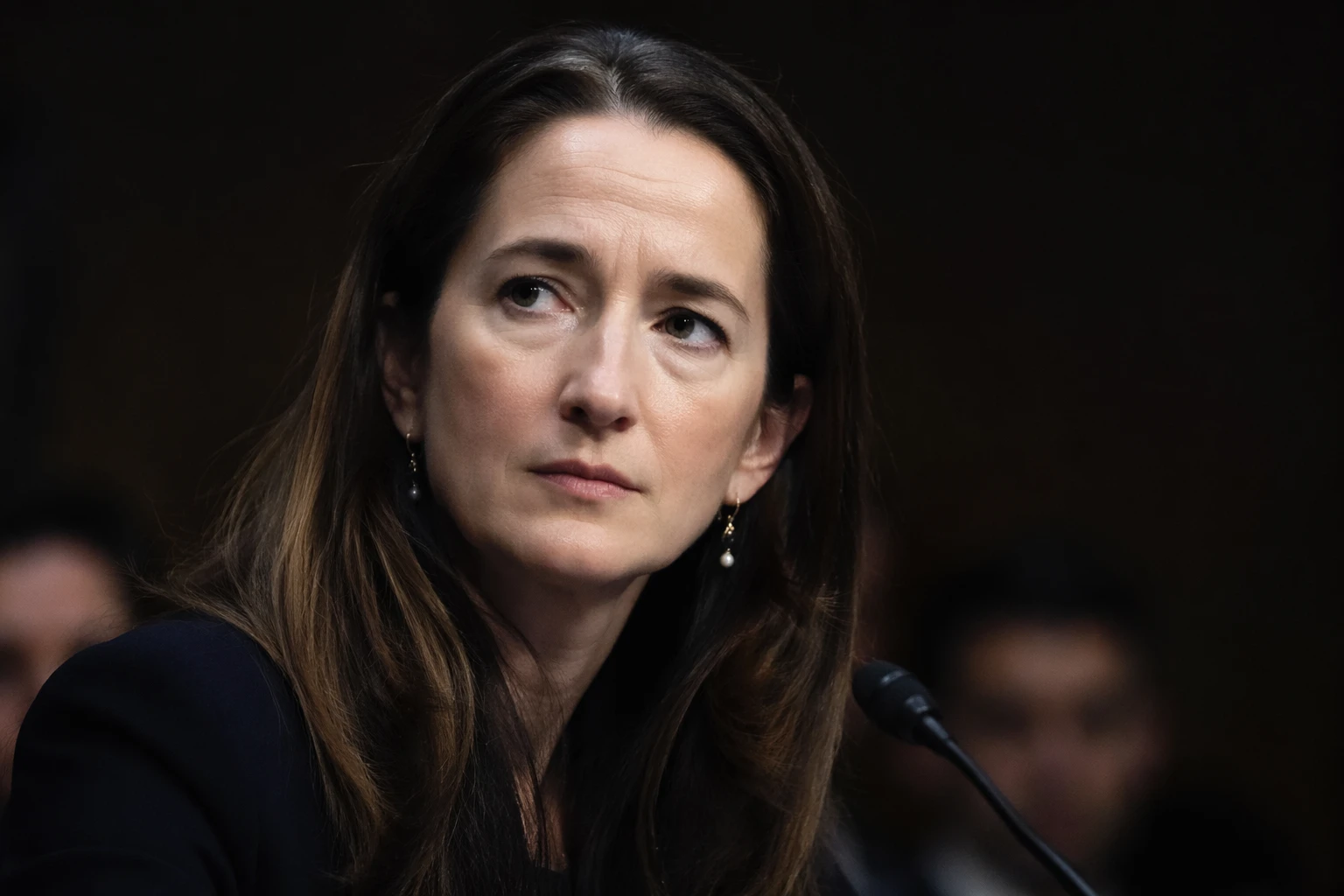
Jane Hartley, chair of Carnegie’s board of trustees, said Haines is the right leader for a period defined by rapid technological change, intensifying conflicts, and institutions struggling to respond. The choice reflects Carnegie’s own evolution from a traditional foreign-policy think tank into a forum where the wars in Ukraine, the rise of artificial intelligence, and the shape of democracy are now treated as interconnected strategic questions.
Haines said she was honored to lead Carnegie at a consequential moment, arguing that the world faces challenges governments cannot solve alone and that the right ideas can help drive peace. She has spent the past year as a visiting fellow at All Souls College, Oxford, and as a Carnegie distinguished fellow at Columbia University’s Institute of Global Politics. Her arrival puts another seasoned national-security official at the center of a policy institution that increasingly sits where intelligence, diplomacy, and public argument now meet.