Politics
Haley Stevens faces doubts over electability in Michigan Senate race
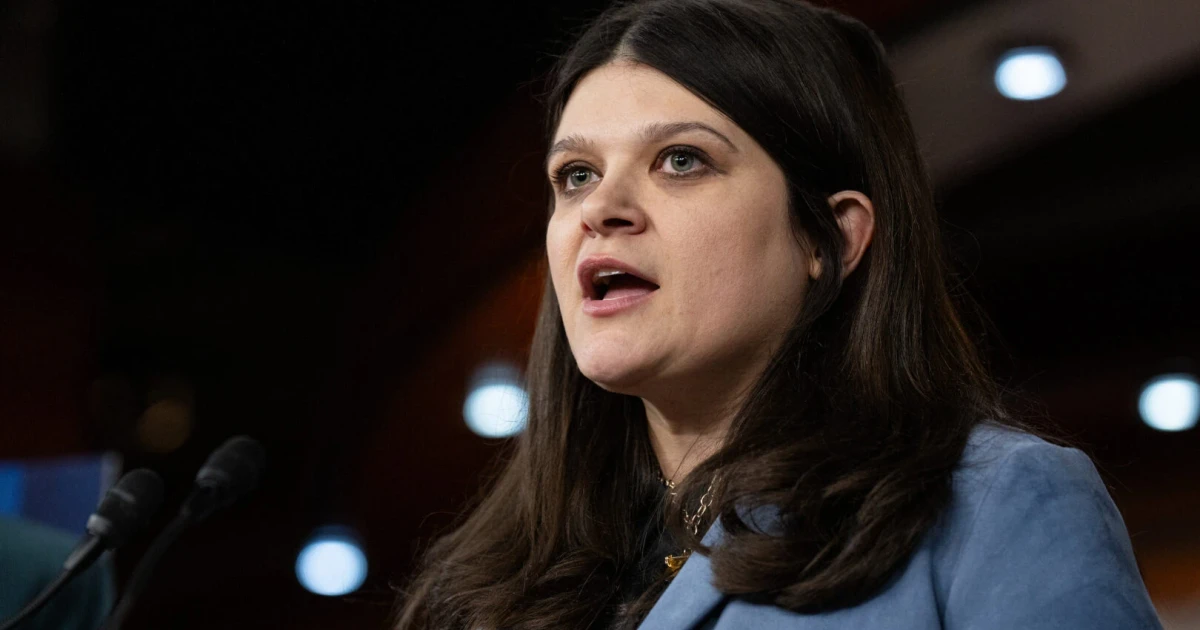
Haley Stevens announced her Senate candidacy on April 22, 2025, making herself the candidate of pragmatism in Michigan’s open Senate race. But the argument that the most moderate Democrat is automatically the safest one is getting harder to defend. With the primary set for August 4, 2026 and the general election on November 3, 2026, the contest is shaping up as a test of whether donor-friendly reassurance can outmuscle real primary voter energy in a state where every coalition matters.
A race shaped by an open seat and a swing-state map
The seat opened after Gary Peters announced on January 28, 2025, that he would not seek reelection, creating one of the most closely watched Senate contests of 2026. Republicans have not won a Michigan U.S. Senate election since 1994, but nobody in either party is treating that history as a guarantee in a state that has become deeply competitive and can still swing on turnout and suburban margins.
The likely Republican standard-bearer is Mike Rogers, who narrowly lost Michigan’s other Senate race in 2024 and is trying again, giving Democrats a familiar opponent with statewide name recognition. Michigan is also one of the chamber’s key battlegrounds, so the fight has drawn national attention well beyond Lansing or Washington.
Why Stevens entered as the moderate front-runner
After representing Michigan’s 11th Congressional District since 2019, Stevens has cast herself as the candidate who can speak to manufacturing voters, union households, and suburban moderates, leaning on her work tied to the auto rescue task force and on a message aimed at the “Trump-Musk chaos agenda.”
Her campaign argument is simple: she is the Democrat most likely to hold the seat. That claim is reinforced by her previous electoral record. Stevens won her House seat in the 2018 blue wave and later defeated fellow Democrat Andy Levin with nearly 60% of the vote after redistricting forced the two incumbents into the same district.
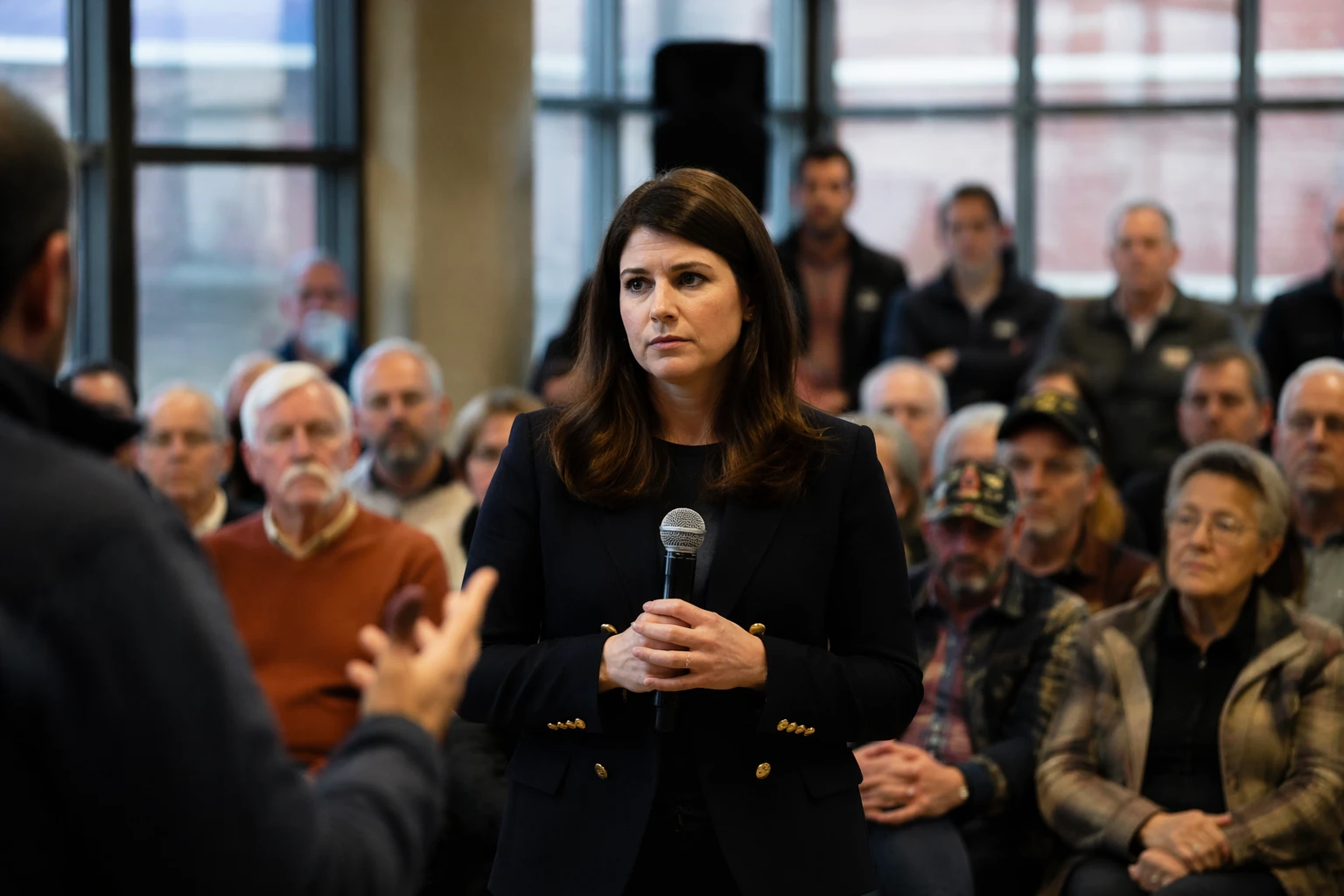
But Michigan is not a House district writ large. A statewide primary rewards a different skill set: enthusiasm, local network density, and the ability to hold together the party’s left flank while still appealing to persuadable general-election voters.
The turnout problem moderates cannot ignore
Stevens is running against state Sen. Mallory McMorrow and former Wayne County public health director Abdul El-Sayed, both positioned to her left. That matters because a candidate can look strongest in a donor memo and still struggle to generate the kind of primary excitement that powers turnout operations in Oakland County, Wayne County, Detroit, Ann Arbor, and the rest of the state’s Democratic base.
The central question is not whether moderation can win in November. It is whether a moderate can actually survive the August test while a more energized electorate is choosing the nominee. Some Democratic officials and strategists have grown uneasy that Stevens’s campaign execution has not matched the confidence behind it, especially when her rivals are speaking more directly to activist energy and to voters who want a sharper break with the party’s establishment habits.
A candidate who depends on broad appeal but inspires lukewarm loyalty can wind up with strong fundraisers and weak field intensity, especially in a three-way race where the winner may emerge from a motivated plurality rather than a consensus majority.
Polling and fundraising have complicated the electability argument
The first hard stress test came in January 2026, when a Detroit News-WDIV poll found Stevens statistically tied with Rogers in a hypothetical general-election matchup. That kind of result is what her backers point to when they say she is the party’s strongest November bet. It also does not settle the primary, where different voters reward different messages.
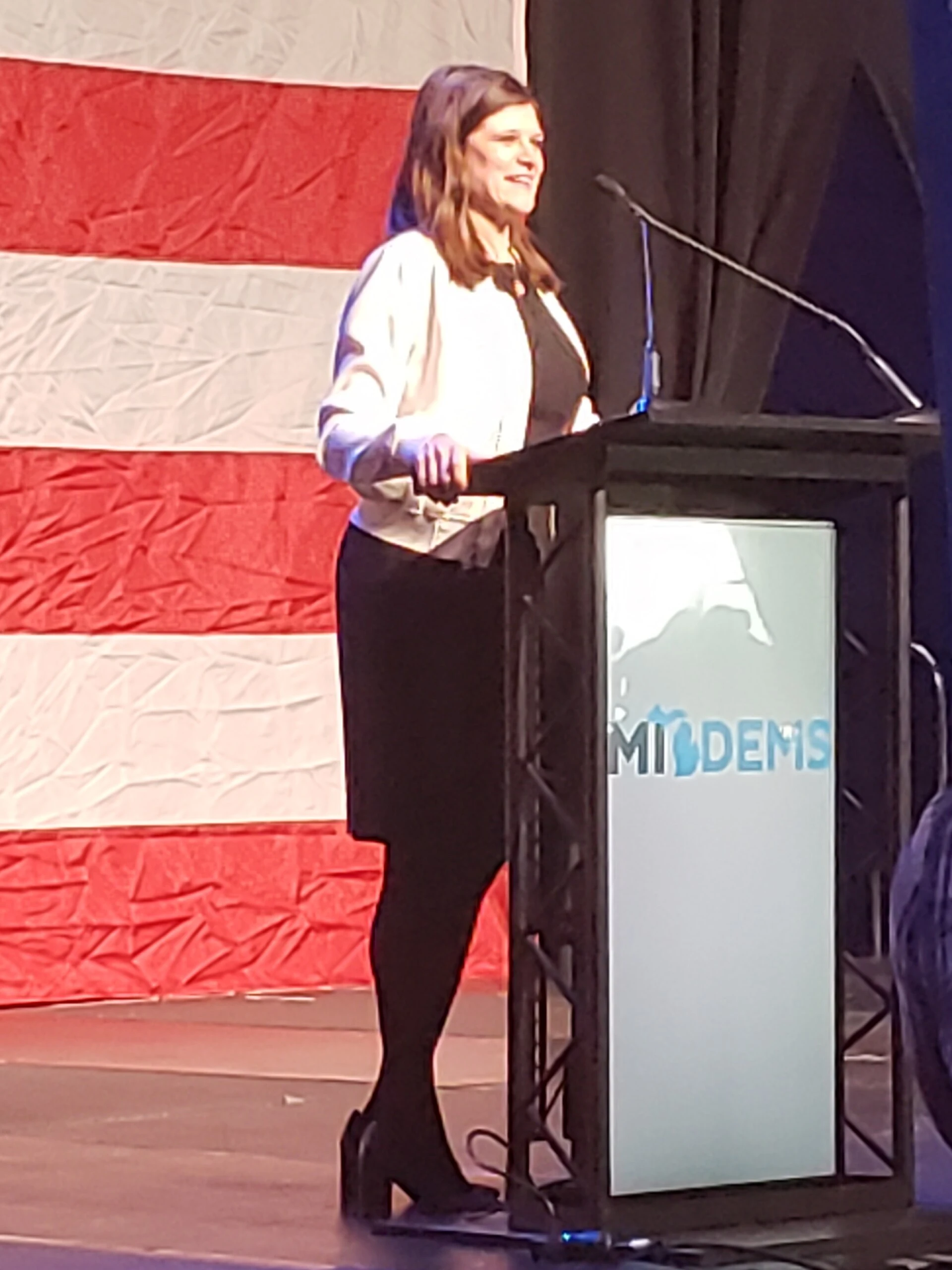
By May 2026, some polls showed McMorrow ahead and El-Sayed often leading the primary field, a sign that the race was no longer operating on Stevens’ original assumptions. Democrats in Michigan and Washington were growing more critical of her campaign, citing public missteps, underwhelming fundraising, and a sense that the two more liberal candidates were running more dynamic operations.
The fundraising numbers give that concern context. Stevens’ campaign reported $8,870,471.26 in total receipts from April 22, 2025 through March 31, 2026.
Endorsements reveal the party’s split screen
The endorsement battle has made the strategic divide even clearer. Senate Democratic Leader Chuck Schumer has publicly backed Stevens as having the “best chance” to win Michigan’s Senate race, and former Sen. Debbie Stabenow endorsed Stevens in May 2026, saying she is “Michigan through and through” and best able to defeat Rogers. Colleen Ochoa Peters, the wife of retiring Sen. Gary Peters, has also endorsed Stevens, reinforcing her ties to the party’s current Senate infrastructure.
McMorrow’s team has answered with a sharper argument about generational change and political style, saying the state needs new leaders, not the kind of campaign that “may have won in Michigan in decades past.”
The Original Eastside Slate has also backed Stevens, adding another layer of local organizational support.
Sources
- [1]nytimes.com
- [2]notus.org
- [3]bridgemi.com
- [4]michiganchronicle.com
- [5]fec.gov
- [6]ballotpedia.org