Technology
Hany Farid races to prove what's real in the age of AI
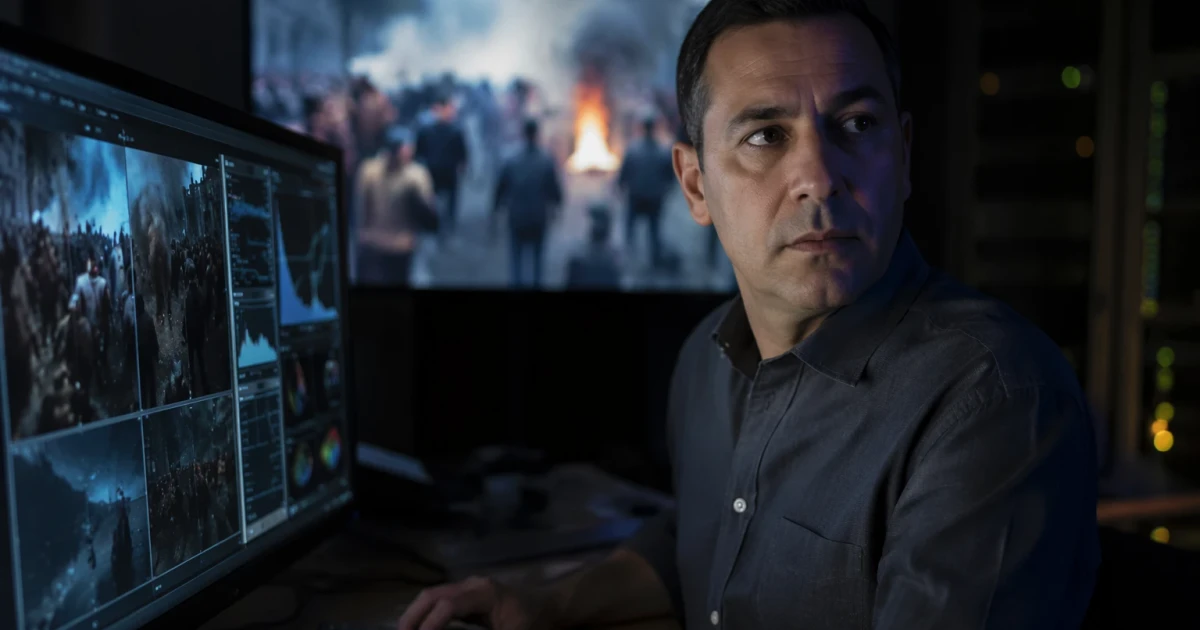
Hany Farid is running out of visual shortcuts. The UC Berkeley professor, who has spent more than 20 years in digital forensics, now argues that generative AI and real-time deepfakes are making audio, video, and images too easy to counterfeit for instinct alone to handle.
A career built on proving images can lie
Farid’s focus on authenticity goes back to the late 1990s, when he read the Federal Rules of Evidence and noticed that courts still treated digital images much like film negatives. That early insight helped shape a career that now spans both academia and industry: he holds joint appointments in electrical engineering and computer sciences and in the School of Information at UC Berkeley, and he is also co-founder and chief science officer at GetReal Security.
GetReal Security, launched in 2024, is built around combating malicious synthetic content, deepfake detection, and AI-enabled fraud. Farid’s work sits at the center of an arms race that Berkeley has described as moving from editing software to artificial intelligence, with each new generation of synthetic media forcing investigators to replace intuition with more technical verification.
Why visual evidence is no longer enough
Farid’s recent public remarks make one message clear: the old idea that people can spot a fake by eye is collapsing. In October 2025, he warned that a once-popular test, covering part of a face to see whether a face-swap breaks, no longer reliably works because newer deepfake systems are occlusion-aware. They can track faces in 3D and infer what is hidden, which means simple visual tricks can fail precisely when users think they are catching a fake.
That matters because the threat is no longer confined to clumsy misinformation. Farid has said the problem now includes broad, fast-moving manipulation that erodes shared reality itself, leaving people unsure what is real online and what is engineered to look real. In his 2026 remarks, he framed the crisis as one of trust, asking where people can turn when audio, video, and images can no longer be assumed authentic.
The harms are already visible
Farid points to real-world incidents to show that this is not a future problem. He has cited the market turmoil caused by a viral fake image of a Pentagon explosion, deepfake disruptions in Slovakia’s election, and a CFO-deepfake that led to a $25 million wire transfer. Each example shows a different pressure point: markets, politics, and corporate finance.
Together, those cases reveal how synthetic media now travels beyond internet pranks and into systems that depend on fast decisions. A fake image can move markets before a newsroom verifies it. A convincing election deepfake can distort public debate before fact-checkers respond. A cloned executive voice can trigger a transfer before finance staff realize they are being manipulated.
What verification methods still work
Farid’s warning is not that truth has become impossible to recover. It is that verification has to become deliberate, layered, and technical. The methods that still help are the ones that examine provenance, context, and consistency rather than relying on a single visual tell.
Useful checks include:
- Confirming the original source of a file, not just where it was reposted.
- Comparing the claimed event with independent records, such as timestamps, location data, or corroborating reports.
- Looking for metadata and chain-of-custody clues when files are available in their original form.
- Using forensic analysis to test whether audio, lighting, shadows, motion, or lip movement match one another over time.
- Cross-checking against other forms of evidence, including witness accounts, documents, and live logs.
These methods are stronger than guessing, but they are not magic. Metadata can be stripped, reposts can obscure origin, and forensic analysis takes expertise and time that many institutions do not have in the middle of a breaking story or a fast-moving incident.
Where verification fails, and why that matters
The old failure mode was obvious fakery. The new one is plausible fiction that arrives faster than verification. Farid’s critique is that humans are still tempted to trust what looks polished, urgent, or emotionally persuasive, even when the source is unstable or the file has been altered.
That creates a public-health style problem for information systems: once trust becomes brittle, people withdraw from shared evidence altogether. Communities that are already vulnerable to misinformation, including non-English-speaking audiences, immigrant families, and people who rely on social platforms for news, can be hit hardest when false media is designed to exploit confusion before correction catches up.
How courts, campaigns, newsrooms, and citizens should adapt
Farid’s work implies that every institution handling visual evidence needs a higher bar. Courts must treat digital media as contested material that requires authentication, not assumption. Campaigns need rapid-response teams that can verify and debunk manipulated content before it hardens into political fact. Newsrooms need stricter intake protocols so that an image or clip is not published merely because it is viral.
Ordinary citizens need a different habit, too. The right response to an astonishing clip is not to ask whether it looks real, but whether it can be independently verified. In practice, that means slowing down long enough to look for the original upload, checking whether respected outlets and primary witnesses match the claim, and treating unsourced, emotionally charged media as unconfirmed until proved otherwise.
The broader lesson for a synthetic media era
Farid’s career now reads like a warning label for the internet age. A scholar who began by studying image manipulation has become one of the clearest voices explaining that synthetic media is no longer a niche technical problem. It is a social one, a legal one, and a public trust problem that reaches from courtrooms to campaign offices to family group chats.
The basic rule has changed: seeing is no longer believing. The institutions that adapt fastest will be the ones that stop trusting the image first and start trusting the evidence around it.