Technology
Harvard Study Finds AI Surpasses Doctors in ER Trials
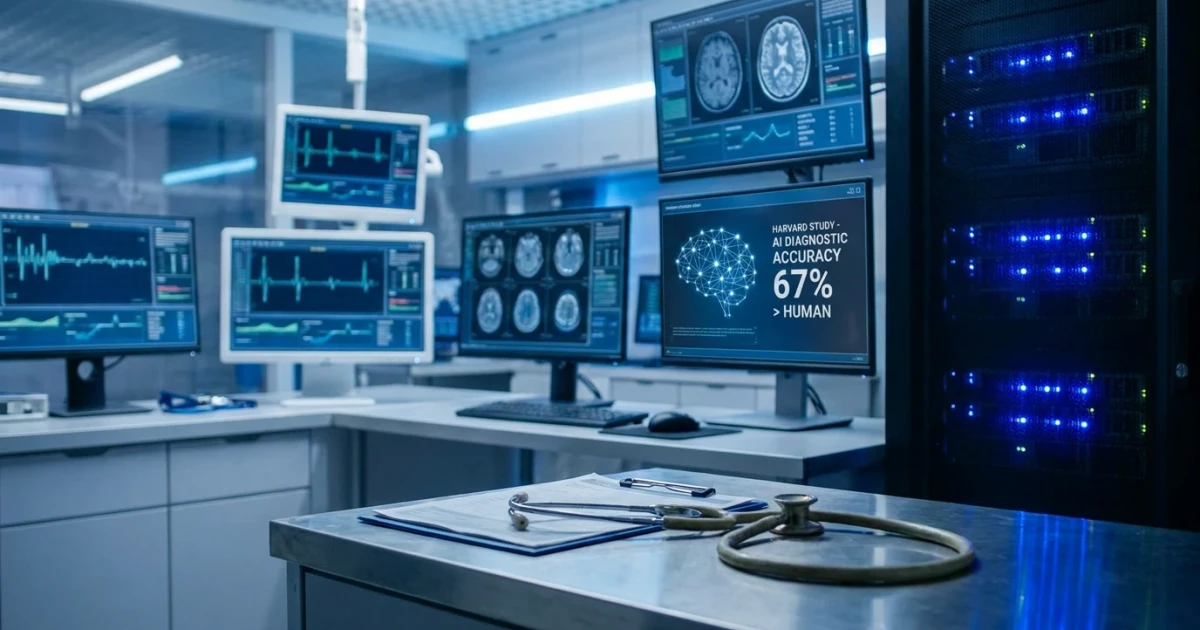
Artificial intelligence diagnostic tools have surpassed physicians in emergency room trials, achieving a 67% accuracy rate according to a new Harvard study, The Indian Express reports. The findings fuel ongoing debate about the future role of AI in clinical decision-making and patient safety.
AI Diagnostic Tools Tested in Emergency Settings
The Harvard study, conducted in multiple emergency departments, evaluated the diagnostic accuracy of AI systems compared to human doctors under real-world conditions. Researchers found that AI tools provided correct diagnoses in 67% of cases, outpacing their physician counterparts in the trial.
While the study's specific methodology and sample size details were not provided in the initial report, the results align with a growing body of research suggesting that AI can match or even surpass human accuracy in certain clinical tasks. For those interested in the underlying research methods and statistical analysis, the full NEJM study offers a comprehensive look at the data and supplementary tables.
How AI Performance Compares to Physicians
- 67% accuracy: The AI system's correct diagnosis rate in the Harvard-led trials.
- Outperformed doctors: According to The Indian Express, AI surpassed physician accuracy though the margin was not specified.
- The results are consistent with findings from other peer-reviewed studies, including a recent Nature Digital Medicine paper showing AI outperforming doctors in certain emergency diagnostic tasks.
The promise of AI lies in its ability to rapidly process vast amounts of data, recognize subtle patterns, and provide decision support in high-pressure environments. However, experts caution that accuracy rates, while impressive, must be interpreted alongside patient outcomes, workflow integration, and the risk of algorithmic bias.
Implications for Patient Care and Healthcare Systems
As emergency departments face increasing patient loads and staffing shortages, AI-assisted diagnosis could help improve efficiency and reduce errors. According to CDC data, U.S. emergency departments manage over 130 million visits annually, highlighting the potential impact of even modest improvements in diagnostic accuracy.
The Harvard study adds momentum to ongoing efforts by regulatory agencies, including the FDA, to evaluate and approve AI-powered medical devices for clinical use. Hospitals and health systems are increasingly piloting such tools, aiming to supplement — but not replace — physician judgment.
Next Steps and Ongoing Research
Further research is needed to validate AI performance across diverse patient populations and medical conditions. Detailed results from the Harvard trial are expected to inform future guidelines for the safe deployment of these technologies in emergency settings. The official clinical trial record provides additional background on study protocols and outcome measures for AI-assisted ER diagnosis tools.
Healthcare leaders are now weighing how best to integrate AI into emergency workflows, balancing the benefits of increased accuracy with the need for transparency, oversight, and physician involvement. As AI tools continue to evolve, ongoing monitoring and rigorous evaluation will be critical to ensuring their safe and effective use in patient care.
Analysis
The latest Harvard findings underscore the rapid progress of AI in healthcare, but also highlight the complexity of clinical decision-making. While AI may enhance diagnostic accuracy in some scenarios, real-world adoption will require careful alignment with existing standards, robust validation, and collaboration between clinicians and technologists. As the technology matures, its impact on patient outcomes and healthcare delivery will remain closely watched by the medical community.