Business
Heirs’ property threatens family wealth and land ownership across America

Researchers at Auburn University and Mississippi State University conservatively estimated at least 496,000 heirs’ property parcels across Alabama, Florida, Georgia, Kentucky, Louisiana, Mississippi, North Carolina, South Carolina, Tennessee, Virginia, and West Virginia. When land passes to multiple generations without the formal legal steps needed to prove ownership, families may hold an asset they cannot easily borrow against, repair, insure, sell, or defend in court.
What heirs’ property means
Heirs’ property generally refers to family-owned land inherited by multiple generations without the probate or estate planning needed to establish clear title. The USDA Forest Service used that definition in its September 2019 report, and a 2022 Iowa State University legal explainer stated that without proper planning, families can lose the ability to use the land as an economic asset.
Title is the gateway to nearly every financial function a property is supposed to serve. If ownership is fragmented across dozens of relatives, some of whom may be unknown or deceased, a parcel can sit in limbo even while taxes, maintenance, and emotional attachment continue to accumulate.
Why unclear title drains wealth
The practical damage shows up in everyday decisions. Families with heirs’ property can struggle to get a mortgage, a farm loan, or a home-repair loan because lenders want a borrower with a clean, enforceable claim. Insurance can be difficult to secure, improvements can be hard to finance, and a sale can stall if one co-owner refuses or cannot be found.
The Center for Community Progress has identified tangled title as a driver of vacancy, abandonment, and deterioration. That creates a downward financial spiral: once a property decays, its market value falls, the cost of fixing title problems looks larger, and the chance that the land will stay in the family shrinks further.
The problem is not limited to rural land. A December 2023 Housing Assistance Council and Fannie Mae report focused specifically on estimating residential heirs’ property in the United States. In cities and towns, the same title problem can block home equity, delay repairs, and complicate inheritance for the next generation.
Who is most exposed
The burden falls hardest on Black families, especially in the South and parts of Appalachia. Black farmers lost the majority of their land, and a June 2023 Union of Concerned Scientists policy brief tied heirs’ property directly to that land and wealth loss.
A related USDA-linked research result connected heirs’ property and persistent poverty among African Americans in the Southeastern United States. Title instability can reduce wealth in one generation and reinforce lower access to credit, weaker housing security, and fewer resources to resolve the problem the next time property passes down.
The Urban Institute identified heirs’ property as a major barrier to equitable homeownership and reported that fewer than one-quarter of Black households have a will, compared with more than half of white households. Without wills and clear estate planning, property can splinter among heirs again and again, multiplying the title mess with each passing generation.
The historical roots run deep
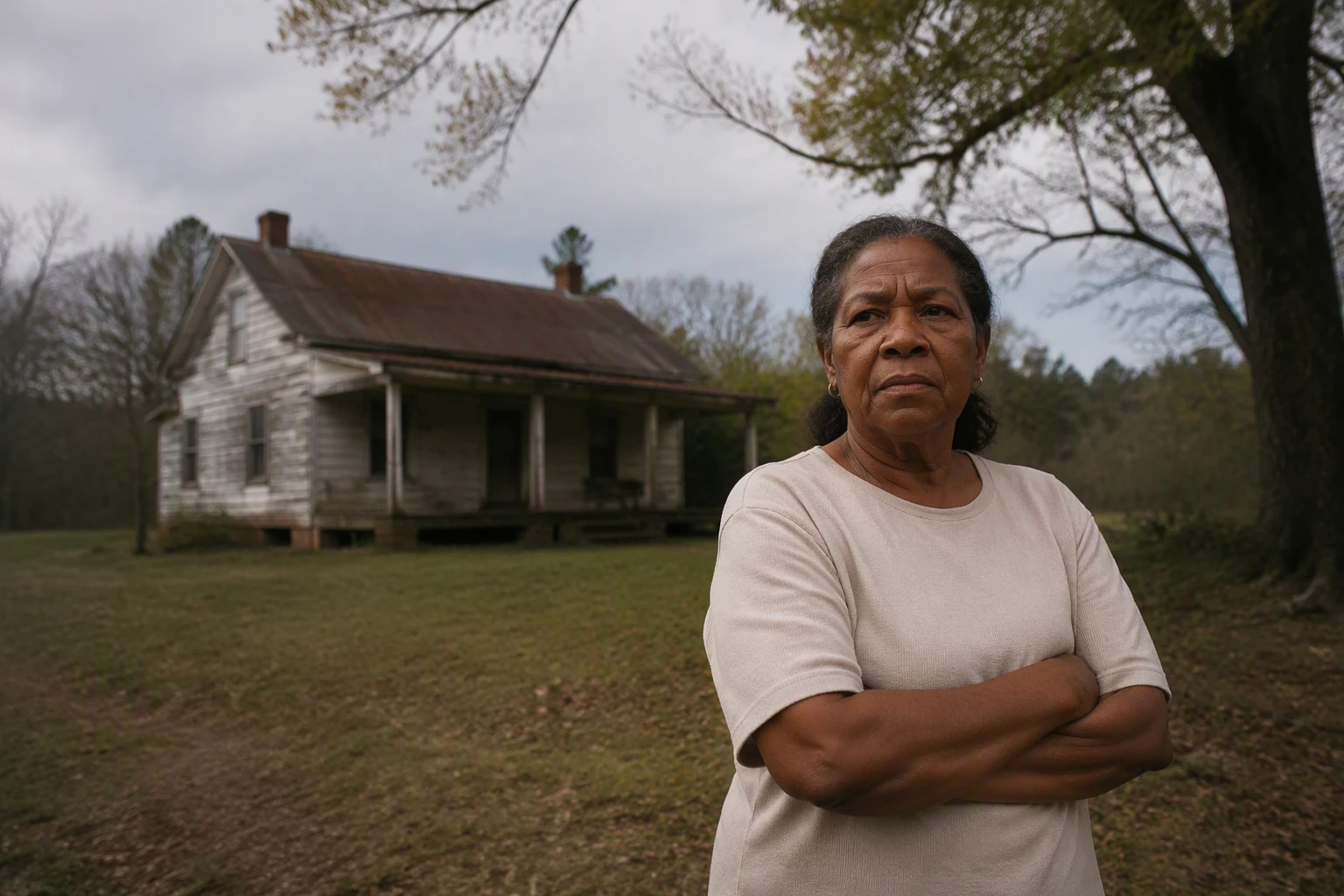
Heirs’ property sits inside a longer story of Black land loss in the United States, especially after slavery and through the 20th century. Farm Aid identifies heirs’ property as one of the main causes of Black land loss, and ProPublica documented Black families losing land that had been bought one generation after slavery because ownership was never formalized cleanly.
Land has been one of the most durable stores of intergenerational wealth in America, and when a family loses land or cannot use it as collateral, the lost value compounds across generations. The Union of Concerned Scientists brief identified a major research problem: data gaps make the total prevalence hard to estimate, which means the visible losses likely understate the full scale of the damage.
What stronger title can unlock
Clear title changes a parcel from fragile inheritance into usable capital. Heirs’ property landowners may become eligible for USDA assistance once they have clear title and a farm number under USDA’s Farmers.gov materials. That can open the door to farm loans and other support that help preserve land rather than force a sale.
On September 5, 2024, USDA published a blog post on helping heirs’ property landowners secure title clarity and protect future family land. Once ownership is documented, families can make repairs, finance operations, and plan for transfer instead of leaving the property exposed to fragmentation.
Heirs’ property is also being treated as a land-use and community-development problem, not just a probate issue. JPMorganChase and the Land Trust Alliance have highlighted heirs’ property in that broader context. In a January 29, 2024 press release, the National Consumer Law Center said its report examined legal strategies to slow home loss in communities of color and help close the racial wealth gap.
The clearest path forward
Families that want to avoid heirs’ property problems need to act before the next transfer. The sequence is straightforward:
- Create a will or estate plan that identifies who inherits the property.
- Resolve title issues early, before ownership is split among many heirs.
- Secure the legal documents needed to show a clear ownership chain.
- Once title is clean, pursue the farm number or other documentation needed to access USDA support.
Sources
- [1]nytimes.com
- [2]srs.fs.usda.gov
- [3]calt.iastate.edu
- [4]fanniemae.com
- [5]ucs.org
- [6]srdc.msstate.edu
- [7]housingmatters.urban.org
- [8]urban.org
- [9]communityprogress.org
- [10]jpmorganchase.com
- [11]farmers.gov
- [12]usda.gov