US News
Historic Philadelphia brings America’s 250-year story to life with new storytellers
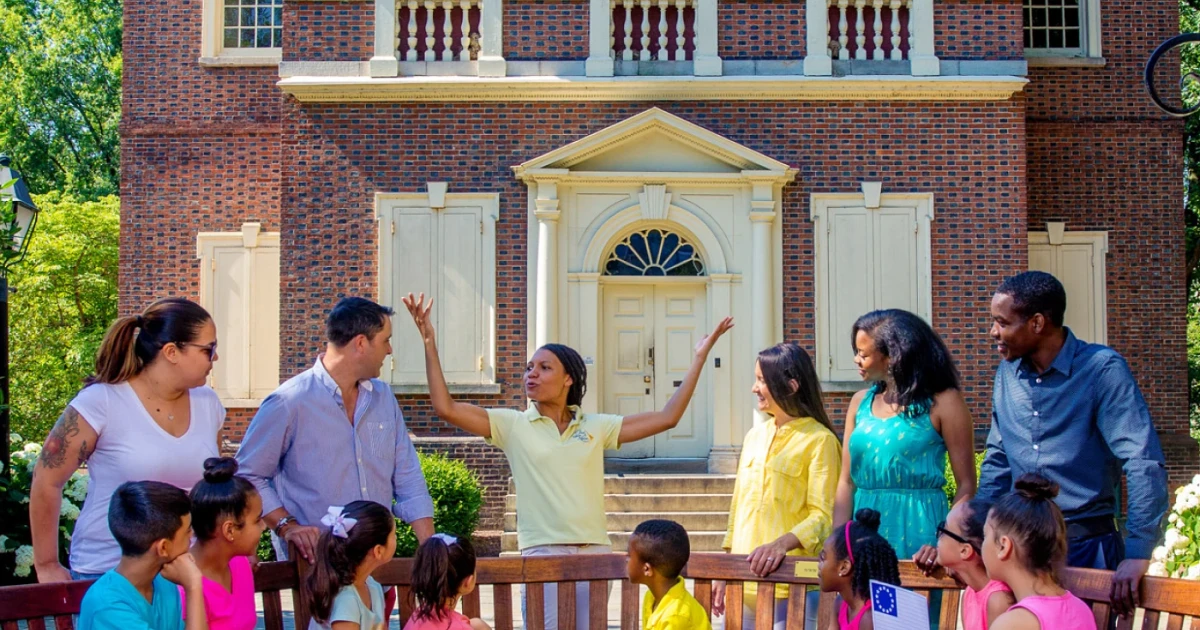
Historic Philadelphia is turning Old City into more than a backdrop for sightseeing. Through costumed reenactors, plain-clothed storytellers, and a growing set of historic sites, the nonprofit is using Philadelphia’s streets to stage the nation’s 250-year story in ways that move beyond familiar founding legends.
A bigger cast in the historic district
The core of the effort is Once Upon A Nation, a program that has operated in Philadelphia’s historic district for 21 years and places storytellers around the city’s most visited revolutionary-era landmarks. Historic Philadelphia says it is using iconic places, compelling characters, and living history experiences to make the city’s Historic District feel like an active performance space, not just a preservation zone.
In 2026, the organization is adding 10 new History Makers and educational storytellers to that cast. The expansion matters because it broadens the range of people represented in public history, moving the focus beyond the usual headline names to figures whose lives complicate the standard founding narrative.
Who gets centered when the city tells the story
The new cast includes Bishop Richard Allen, the Black preacher who founded the African Methodist Episcopal Church, and Hannah Till, a paid servant and cook for George Washington during the Revolutionary War. Their presence changes the tone of the performance on the street: instead of presenting the founding era as a story told only through statesmen and flag-makers, the program brings labor, faith, Black institution-building, and service work into view.
That shift is central to how America 250 is being framed in Philadelphia. The city’s live-history performances still lean on recognizable figures such as Benjamin Franklin and Betsy Ross, but the addition of Allen and Till signals a more deliberate effort to diversify the stories told about the nation’s beginnings. In practice, that means the public memory of the Revolution is being widened in real time, one encounter at a time.
How the performances work
Historic Philadelphia’s public-facing history comes in two forms: costumed History Makers in colonial dress and storytellers in contemporary green shirts and khakis. The contrast is intentional. One style recreates the past in period clothing; the other presents the interpreter as a present-day guide, making the storytelling itself part of the experience.
The pipeline for those performers runs through the Benstitute, a weekslong immersive training program where actors learn how to engage visitors, stay in character, and do street theater. Johanna Dunphy, Historic Philadelphia’s artistic director, has said the goal is to make even teenagers and parents stop scrolling and believe in the imaginary world being created. That emphasis on attention, immersion, and performance shows how seriously the organization treats live history as a civic medium, not a costume party.
Where to find the story on the ground
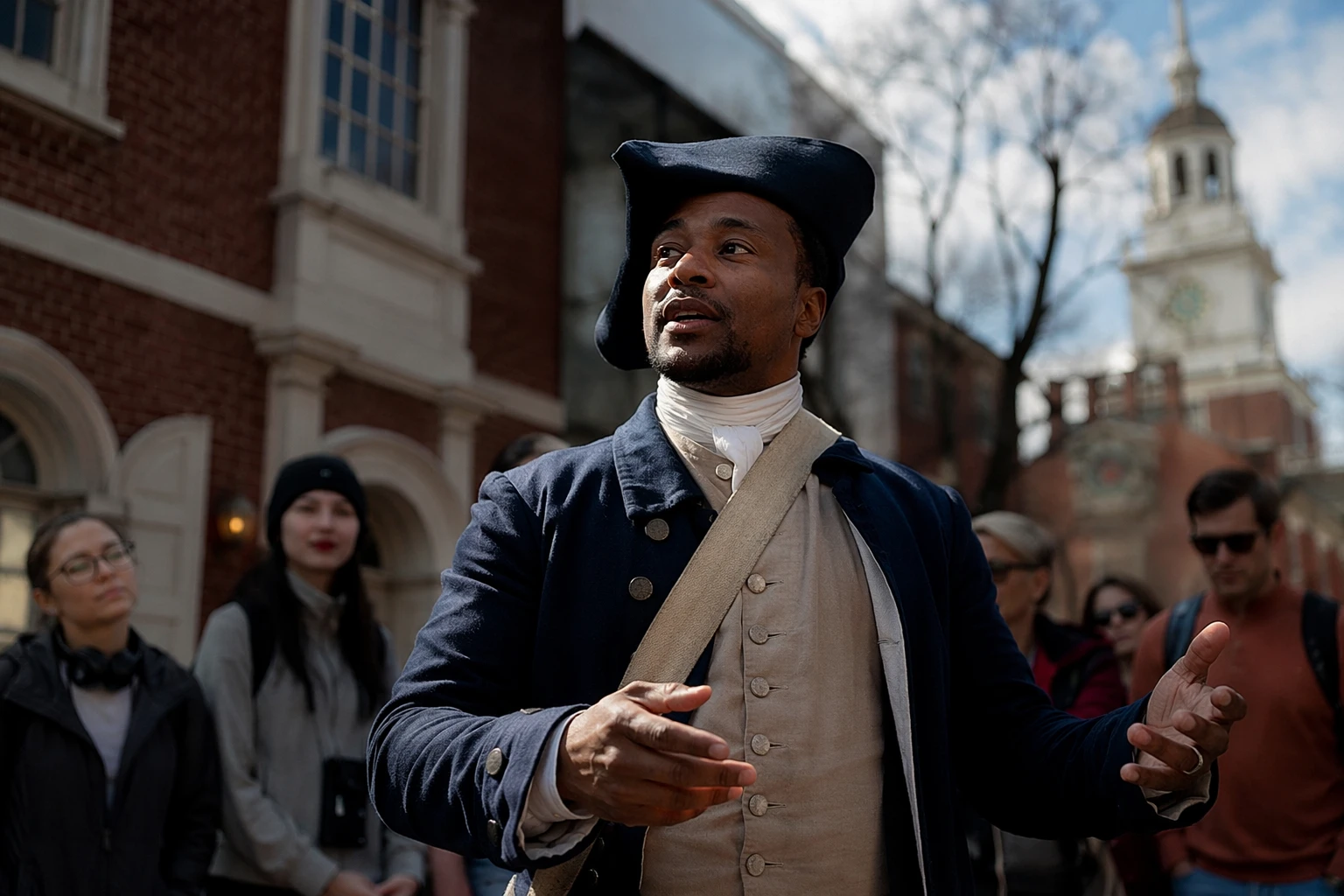
The program is anchored in places that already carry symbolic weight. Historic Philadelphia uses Franklin Square, the Betsy Ross House, and other sites in the Historic District to connect people to the city’s revolutionary landscape. It also says it offers six storytelling benches across the district, turning ordinary pauses on a walk into planned moments of interpretation.
The Betsy Ross House is positioned as one of the main stops in that circuit. Historic Philadelphia describes it as the birthplace of the American flag and home to the city’s only fully functional 18th-century upholstery shop. That pairing of myth, material culture, and craft gives the site a different kind of authority than a museum label alone, because the performance is tied to the physical space where visitors stand.
Other America 250 experiences extend the same approach. Historic Philadelphia offers Independence After Hours, an after-hours tour of Independence Hall, along with a Declaration of Independence reading and programs at the Betsy Ross House. The effect is to braid pageantry with interpretation, so the anniversary is not limited to ceremonies or photo opportunities.
Philadelphia’s larger semiquincentennial push
The city’s own anniversary campaign adds scale to the effort. Philadelphia launched Ring It On! One Philly, A United Celebration on September 3, 2025, and officials said it includes more than $100 million in investment and partnerships with more than 60 community and cultural organizations. The stated aim is to boost neighborhood economies, public art, and celebrations across 2026.
That wider municipal frame matters because America 250 in Philadelphia is being treated as a civic project as much as a tourism draw. The concentration of activity around Independence National Historical Park, Independence Mall, and Old City places the city’s most recognized historic spaces at the center of a yearlong public celebration. At the same time, the investment in neighborhood partners suggests an attempt to spread the anniversary beyond the narrow footprint of the national park.
Why the expanded storytelling matters
Philadelphia has always sold the Revolution through its landmarks, but live history changes the terms of the encounter. A passerby can meet Franklin and Betsy Ross, then turn a corner and encounter Bishop Richard Allen or Hannah Till, each representing a different layer of the founding era. That makes the city’s America 250 effort less about a polished script and more about a contested public memory that is still being edited in full view.
The result is a semiquincentennial program that asks a harder question than how to celebrate the nation’s birth. It asks who gets to appear in the story, which lives were left out of the old script, and how a city built around revolutionary mythology can tell a fuller version of itself without losing the force of the place.
Sources
- [1]cbsnews.com
- [2]phillyvoice.com
- [3]6abc.com
- [4]historicphiladelphia.org
- [5]phila.gov
- [6]whyy.org