Entertainment
Hockney’s art celebrated gay life when Britain kept it hidden
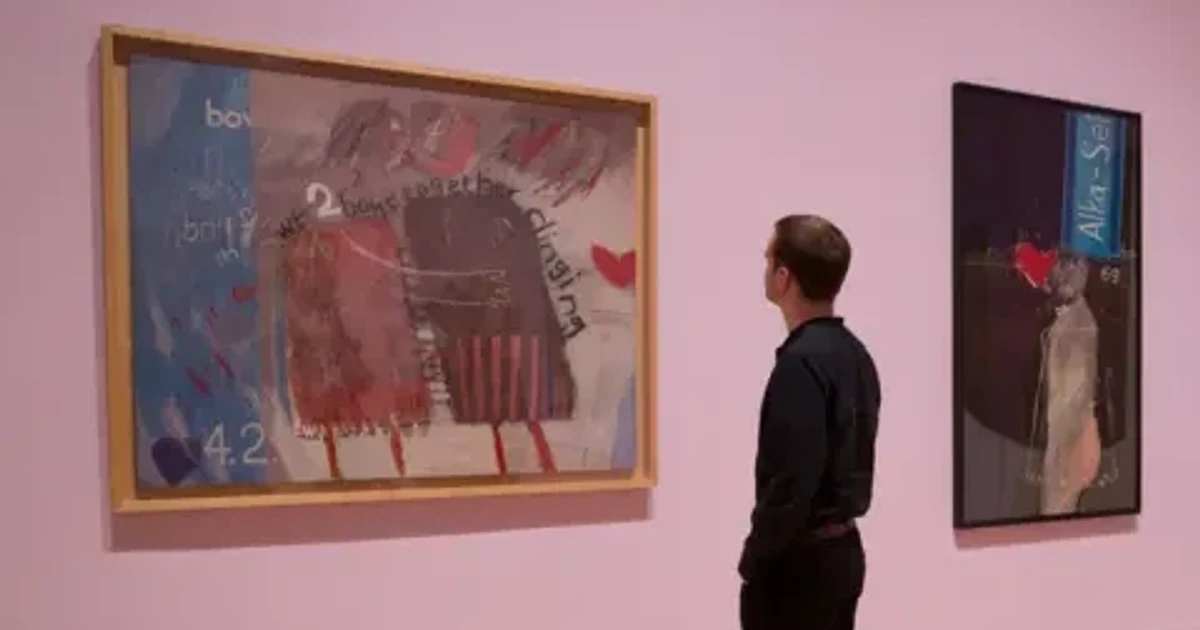
David Hockney made gay life visible by showing what Britain often refused to see: quiet, ordinary intimacy. At a time when same-sex acts between men were still criminalized in England and Wales until the Sexual Offences Act 1967 partially decriminalised them, his paintings and prints treated affection, companionship and domestic ease as worthy subjects rather than secrets.
Against a culture of concealment
Hockney’s early work landed in a climate shaped by both law and stigma. Tate’s Queer British Art framework places queer British art between 1861, when the death penalty for sodomy was abolished, and 1967, when sex between men was partially decriminalised, a period in which artists often helped build queer communities even as words such as lesbian, gay, bisexual and trans were not widely recognised. That context matters because Hockney was not simply painting private feelings, he was insisting that queer life belonged in public culture.
The radicalism of his work lies in its calm. Rather than focus only on scandal or subversion, he depicted the everyday rituals of companionship, time spent together, and the domestic spaces where desire could be lived, not just imagined. In a society that pushed gay men toward secrecy, those images argued that tenderness itself was political.
A young artist finding himself in New York
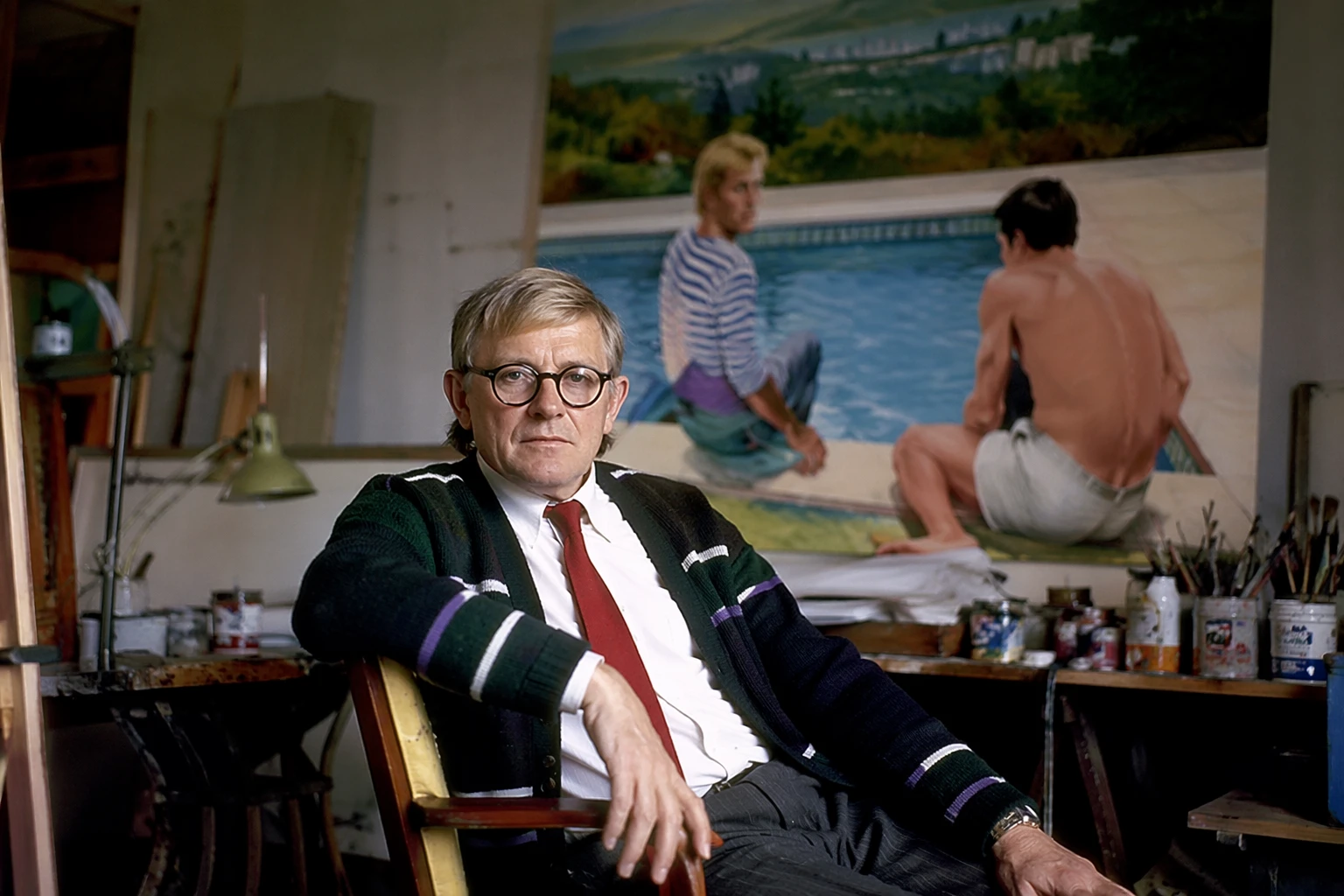
That tension is already present in A Rake’s Progress, Hockney’s 1961 to 1962 etching series, published in 1963. The Museum of Modern Art describes the series as presenting his “rake” as a young artist and gay man struggling to find his way in New York, a framing that places self-discovery, loneliness and sexual identity at the center of the work.
The series is important not only because of what it says about Hockney, but because of when it said it. In the early 1960s, gay men in Britain were still living under the shadow of criminalisation, and even in art there was pressure to disguise or flatten queer experience. Hockney did the opposite. He turned ambiguity into candor and made the search for belonging look like a subject of serious artistic attention.
California as a different kind of freedom
California changed the visual language of Hockney’s art. He first visited in 1963 and, according to Tate, was immediately won over by the sunshine and laid-back lifestyle, describing it as his “promised land.” He lived intermittently there from 1964, and the state’s bright openness offered a sharp contrast with the more concealed life many gay men were forced to lead in Britain.
That shift mattered aesthetically and socially. The openness of Los Angeles and the glamour of swimming pools gave Hockney a setting in which desire could be staged through light, water and architecture rather than through secrecy or shame. In his hands, California was not just a backdrop, it became a visual argument for a more relaxed, more legible form of queer life.
Pools, privacy and desire
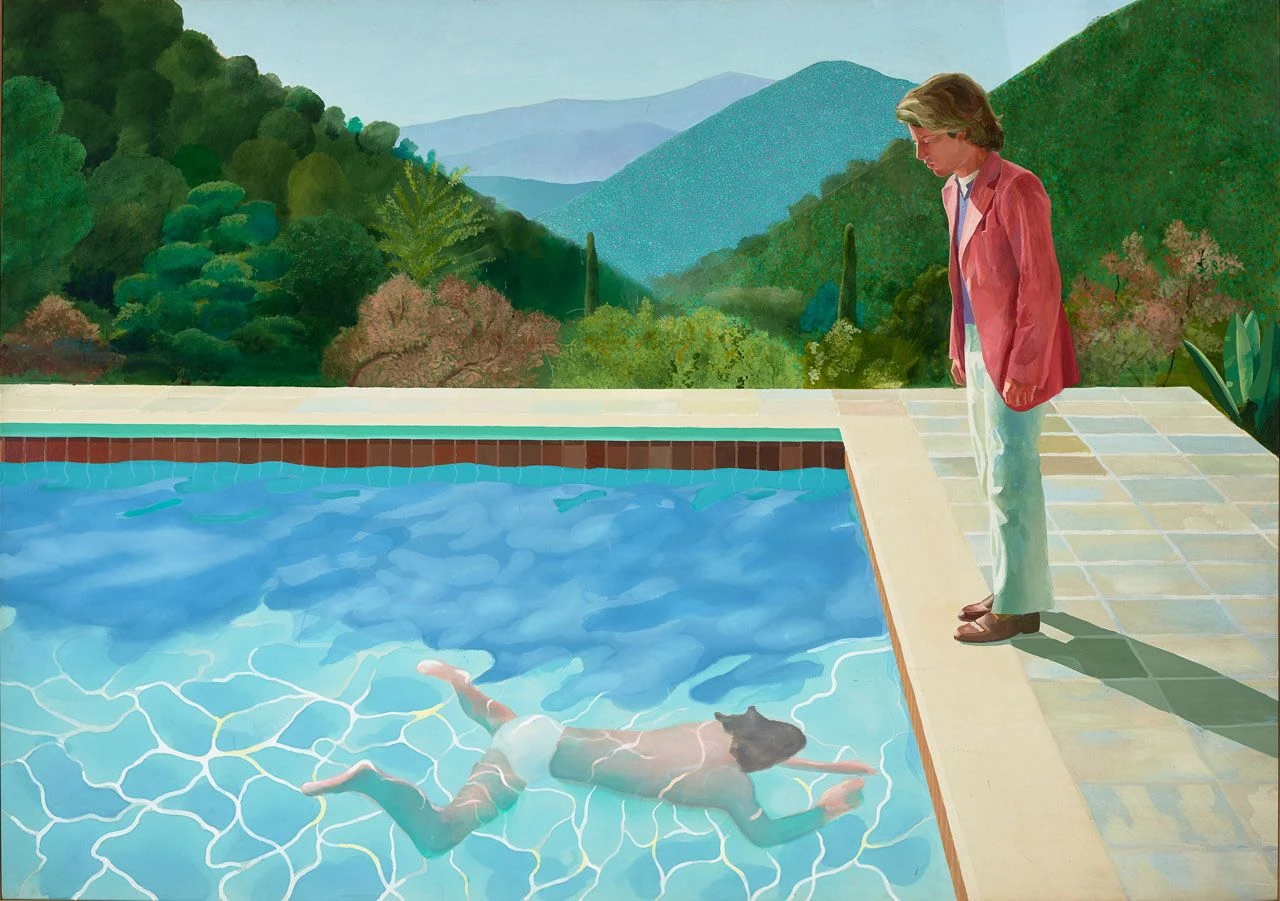
Peter Getting Out of Nick’s Pool, painted in 1966, distills that argument with striking clarity. The work features Peter Schlesinger, Hockney’s friend and muse, and Nicholas Wilder, the Los Angeles gallery owner. It won the John Moores Prize at the Walker Art Gallery Liverpool in 1967, the same year homosexuality was partially decriminalised in England and Wales, which gives the painting an especially pointed place in the story of changing public attitudes.
The image is memorable because it is so unforced. A figure stepping from a pool is not a dramatic political gesture, yet in Hockney’s world it becomes one by virtue of what it normalizes: gay companionship, leisure and the unguarded domestic scene. That is the heart of his achievement. He showed same-sex life not as crisis alone, but as routine, warmth and shared space.
A Bigger Splash, dated 1967 by Tate and shown at Tate Britain, extends that same language. The swimming pool becomes more than a modernist motif; it becomes a site where privacy, desire and cultivated ease coexist. Hockney uses the pool not to hide queer life, but to frame it within a bright, contemporary visual culture that refuses embarrassment.

Why the work still resonates
Hockney’s legacy reaches beyond art history because it speaks to a national question that remains unresolved: who gets represented as normal, safe and visible in public culture. His paintings challenged the idea that queer life belonged at the margins by placing it in homes, gardens and leisure spaces, where intimacy looked as ordinary as anyone else’s.
That is why his work still feels socially urgent. When a culture criminalizes or stigmatizes a community, representation becomes more than visibility, it becomes a form of repair. Hockney understood that presenting calm domestic same-sex life was itself a radical act, because it made room for queer people not only to be seen, but to be imagined as part of everyday life.
The breadth of that vision is also clear in Tate’s plans for a 2027 Hockney exhibition, which will focus on love, friendship, intimacy, vulnerability and human connection across seven decades. Taken together, those themes show a body of work that never stopped returning to the human scale of queer life. Hockney’s art did not just document a changing Britain; it helped push the country toward a fuller idea of who belongs in the picture.
Sources
- [1]bbc.com
- [2]tate.org.uk
- [3]moma.org
- [4]shop.tate.org.uk