Entertainment
Hollywood CEO Pay Gaps Spotlight Industry Inequality
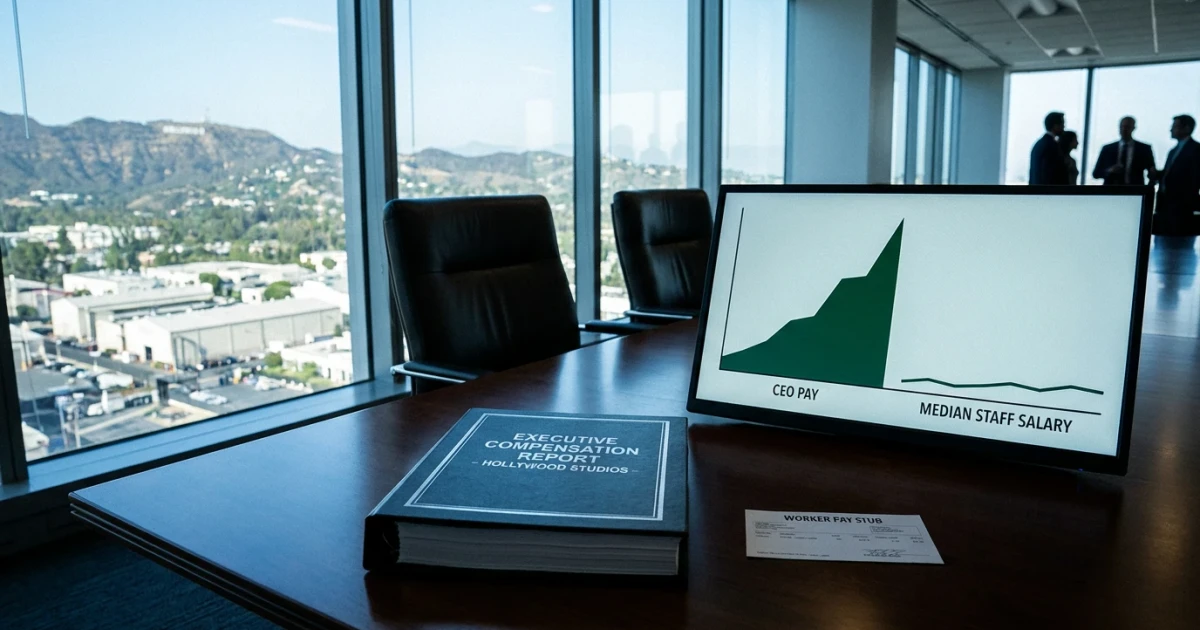
Newly released data on CEO compensation at major Hollywood studios has drawn renewed scrutiny to the widening gulf between top executive pay, median employee salaries, and union wages across the entertainment industry. The Hollywood Reporter’s latest analysis, published as the industry faces ongoing labor tensions, compiles official SEC filings alongside union contract summaries to provide a detailed look at the numbers behind the headlines.
CEOs Earn Far More Than Median Workers
The report reveals that chief executives at leading studios like Disney, Warner Bros. Discovery, Paramount Global, and Netflix earned tens of millions of dollars in 2025, often dwarfing the median annual salary of their company’s employees. For example, Disney CEO Bob Iger's total compensation topped $30 million, while the median Disney worker earned under $60,000 in the same year. AFL-CIO Executive Paywatch data confirms that such disparities are not unique to Disney, as similar ratios are found across other media conglomerates.
- At Netflix, co-CEO pay reached over $40 million, with a CEO-to-median-worker pay ratio of more than 200:1.
- Warner Bros. Discovery’s CEO reported compensation exceeded $30 million, with employees earning a median salary below $70,000.
- Paramount Global’s CEO had a pay ratio of over 300:1 compared to the median worker.
These figures are sourced from SEC filings and annual proxy statements, which publicly traded companies are required to submit each year.
Union Minimums and Worker Wages
The gap between executive pay and frontline wages is further highlighted by union-negotiated minimums for actors, writers, and crew. According to the SAG-AFTRA contracts, a principal actor on a major studio feature film earns a minimum of $1,082 per day or $3,756 per week under the most recent agreement. Television writers, covered by the Writers Guild of America (WGA) contracts, have minimum weekly rates starting around $4,000 for staff writers, but many workers earn at or near these baseline rates—far below the sums paid to studio chiefs.
Data from the Bureau of Labor Statistics shows that the average wage for all motion picture and video industry workers was approximately $36.54 per hour in 2025, or about $75,000 annually for full-time employees. However, these averages mask wide disparities, as entry-level and support staff often earn much less, while above-the-line talent and executives earn far more.
Industry Context and Labor Tensions
The Hollywood Reporter notes that these pay disparities have become a flashpoint in recent labor negotiations and public debates about fairness in entertainment. Actors and writers often point to the soaring compensation packages received by top executives when advocating for higher minimums and improved residuals. The SAG-AFTRA 2023 TV/Theatrical Contract outlines incremental gains in minimums for union members, but these increases are modest compared to the continued rise in CEO pay.
Industry analysts, as cited by The Hollywood Reporter, argue that while executive pay is often tied to company performance and share price, the optics of such large pay gaps are increasingly difficult to defend—especially as unions continue to highlight wage stagnation and job insecurity for the majority of Hollywood’s workforce.
Comparing Hollywood to Broader Trends
Hollywood’s CEO-to-worker pay ratios are among the largest in any sector of the U.S. economy. According to Statista’s U.S. film industry statistics, employment in entertainment remains robust, but wage growth for most workers has lagged well behind executive compensation. The Equilar 100 annual report shows several Hollywood CEOs consistently rank among America’s highest-paid corporate leaders.
- Median pay ratio for S&P 500 CEOs is about 186:1, while in Hollywood it often exceeds 200:1 or higher.
- Top studio executives’ pay is primarily composed of stock awards, bonuses, and incentive plans, in addition to base salaries.
The Path Forward
As the entertainment industry navigates shifting business models and ongoing union negotiations, the debate over executive compensation is likely to intensify. Stakeholders on all sides acknowledge the need for greater transparency and equity, yet consensus on solutions remains elusive. Ultimately, the data underscores that the great divide between Hollywood’s highest earners and its broader workforce continues to shape the industry’s economic and social landscape.