Business
Honda recalls 325,588 Odysseys over rearview camera defect

Honda Motor America is recalling 325,588 Odyssey minivans in the United States because a rearview camera defect can leave drivers without a clear image when backing up, raising the risk of a crash in driveways, parking lots and crowded residential streets. The action covers certain 2018-2020 model-year Odysseys, a large slice of a family-hauling fleet that depends on rear visibility for everyday maneuvering.
The National Highway Traffic Safety Administration said water can enter the rearview camera and prevent the image from displaying when the vehicle is in reverse. In the agency’s recall report, the camera housing may have been improperly bonded, allowing adhesive to separate over time and moisture to seep into the assembly. That intrusion can corrode internal electrical components and cause the picture to become blurry, distorted or disappear into a black screen. The report identified Sharp as the supplier and said Honda began investigating after receiving a potential incident notice in May 2024.
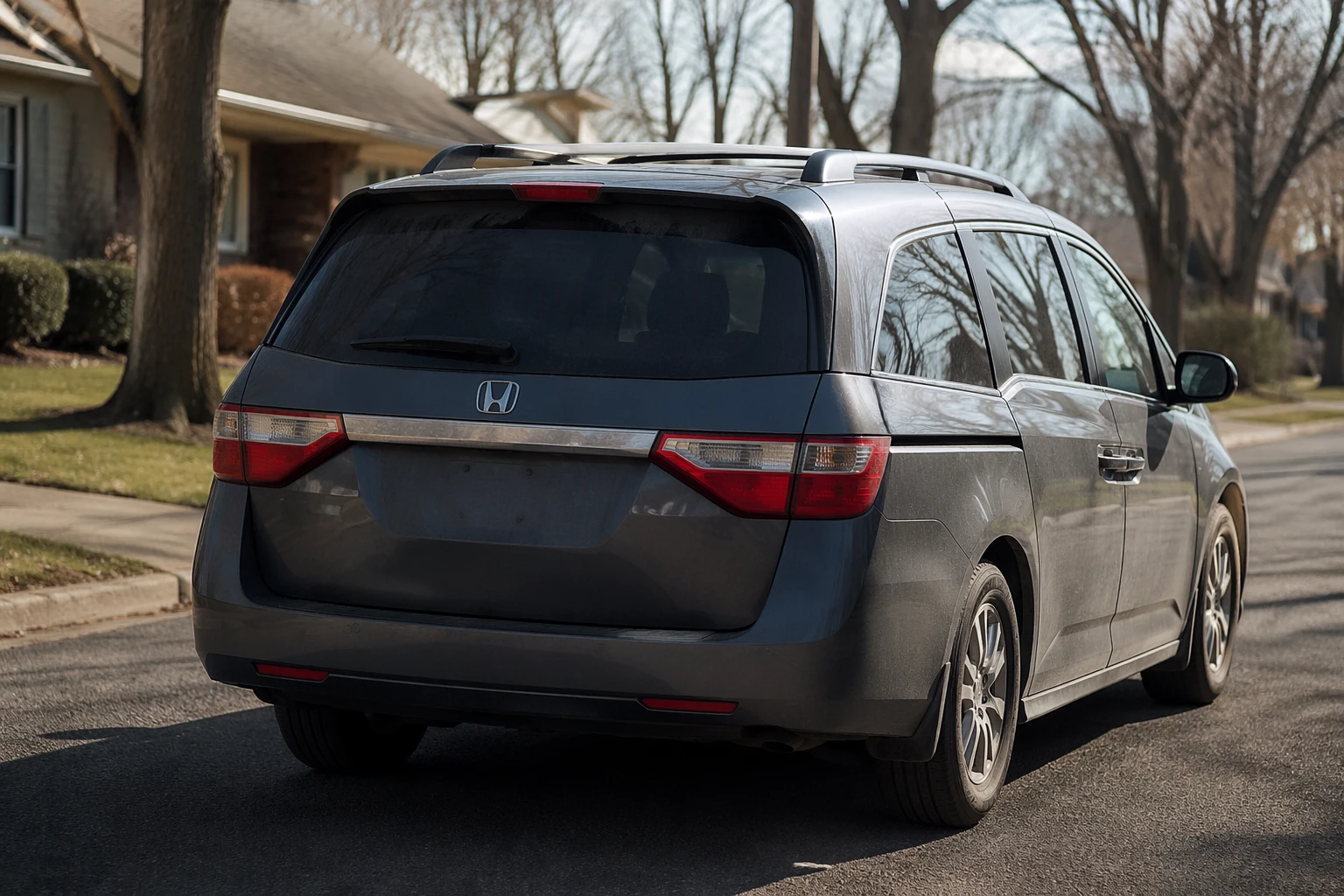
Honda said dealers will replace the rearview camera free of charge. The repair is straightforward, but the safety issue is not. Rearview cameras are one of the most important visibility tools during low-speed reversing, when a driver’s view is already limited and children, pets, shopping carts and fixed objects can be difficult to see from the driver’s seat. A failed display turns that routine task into a higher-risk maneuver.
The recall also adds to scrutiny of Honda’s quality-control systems as modern vehicles lean more heavily on cameras, displays and software. Honda’s recall listings show a separate April 15, 2026 action involving about 440,000 Odyssey vehicles over side curtain and side airbag software, and a May 21, 2026 rearview-camera recall covering 59,887 Prologue and Acura ZDX vehicles. That earlier camera action involved moisture intrusion tied to improper bonding and also led to distorted or blank displays.
The Odyssey recall was filed under NHTSA report 26V306, with a submission date of May 14, 2026. Taken together, the recent actions show how a small failure in bonding, sealing or supplier process control can ripple into a large safety campaign when the part sits at the center of a vehicle’s visibility system.