World
Hope Returns as Gaza’s Rafah Crossing Set to Reopen After Years of Closure
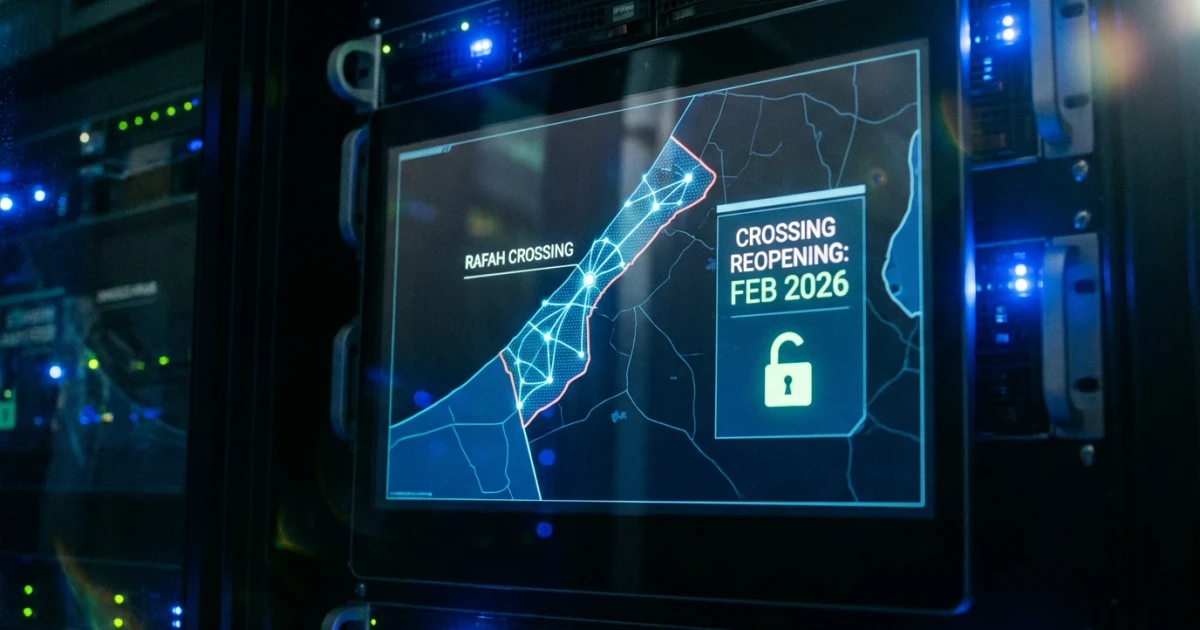
Gaza’s Rafah crossing, the critical gateway between the Gaza Strip and Egypt, is set to reopen for Palestinians on Monday, according to an announcement from Israeli authorities. The move marks a significant development for the region, where the crossing has remained largely sealed for years, impacting the daily lives of Gaza’s population.
Renewed Activity at a Vital Border
The Rafah crossing has long served as a lifeline for Palestinians in Gaza, offering passage for those seeking medical treatment, family reunification, and access to the outside world. Its near-complete closure in recent years has intensified economic hardship and isolated the local population. Reports indicate that the border area is already buzzing with renewed activity, a stark contrast to its previously dormant state.
- Rafah crossing is the only major exit point from Gaza not directly controlled by Israel.
- Its closure has severely restricted movement for Gaza’s two million residents.
- The reopening is expected to facilitate the movement of hundreds seeking urgent medical care, education abroad, or family visits.
Humanitarian and Economic Impact
The reopening is particularly significant for those requiring urgent medical attention. In the past, patients have faced prolonged delays and, in some cases, have been unable to receive life-saving treatment due to travel restrictions. Relief organizations stress that increased access is vital for addressing Gaza’s ongoing humanitarian needs.
Moreover, the resumption of cross-border movement could revitalize local commerce and provide short-term economic relief. While the long-term effects remain to be seen, increased mobility is widely viewed as a positive step for both humanitarian and economic reasons.
Regional and Political Context
The decision to reopen the crossing comes amid ongoing diplomatic efforts and complex negotiations involving Israel, Egypt, and Palestinian authorities. The Rafah crossing’s status has often served as a barometer for broader regional relations, reflecting both security concerns and political realities.
While the reopening is being met with cautious optimism, observers note that it could be subject to sudden changes based on security considerations. The extent to which the crossing remains open—and under what terms—will continue to be closely watched by both local residents and the international community.
Looking Ahead
For now, the scheduled reopening of the Rafah crossing represents a rare moment of hope for many in Gaza. As the border area comes alive with anticipation, the move is widely seen as a potential turning point in addressing the enclave’s isolation and humanitarian challenges. However, the sustainability of this opening will depend on ongoing cooperation and the stability of the region’s delicate political landscape.
Sources
- [1]The Guardian