Politics
House Blocks Effort to Limit Trump's Iran War Powers
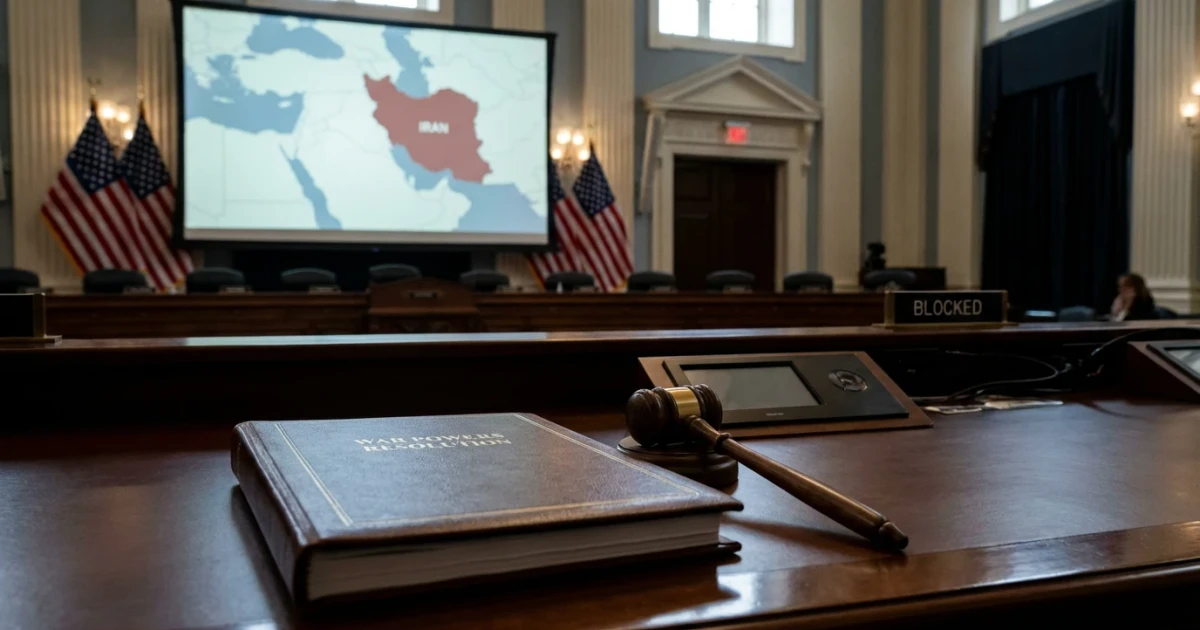
The U.S. House of Representatives has rejected the most recent attempt to restrict President Donald Trump's authority to conduct military operations against Iran, underscoring the ongoing struggle between Congress and the executive branch over war powers.
House Votes Down Iran War Powers Resolution
On Thursday, lawmakers in the House failed to pass a resolution that would have limited President Trump's ability to engage U.S. forces in hostilities against Iran without explicit congressional approval. The vote, reported by Reuters, marks the latest in a series of unsuccessful congressional initiatives to assert legislative oversight over military action in the Middle East.
- Efforts to restrict presidential war powers have become more frequent in recent years, especially following escalations between the U.S. and Iran.
- The House vote was part of a broader legislative push to reaffirm Congress's constitutional role in authorizing war.
- Similar measures have previously passed the House but stalled in the Senate or faced presidential veto threats, as documented in the official roll call vote records.
Background: The Ongoing War Powers Debate
The question of war powers has been contentious for decades, with the War Powers Resolution of 1973 intended to limit the president's ability to commit U.S. forces to armed conflict without congressional consent. Despite this, presidents from both parties have frequently engaged in military actions citing executive authority or existing authorizations for use of military force.
According to a Congressional Research Service report, compliance with the War Powers Resolution has varied, and disputes over its interpretation remain unresolved. The current push to limit President Trump's actions reflects longstanding concerns about unchecked executive military power.
Recent Legislative Efforts and Outcomes
Congress has made multiple attempts to assert its role in decisions about military engagement with Iran. In 2020, the House passed a joint resolution directing the removal of U.S. forces from hostilities with Iran, but it failed to become law after Senate resistance and a presidential veto.
The most recent vote continues this pattern, with the House divided along partisan lines and ultimately unable to muster the support needed to rein in the president's war authority. Data from GovTrack shows that such votes typically break down with Democrats in favor and Republicans opposed, though a few members have occasionally crossed party lines.
Implications for Executive-Legislative Relations
This latest failure reinforces the enduring tension between Congress and the presidency over war powers. As analyzed by the Council on Foreign Relations, the balance of war powers is a perennial source of debate, with Congress often struggling to assert its constitutional prerogatives against an increasingly assertive executive branch.
With the House unable to pass new restrictions, President Trump retains broad authority to direct U.S. military actions regarding Iran under existing legal interpretations. The issue is likely to remain contentious, particularly amid ongoing regional tensions and public debate about the proper scope of presidential power.
Looking Ahead
The defeat of the resolution signals that, for now, efforts to curtail presidential war powers lack sufficient congressional support. However, the ongoing debate ensures the issue will remain on the legislative agenda, especially as new developments arise in U.S.-Iran relations. Lawmakers on both sides are expected to revisit the question of war powers as part of the broader conversation about checks and balances in American government.