Politics
House Democrats split over ending U.S. aid to Israel
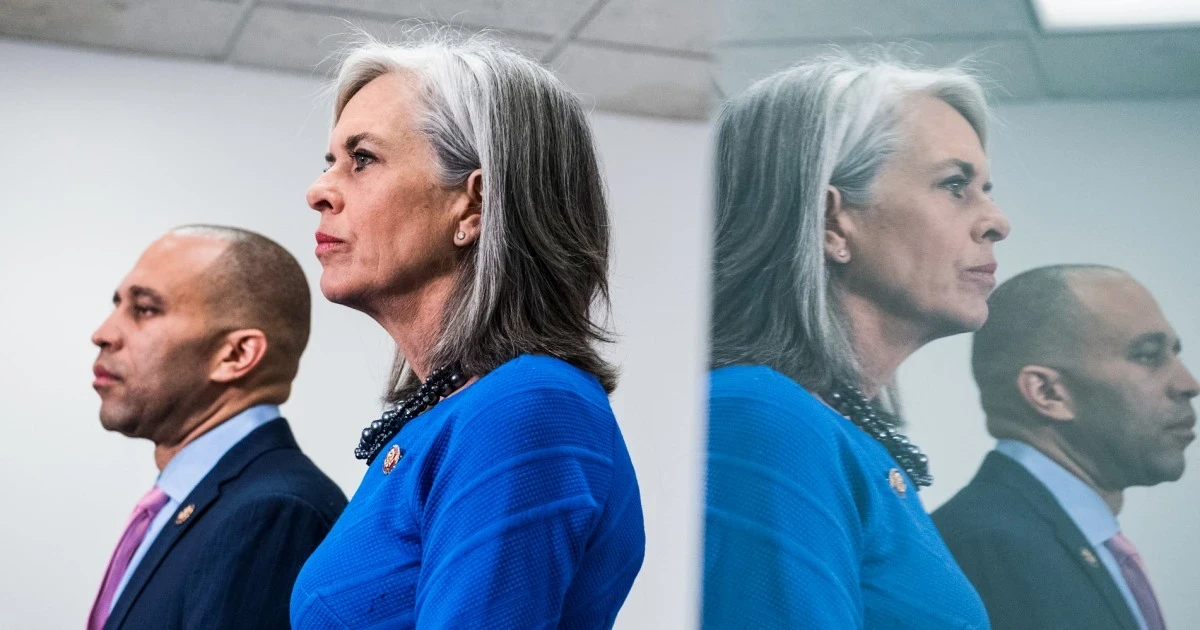
House Democrats split 314-104 on Wednesday over an amendment to end U.S. aid to Israel, a vote that would have eliminated $3.3 billion in funding and showed how far the party’s internal fight has moved into the open. One hundred three Democrats backed the cutoff, 98 opposed it and 10 voted present, but the measure fell easily because Republicans lined up behind continued support for Israel.
The break reached the top of House Democratic leadership. Minority Leader Hakeem Jeffries and Minority Whip Katherine Clark planned to vote differently, a rare public divide inside the party’s senior ranks. Jeffries had not given firm caucus guidance, instead allowing Democrats to argue the issue in two lengthy private caucus meetings before the floor vote. That hands-off approach reflected a calculation that the party can contain the fight without forcing a single line, even as the issue divides members by geography, ideology and donor networks.
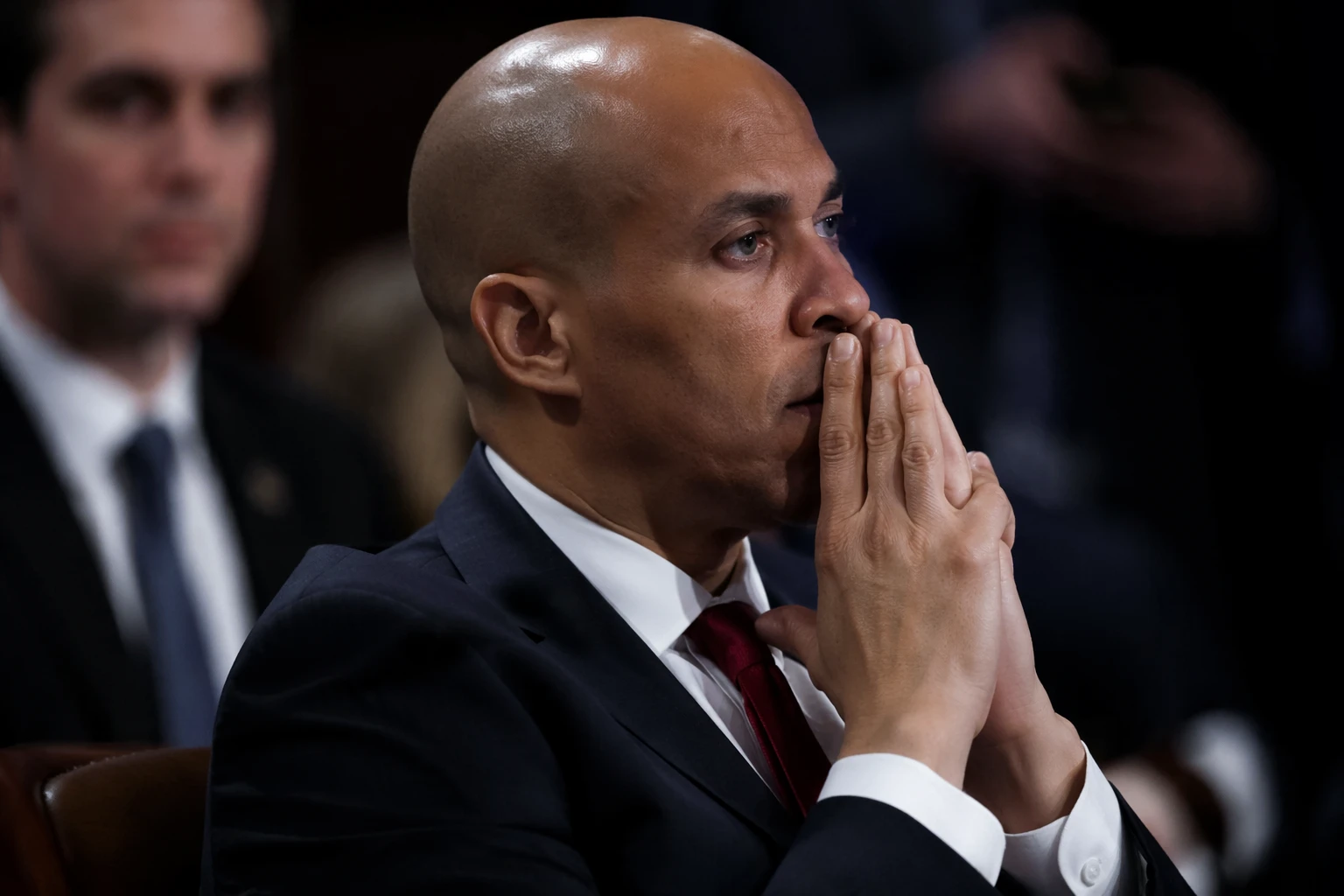
The vote came after months of Democratic primary battles in which candidates critical of the American Israel Public Affairs Committee won significant races. It also came as more liberal Democrats have been moving sharply away from Israel. In the Chicago Council on Global Affairs’ July 2025 survey, 69% of liberal Democrats said the United States provides Israel too much support, 60% said Washington gives Israel too much military aid, and 74% favored Palestinian statehood.
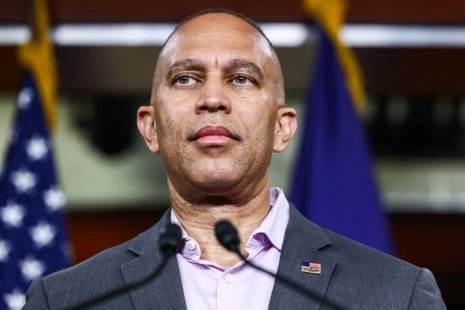
Polling this year suggested that shift is widening beyond the party’s activist base. An AP-NORC poll published in July 2026 found about half of Democrats believe Israel has committed genocide against Palestinians, part of a broader decline in support that has accelerated during the Gaza war. In Washington, the issue has already started to reshape congressional behavior: in April 2026, Senate Democrats showed a major shift when a record number voted for resolutions blocking arms sales to Israel, after only 15 senators backed such a move in April 2025 and 27 did so on a separate measure in July 2025.

The House vote left Democrats with the same dilemma they have faced for months: symbolic anti-aid votes can now command a sizable bloc, but the center of power still sits with leadership, major donors and the party’s 2026 electoral strategy. The amendment’s defeat kept U.S. aid flowing to Israel, while the size of the Democratic split made clear that the caucus is no longer speaking with one voice.
Sources
- [1]nbcnews.com
- [2]politico.com
- [3]axios.com
- [4]globalaffairs.org
- [5]apnorc.org
- [6]notus.org