Politics
House Moves to Limit Trump’s Authority on Iran Strikes
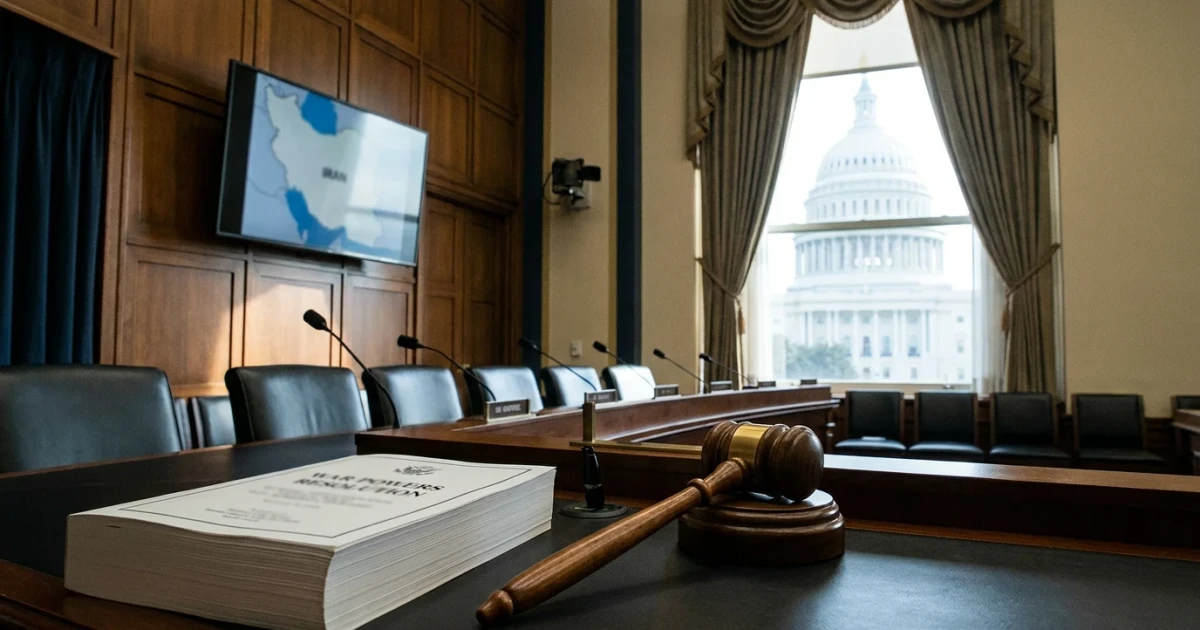
The House of Representatives has voted to restrict President Trump’s authority to order additional military strikes against Iran, marking a significant step by lawmakers to limit the scope of presidential war powers.
Historic House Vote Seeks to Curb Military Action
In a move described as a first by The Washington Post, the House approved an amendment aimed at prohibiting the president from taking new military action against Iran without explicit congressional approval. The measure, debated in the wake of heightened tensions between the United States and Iran, reflects growing concerns among lawmakers about the potential for an expanded conflict in the region.
The official House Amendment 500 to H.R. 550 lays out the legislative language and conditions under which military action would be authorized. The action follows previous airstrikes and military escalations that drew bipartisan scrutiny over the president’s unilateral use of force.
War Powers and Congressional Oversight
The vote is rooted in longstanding debates over the War Powers Resolution, which was enacted in 1973 to balance the president’s role as commander-in-chief with Congress’s constitutional authority to declare war. While the executive branch has often interpreted its powers broadly, Congress has periodically sought to reassert its oversight, especially in instances where hostilities risk escalation without a formal declaration of war.
According to a detailed breakdown of the House vote, the measure garnered support primarily from Democratic lawmakers, with some Republicans joining in a show of concern about unchecked military engagement. The vote underscores a rare moment of bipartisan agreement on the need for congressional checks, following years of debate over the appropriate limits of presidential military authority.
Background: Rising Tensions with Iran
The vote comes against a backdrop of longstanding tensions between the U.S. and Iran, which have fluctuated over the past several decades. Recent years saw a series of military exchanges and diplomatic confrontations, leading lawmakers and analysts to warn of the risk of unintended escalation in the absence of clear congressional oversight.
The U.S. State Department’s Country Reports on Terrorism detail the complex security environment and the ongoing challenges posed by Iranian military activities in the region. These developments have fueled debate in Washington about the appropriate balance between deterrence and restraint.
Public Opinion and Future Implications
- Recent Pew Research Center surveys show Americans remain divided on the Trump administration’s approach to Iran, with opinions often split along partisan lines.
- Supporters of the House measure argue it reaffirms Congress’s constitutional role in decisions of war and peace, while critics warn it could constrain the president’s ability to respond swiftly to security threats.
As the amendment moves to the Senate and potentially faces a presidential veto, the outcome could set precedents for future debates over war powers and the conduct of U.S. foreign policy. The House’s action signals a renewed willingness by lawmakers to engage directly in decisions of military significance, highlighting the ongoing tension between the executive and legislative branches over America’s use of force abroad.