Health
House panel probes drugmakers’ China trials over military data risk
Rep. John Moolenaar’s House Select Committee on China opened national-security investigations into five drugmakers, including Merck and AbbVie, over whether clinical trials in China could expose sensitive medical and research data. The committee gave Merck, AbbVie, Eli Lilly, Pfizer and Bristol Myers Squibb until July 17 to answer questions about due diligence, data-protection practices and the standards used at trial sites, with particular scrutiny on work in Xinjiang and at military hospitals.
The committee’s letters put hard numbers behind the inquiry. Merck has been linked to 224 clinical studies in China since 2005, including at least 31 in Xinjiang and 40 at facilities affiliated with China’s military, while AbbVie has been linked to more than 100 studies since 2007, including at least 17 in Xinjiang and 16 at military-linked centers. The requests to the chief executives, Robert Davis at Merck and Robert Michael at AbbVie, show how quickly a geopolitical concern has turned into a formal congressional probe.
Markets reacted immediately. Shares of Lilly, Pfizer, Merck and Bristol Myers Squibb fell nearly 2% in early trading, while AbbVie slipped about 1%, signaling investor concern that the inquiry could bring regulatory pressure and reputational risk. Merck said patient safety and ethical integrity remain priorities for its clinical research program. AbbVie declined to comment, and the other companies either declined further comment or said they were reviewing the letters.
The committee’s focus goes beyond a single set of trials. China’s embassy in Washington called the probe politicized and said there was “nothing credible” in the committee’s actions. Still, lawmakers are examining where the trials took place, who ran the sites and what information may have been collected, reflecting a broader fear in Washington that health data, biospecimens and research records can become tools of state power when they are gathered in strategic locations.
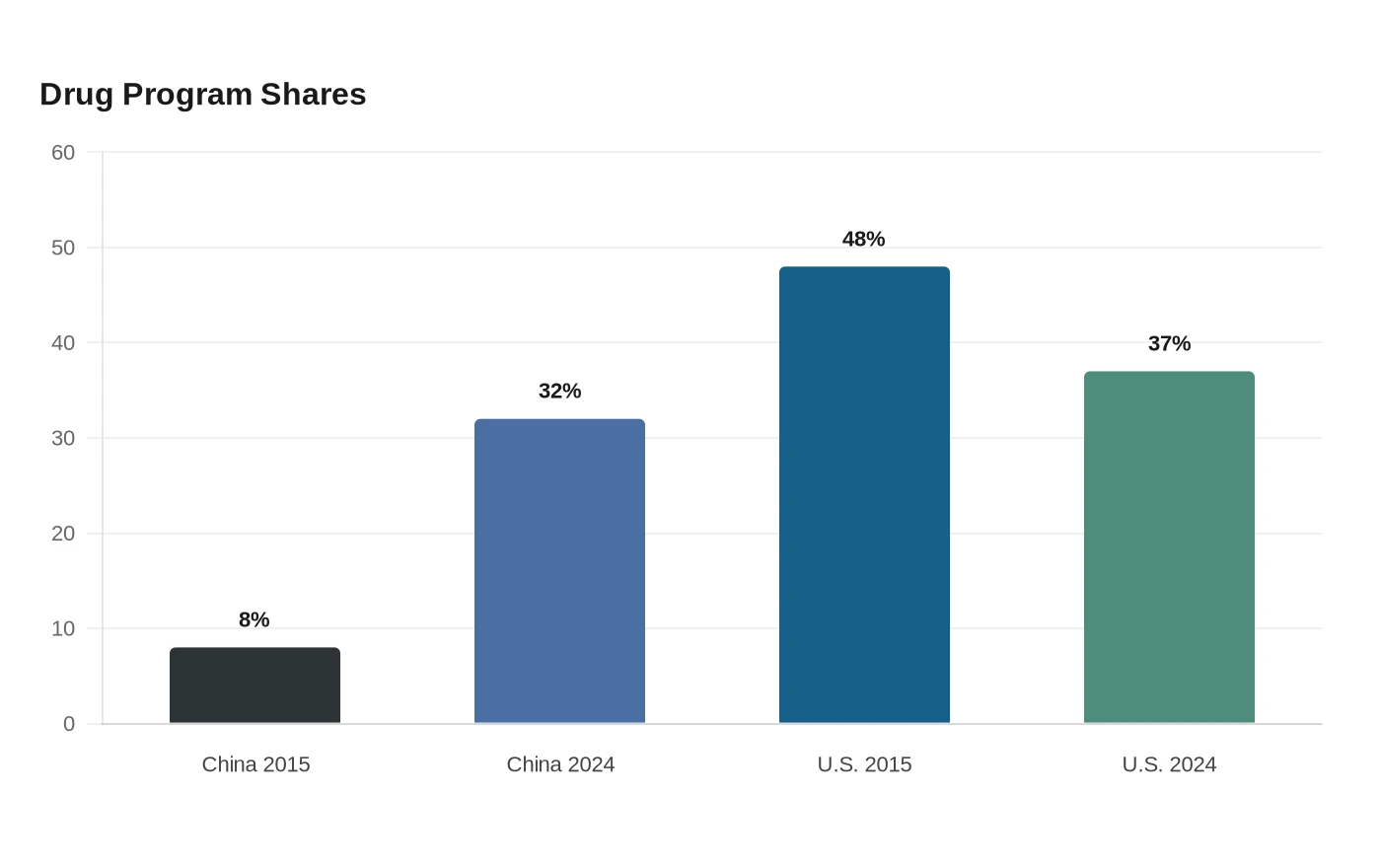
The concern lands at a moment when China has become more central to early drug development. Georgetown University researchers found China’s share of global early-stage drug programs rose from 8% in 2015 to just over 32% in 2024, while the U.S. share fell from 48% to about 37%. If Congress decides that overseas trials pose unacceptable security risks, drugmakers could face tighter limits on where they run studies and how they share data, a shift that could raise costs and slow timelines even as it reshapes where future medicines are tested.