Politics
House Republicans Narrowly Block Bid to Limit Trump’s War Powers on Venezuela
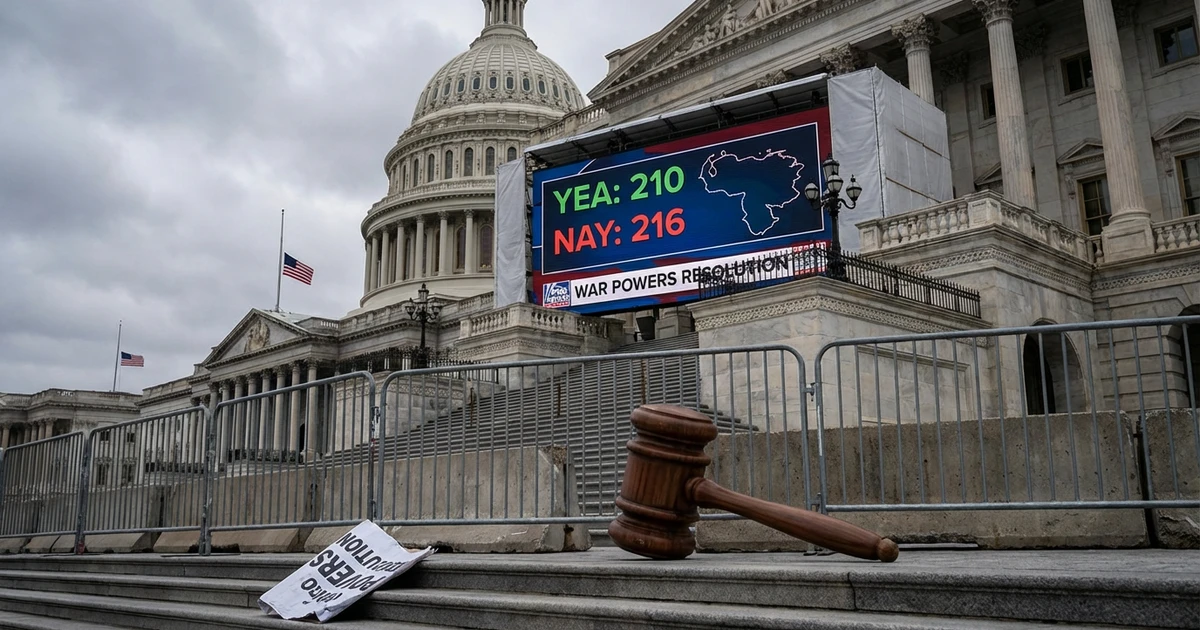
House Republicans narrowly blocked a high-stakes resolution to limit President Donald Trump’s authority for military action in Venezuela, after a contentious vote that underscored partisan divisions within Congress. The measure, which sought to check the president’s war powers, fell just short of passage in the House, leaving Trump’s latitude on Venezuela military policy unchanged.
Resolution Seeks Congressional Oversight of Military Action
The defeated resolution was introduced as a direct response to concerns about potential unilateral military action by the executive branch in Venezuela. Lawmakers backing the measure argued for restoring Congress’s constitutional role in authorizing war, specifically requiring congressional approval for any significant military engagement against the South American nation.
Partisan Divide Defines the Vote
Both ABC News and Reuters reported that the outcome was determined by a razor-thin margin, with House Republicans largely voting in lockstep against the resolution. The failure of the measure underscores the current deep partisan divisions over foreign policy and the checks on presidential power.
- The proposal was defeated by a narrow margin, with most Republicans in opposition and Democrats largely in support.
- The vote was seen as a key test of congressional willingness to reclaim war powers from the executive branch.
- Advocates for the resolution stressed the need for oversight following recent tensions with Venezuela, while opponents warned it could constrain the president’s ability to respond to emerging threats.
Implications for US Policy Toward Venezuela
With the resolution’s defeat, President Trump retains broad authority to direct US military policy regarding Venezuela without an explicit congressional mandate. Both news agencies highlighted that the vote reflects ongoing debates about the balance of power between Congress and the president, especially in times of international uncertainty.
While the measure’s authors framed their effort as a defense of constitutional norms, critics contended that it might undermine US strategic options in the region. The close outcome suggests that the question of war powers—and legislative oversight—remains unsettled in the current political landscape.
What Comes Next?
Following the vote, lawmakers and policy experts are expected to continue pressing for greater clarity over the scope of presidential military authority. The House’s near-even split signals that future attempts to limit executive war powers could re-emerge, particularly as US-Venezuela relations continue to evolve.
For more details on the current makeup of Congress and ongoing legislative debates, visit the official Congressional portal.
In summary, the House’s narrow vote not to limit Trump’s war powers on Venezuela keeps the executive’s options open, while also ensuring that the war powers debate will remain a central issue in US foreign policy oversight.