Politics
House Shelves Vote on Halting Military Action Against Iran
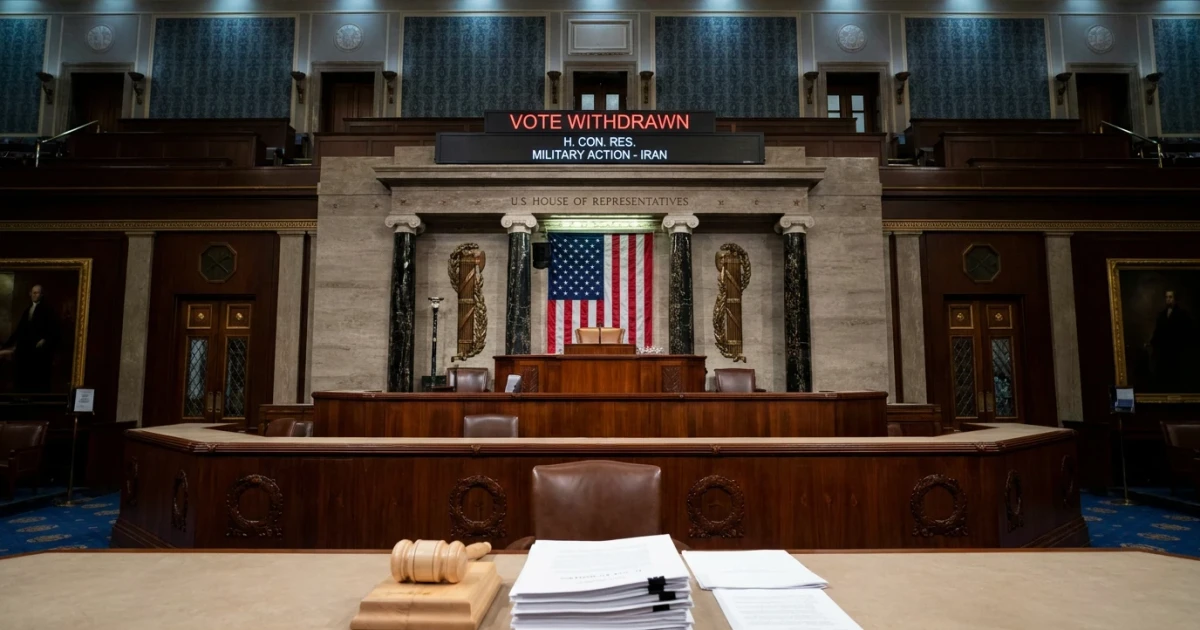
The U.S. House of Representatives abruptly pulled a scheduled vote to halt military action against Iran, highlighting persistent tensions between Congress and the executive branch regarding war powers and the authorization for use of military force in the Middle East.
Background: Congressional Push to Limit Military Force
For months, lawmakers have debated measures aimed at repealing the Authorization for Use of Military Force Against Iraq Resolution of 2002 (AUMF), which has served as a key legal foundation for various U.S. military operations in the region—including actions targeting Iranian interests. Efforts to curtail the president's unilateral ability to deploy armed forces have intensified, particularly after recent escalations with Iran.
The House had planned to vote on legislation that would direct the removal of U.S. armed forces from hostilities against Iran unless explicitly authorized by Congress. Previous votes, such as House Vote 7, demonstrated a bipartisan desire to reassert congressional control over military engagements, but consensus on the scope and details has proven elusive.
Why the Vote Was Pulled
According to reporting from The New York Times, House leadership decided to withdraw the vote amid concerns about political divisions and the timing of the measure. The move came as lawmakers weighed the potential ramifications for U.S. foreign policy and national security, particularly with ongoing tensions between the Trump administration and Iran.
- Political divisions within both parties persisted over whether to limit the president's authority without undermining U.S. strategic interests.
- Ongoing diplomatic efforts and security briefings influenced the decision to delay action.
- Some legislators called for additional debate and amendments before moving forward.
War Powers and Legal Framework
The debate over the House vote is rooted in the larger question of war powers—the division of authority between Congress and the president to initiate or sustain military actions. The 2002 AUMF has been cited as the legal basis for a range of operations, including those targeting Iranian-backed forces and interests.
Recent U.S. State Department reports and Congressional Research Service analyses have underscored the complexity of repealing or amending the AUMF. The legislative history reveals that attempts to revoke or update these authorizations often encounter procedural hurdles and resistance from the executive branch.
Fiscal and Policy Implications
Beyond legal debates, proposals to repeal the AUMF or limit military action have prompted analysis from the Congressional Budget Office. While the fiscal impact of ending authorizations is modest compared to broader defense spending, policy experts argue that the symbolic shift could reshape America’s approach to military intervention.
Analysis: Congressional Authority Remains in Flux
The House’s decision to pull the vote highlights the ongoing struggle between legislative oversight and executive discretion in matters of war and peace. While many members continue to push for a more active congressional role in authorizing military force, current events demonstrate the challenges of building consensus amid shifting geopolitical circumstances.
As the debate persists, lawmakers and analysts point to the need for a clear, updated framework governing the use of force abroad, ensuring both national security and respect for democratic processes. Readers interested in the legislative history and policy analysis can explore Congressional Research Service’s brief history of the 2002 AUMF.
Looking ahead, Congress may revisit the issue as circumstances evolve, with renewed calls for transparency and accountability in America’s military engagements. The fate of the AUMF and war powers legislation remains uncertain, but the debate is expected to continue as part of a broader conversation about U.S. foreign policy and constitutional checks and balances.