Politics
House Turns Down Aviation Safety Bill After Pentagon Withdrawal
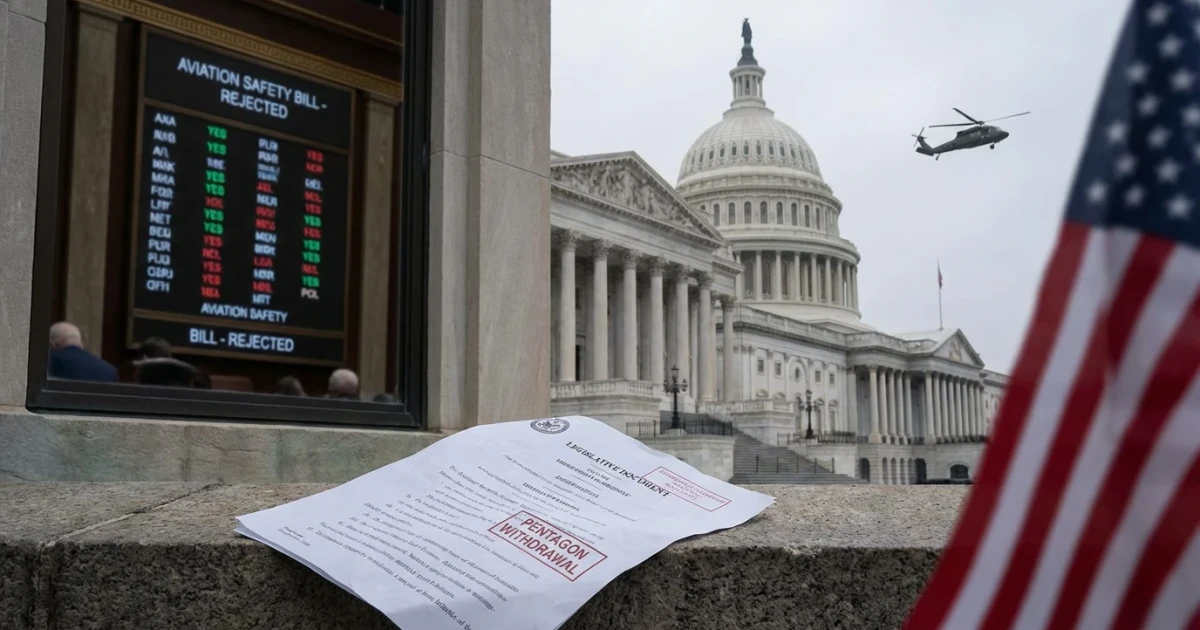
The U.S. House of Representatives rejected a high-profile aviation safety bill on Monday, following the Pentagon’s surprise decision to withdraw support for the legislation. The move marks a significant setback for efforts to strengthen oversight and safety standards in American aviation, and it reflects growing divisions over how best to balance national security priorities with the needs of civil aviation.
Key Bill Blocked Amid Defense Concerns
The bill, officially known as the Securing Growth and Robust Leadership in American Aviation Act (H.R.3935), had been a top legislative priority as Congress considered a sweeping reauthorization of the Federal Aviation Administration (FAA). The legislation aimed to update safety regulations, modernize air traffic control systems, and address recent aviation incident trends.
Supporters argued that the bill would help the U.S. remain a global leader in aviation safety and innovation. However, the Pentagon’s last-minute withdrawal of support—citing undisclosed national security concerns—prompted a shift in the House, leading to the bill’s defeat. The New York Times reported on the vote and the Pentagon’s role in the decision, noting that the sudden reversal led many lawmakers to question the compatibility of the bill’s provisions with ongoing defense priorities.
What the Bill Proposed
- Reauthorization and expansion of FAA programs to improve air traffic safety and capacity
- New funding for aviation safety research and accident prevention initiatives
- Updated regulations for emerging aviation technologies such as drones and electric aircraft
- Enhanced reporting and data sharing on aviation safety statistics
According to summaries from the Congressional Research Service, the bill was designed to address recent recommendations from the Government Accountability Office (GAO) and the National Transportation Safety Board (NTSB), both of which have pointed to persistent gaps in safety oversight amid a rise in reported near-miss incidents.
Pentagon’s Withdrawal and Political Fallout
The Pentagon’s decision to reverse its position was not accompanied by a detailed public explanation. Lawmakers and analysts speculated that the concerns might relate to shared civil-military airspace or to provisions affecting defense-related flight operations and contracts. The Department of Defense had previously supported several aviation-related initiatives but objected to provisions in the final version of the bill.
The bill’s defeat highlights the fragile consensus on aviation policy, especially when national security issues intersect with civil sector reforms. The New York Times coverage underscored that this kind of late-stage opposition is rare but can be decisive in closely contested legislative battles.
What This Means for U.S. Aviation Safety
- The FAA will continue operating under its current authorization, but lawmakers will need to revisit key safety and modernization measures.
- Data from the FAA and NTSB show that while the U.S. maintains one of the world’s safest aviation systems, ongoing challenges—such as runway incursions and airspace congestion—require continued vigilance and updated policies.
- The GAO’s latest aviation safety report warns that delays in legislative action could slow the implementation of critical reforms.
Next Steps for Congress
House leaders have indicated that negotiations will continue in search of a compromise that addresses both safety and defense concerns. Aviation industry groups and safety advocates have called for urgent action, warning that failure to modernize regulations could put the U.S. at a disadvantage internationally.
As lawmakers return to the negotiating table, the outcome will be watched closely by airlines, defense contractors, and the flying public. The episode underscores the complex interplay between transportation policy and national security—and the challenges of forging consensus in a divided Congress.