Politics
House Votes to Limit Trump’s Iran War Powers
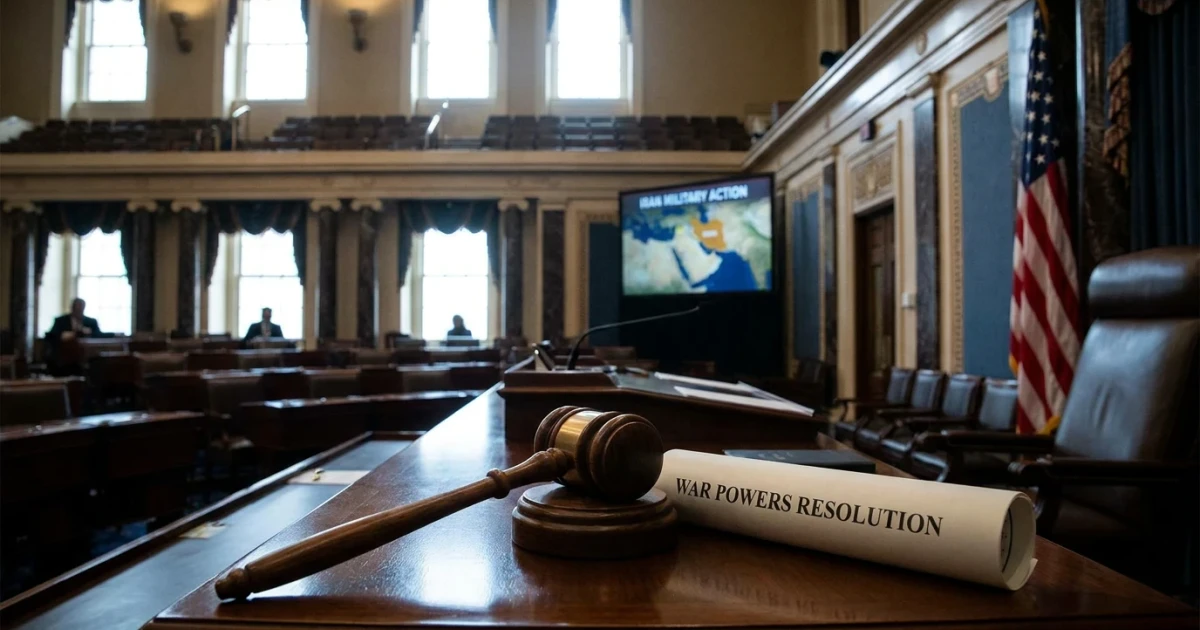
The U.S. House of Representatives on Wednesday took a significant step to assert its constitutional authority over war powers by passing a resolution directing President Donald Trump to halt hostilities with Iran without explicit congressional approval. The measure, debated in the wake of heightened tensions between Washington and Tehran, reflects mounting concerns in Congress about executive power in military matters.
What the Resolution Does
The resolution, which passed largely along party lines, is intended to reinforce Congress’s role as outlined in the War Powers Resolution of 1973. The legislation directs the President to end the use of U.S. Armed Forces to engage in hostilities against Iran or any part of its government or military, unless Congress has declared war or specifically authorized such action. The full legislative text is available for public review through the official congressional record.
The final vote count demonstrates the measure’s contentious nature, with most Democrats voting in favor while Republicans largely opposed, echoing partisan divisions over foreign policy and executive authority.
Context: Rising Tensions with Iran
The House action comes days after a U.S. drone strike killed Iranian General Qassem Soleimani, a move that dramatically escalated tensions in the region and led to Iranian missile strikes against U.S. bases in Iraq. Lawmakers from both parties expressed concern about the potential for open conflict and the lack of congressional consultation prior to military engagement.
- The War Powers Resolution of 1973 was designed to prevent presidents from unilaterally engaging in hostilities without congressional consent, after experiences in Vietnam and Korea.
- Similar measures have periodically surfaced in Congress during moments of crisis, but rarely pass both chambers.
- Public opinion polling by Pew Research Center shows that a majority of Americans are wary of further military escalation with Iran and support congressional oversight of war powers.
Debate and Legislative Process
The measure’s House passage represents a symbolic rebuke of the administration’s actions in the region and a call for a rebalancing of war-making powers. The Guardian notes that Speaker Nancy Pelosi and other Democratic leaders argued the resolution was necessary to uphold the Constitution and prevent unauthorized conflict, while Republican leaders contended that it could undermine national security and send the wrong message to adversaries.
According to the congressional action log, the resolution now moves to the Senate, where its prospects are uncertain. Historically, the Senate has been less receptive to measures limiting executive power during times of crisis, and a presidential veto remains a possibility.
What’s Next?
The House’s move signals renewed congressional interest in reclaiming war powers. As the Congressional Research Service explains in its analysis of the War Powers Resolution, the effectiveness of such measures often depends on political will and public support, as enforcement mechanisms are limited.
Whether the Senate will act on the measure, and how the administration will respond, remains to be seen. For now, the House vote marks a pivotal moment in the ongoing debate over the separation of powers and the role of Congress in matters of war and peace.