Sports
Houston’s World Cup party reflects a city shaped by global migration
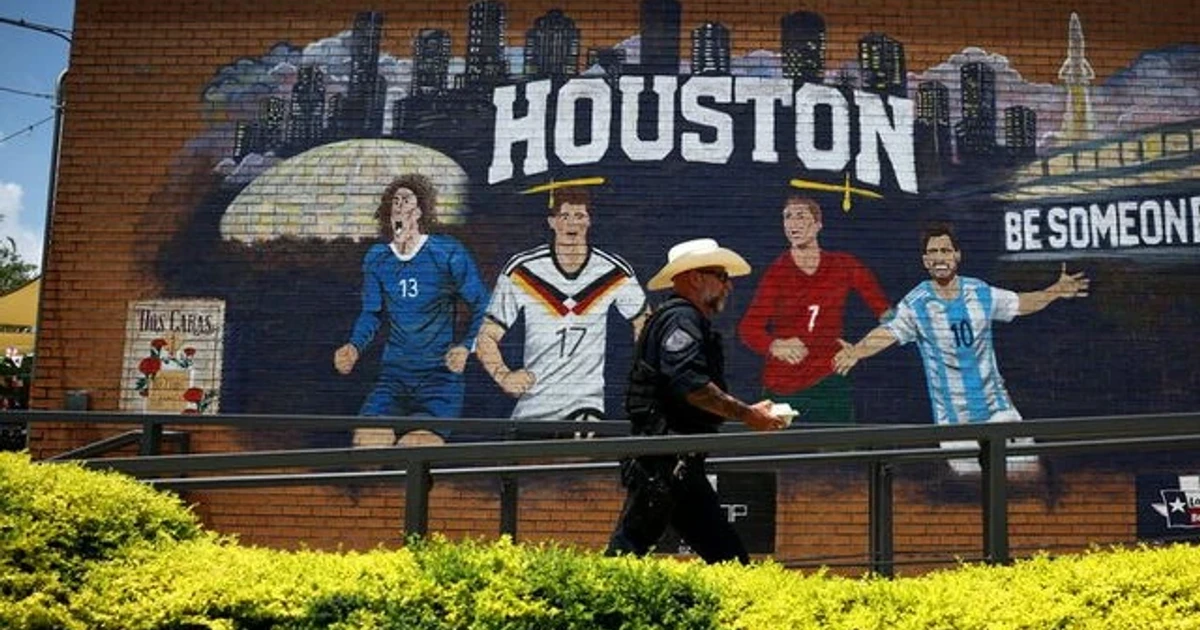
Houston’s World Cup crowds look less like a temporary sports spectacle than a city seeing itself in public. With roughly one-third of residents born outside the United States and around 145 languages spoken, the tournament has turned bars, parks and fan zones into a live portrait of migration becoming civic identity. In Houston, the global game does not sit apart from city life. It blends into the city’s neighborhoods, work force and everyday rituals.
A city that already looks like the world
Houston’s scale helps explain why the World Cup feels so at home here. The City of Houston Planning and Development Department puts the July 1, 2024 population at 2,333,346, while a separate current demographic page lists 2,392,327, underscoring how fast the city keeps growing. City open-data and Census-based materials use American Community Survey estimates to track population, language and race and ethnicity trends, and those numbers show a city that is majority-minority, with substantial Hispanic/Latino and Asian populations.
That profile is not abstract when the tournament arrives. Reuters described Houston as one of the nation’s largest foreign-born cities, with roughly one-third of residents born outside the United States, a share that helps explain why the World Cup does not feel imported so much as amplified. The city’s economic base, built on energy and medical jobs, affordable living and proximity to Latin America, has long made it a magnet for newcomers, and the tournament has simply made that visible in one concentrated burst.
The fan festival as a civic square
Houston’s FIFA Fan Festival has become the clearest stage for that public mix. Local media described it as a 275,000-square-foot entertainment district in East Downtown expected to welcome more than 500,000 visitors across 34 match days. The site’s main entrances are on Walker Street and Bastrop Street near Shell Energy Stadium, along with Polk Street between Hutchins Street and Emancipation Avenue, placing the festival squarely in a part of the city where dense foot traffic and transit access already shape daily life.
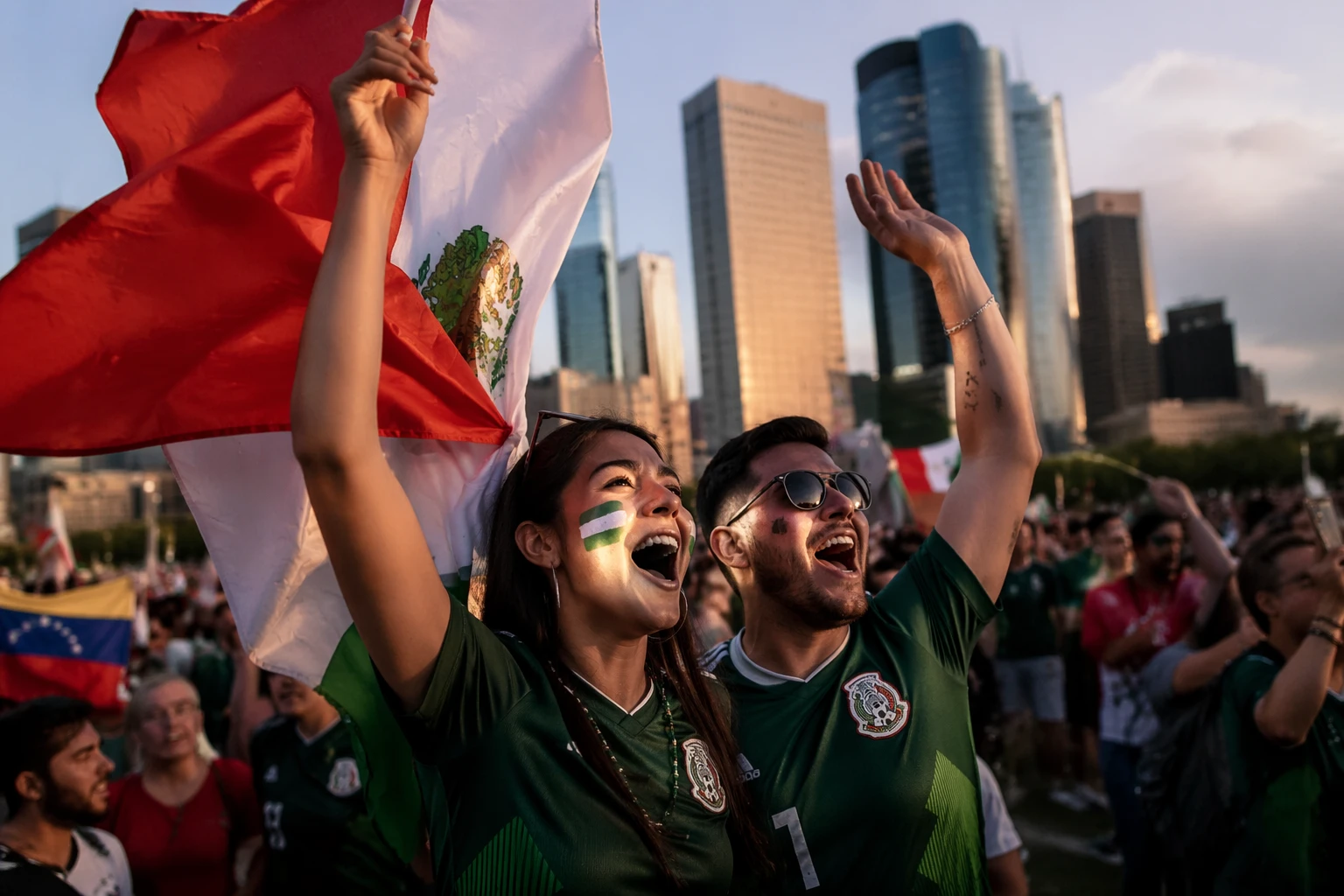
Inside that footprint, the atmosphere has been less like a single event than a rotating civic gathering. Patti Smith, who runs the festival, estimated as many as 20,000 people were attending daily, with different nationalities filling the crowd each night. That scale matters because it turns the fan zone into a temporary public commons, one where spectators are not just consuming soccer but performing the city’s diversity in real time.
Programming has also been designed to fold Houston into the global tournament rather than hang local culture on the margins. A Houston Chronicle preview said the festival would mark an H-Town Day celebration tied to a U.S. Men’s National Team match and include a performance by Trae tha Truth. That choice signals how major events can work in Houston: not by replacing local identity, but by making local identity part of the draw.
Flags, faith and neighborhood pride
The clearest visual cue in Houston’s World Cup crowd is the flags. The city’s large Mexican heritage population is especially visible when El Tri plays, when green jerseys flood the stands and the festival takes on the feel of a neighborhood block party scaled up to city size. But the scene extends well beyond any one national team, with supporters from South Korea, Canada and many other countries treating matches as a chance to show who they are and where they come from.
That pride shows up in the smallest details. South Korean attendee Sae Yang described the shared celebrations as part of what makes the tournament special, while Canadian fan Saige Antoine pointed to the flags and accessories on display as a way of showing cultural pride. Even Houston residents with Czech heritage have been using the tournament to celebrate their roots, a reminder that the city’s immigrant story is layered, not limited to the biggest communities or the loudest banners.
Religious accommodation has been part of the same logic. During an Egypt match, organizers set up a prayer room and a foot-washing area for Muslim supporters, a practical adjustment that speaks volumes about how seriously the festival has taken the needs of different communities. In a city where public space is already shaped by many faiths and languages, that kind of detail matters as much as the scoreline.
What the World Cup reveals about Houston
The World Cup does not change Houston so much as reveal the city at full volume. Its economy draws workers from across the world, its neighborhoods carry traces of many migrations, and its official data systems track those shifts through language and foreign-born estimates. The result is a public culture in which a soccer crowd can feel like a census come to life, with Tejano acts, Bollywood performers, green jerseys and national flags all sharing the same frame.
That is why Houston’s tournament atmosphere has resonated beyond the matches themselves. The city’s demographics, its open-data profile and its fan festival programming all point to the same conclusion: global sports become local civic identity most powerfully in places that already live with that identity every day. In Houston, the World Cup is not only a celebration of the game. It is a snapshot of how an American city made by migration turns diversity into part of the spectacle.
Sources
- [1]usnews.com
- [2]houstontx.gov
- [3]houstonchronicle.com
- [4]cw39.com
- [5]data.houstontx.gov