US News
How animals use communication to build cross-species partnerships
Cross-species cooperation is often described as instinct, but the deeper story is communication. Animals that belong to different species still manage to coordinate when they can read one another’s cues, send signals at the right moment, and adjust when the balance of benefits shifts. The result is not random coexistence but negotiated exchange, with each side watching for signs of honesty, timing, and possible cheating.
That is the central insight of a June 2026 review in Animal Behaviour, titled The ecology and evolution of cues and signals in animal interspecies cooperation. Written by 57 co-authors from multiple disciplines, the paper grew out of an interdisciplinary workshop on interspecies cooperation in Cambridge in June 2023. Its lead author, Katie Dunkley of the University of Oxford and a BBSRC Research Fellow, argues that information sharing is what allows close coordination between species in the first place.
How signals turn contact into cooperation
The review focuses on the mechanics of partnership: visual, acoustic, and behavioral signals that help animals align their actions. That matters because species do not automatically experience the world in the same way. One animal may be tracking scent, another movement, another sound, so the gap in perception itself becomes a coordination problem.
Signals help close that gap. They allow one species to announce intent, another to respond, and both to synchronize behavior around a shared task such as finding food, avoiding predators, or cleaning parasites. In that sense, communication is not just a prelude to cooperation, it is the infrastructure that keeps the deal running.
The deal in the savanna, the reef, and the honey field
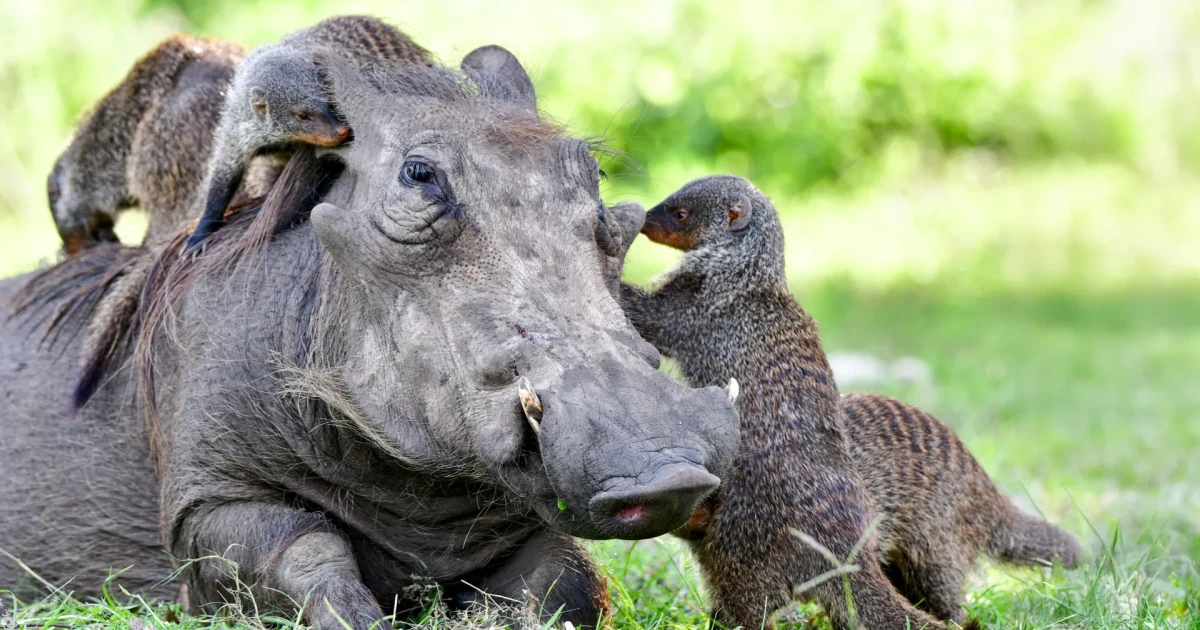
The review draws especially vivid examples from very different ecosystems. Banded mongooses cooperate with common warthogs by removing ticks and other parasites, while the warthogs offer safety and access to resources. Greater honeyguides use specialized calls to lead humans to bees’ nests, and they also respond to human calls, showing that the exchange works in both directions.
Cleaner fish provide another striking case. They remove parasites from larger fish and are rewarded with food, but these interactions are more than a simple transaction. According to Dunkley’s Oxford profile, some cleaner species perform thousands of cleaning events each day, which means the cumulative effect of these exchanges reaches beyond individual animals and into the health of entire reef communities.
Why trust matters when species cooperate
The review makes clear that cooperation is not risk-free. A partner can cheat, take more than it gives, or fail to deliver after receiving the benefit of trust. That is why the paper places so much weight on recognition and signaling: animals need ways to identify reliable partners and detect when another animal is exploiting the interaction.
This is where the hidden mechanics of cooperation become most interesting. Communication does not simply advertise willingness to cooperate; it also helps animals judge whether a relationship is worth maintaining. In practice, that means timing, repeated interaction, and honest signaling can stabilize partnerships that would otherwise collapse under the pressure of short-term self-interest.

What makes interspecies cooperation harder than it looks
Cross-species alliances are difficult precisely because the participants are not the same kind of decision-maker. The review stresses that animals often have to align actions even when they perceive cues differently, which makes coordination more complex than a casual glance suggests. A successful partnership depends on knowing when to act, how to read a signal, and how to respond quickly enough that both species gain.
That complexity helps explain why the paper treats communication as the core of cooperation rather than a side detail. If one animal moves too early, or another fails to recognize the cue, the whole exchange breaks down. The research therefore frames cooperation as a system for coordinating timing and aligning interests, not just as an accidental mutual benefit.
A broad ecological pattern, not a niche curiosity
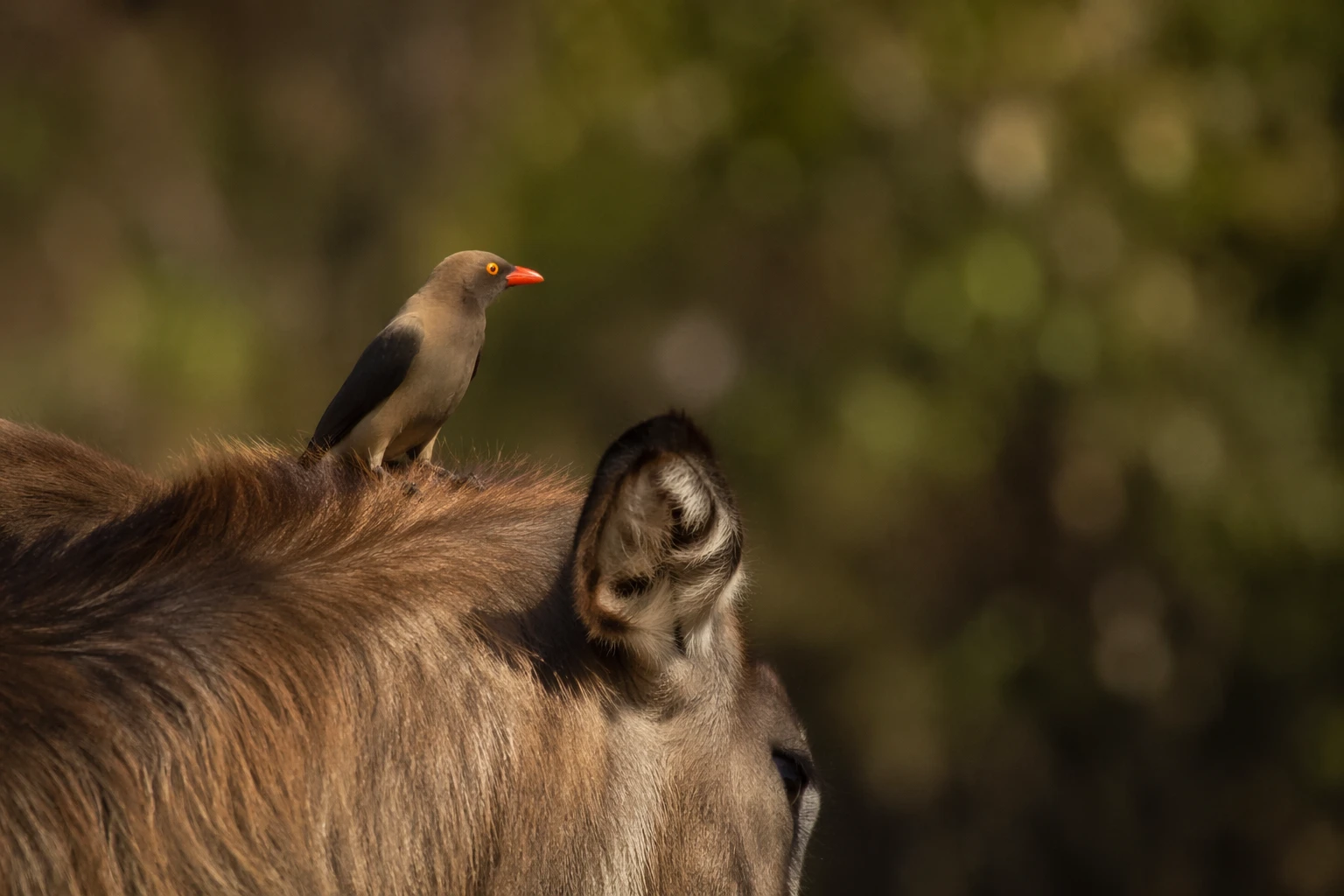
The review pulls examples from birds, fish, insects, and mammals, showing that interspecies cooperation is a broad ecological phenomenon. That matters because it pushes against the idea that such partnerships are rare exceptions. Instead, the natural world appears full of information-rich exchanges in which animals negotiate access to food, protection, or services.
The ecological implications are substantial. Cleaner fish interactions help maintain healthy, diverse fish communities, while honeyguide partnerships show that cooperation can extend to humans as well as to other animals. Taken together, these examples suggest that mutualism works best when species can trade signals as well as services.
Why this line of research is growing
The June 2026 review also fits into a larger scientific shift. Related work published in Current Biology in February 2025 examined the cognitive underpinnings of cross-species cooperation, signaling growing interest in how animals think about other species as social partners. The new review extends that conversation by focusing on the cues and signals that make those relationships possible in the first place.
Oxford coverage highlights co-authors including Eliupendo Laltaika, Leela Channer, and Alexandre Machado, underscoring how interdisciplinary the project is. That breadth matters because interspecies cooperation sits at the intersection of behavior, ecology, cognition, and evolution. The more scientists look closely, the more these relationships resemble structured exchange systems, with rules, signals, and incentives that shape who benefits, who cheats, and which alliances endure.
The bigger lesson is that animal cooperation is often less about reflex and more about communication under pressure. Across reefs, forests, savannas, and human landscapes, species that can read one another well enough to coordinate gain a lasting advantage, and the partnerships that survive are the ones built on reliable information.
Sources
- [1]sciencedaily.com
- [2]phys.org
- [3]biology.ox.ac.uk
- [4]ora.ox.ac.uk
- [5]bnc.ox.ac.uk
- [6]repository.cam.ac.uk