Science
How Bacteria’s Wrapping Flagella Help Them Tunnel Through Microscopic Passages
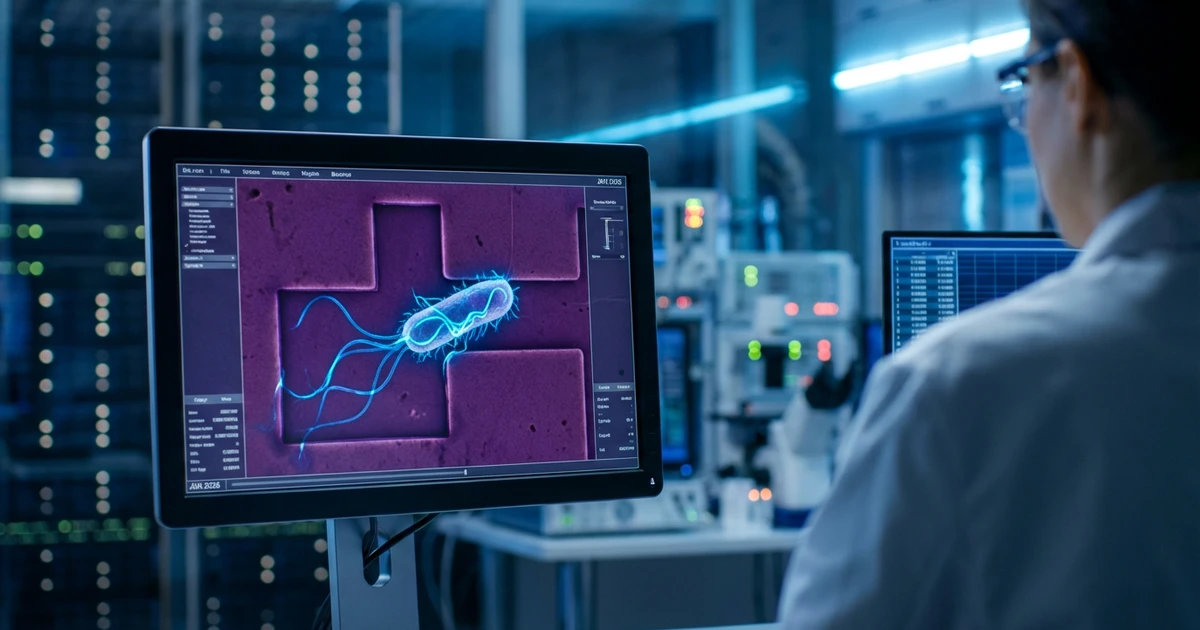
New insights from recent research have uncovered how bacteria harness the power of their wrapping flagella to tunnel through spaces as tiny as one micrometer squared, shedding light on microbial navigation in confined environments. This discovery opens up exciting avenues for understanding bacterial behavior and could impact fields ranging from medicine to nanotechnology.
The Mechanics of Bacterial Movement
Bacteria are known for their remarkable adaptability and resourcefulness, especially when traversing complex environments. A key tool in their motility toolkit is the flagellum—a whip-like appendage that spins to propel the cell forward. While flagella are often depicted as simple propellers, new research reveals a more sophisticated mode of action in tight spaces: flagellar wrapping.
- Bacteria can wrap their flagella around their bodies, creating a helical structure that allows them to exert force in confined environments.
- This wrapping mechanism enables bacteria to break through passages as narrow as one micrometer squared, a scale smaller than most human cells.
Breaking Through Microscopic Barriers
The study, highlighted by Phys.org and also published in Nature, demonstrates that bacteria don’t just squeeze through obstacles—they actively reshape and tunnel through them. When confronted with extremely narrow passages, the bacteria switch from their usual swimming mode to a tunneling behavior, tightly coiling their flagella to push through resistant barriers.
- Observation under high-resolution microscopy revealed bacteria repeatedly wrapping and unwrapping their flagella in response to obstruction.
- This dynamic adaptation gives them the mechanical leverage needed to penetrate micro-scale passages in their environment.
Implications for Science and Medicine
This discovery is more than a fascinating detail of microbial life—it has potential implications for several disciplines:
- Infection and immunity: Understanding how bacteria invade tissues via tight spaces could inform the development of new antimicrobial strategies.
- Biotechnology: Insights into bacterial tunneling could inspire the design of bioengineered systems for targeted drug delivery or micro-scale construction.
- Nanotechnology: Mimicking the flagellar wrapping mechanism may pave the way for new types of nano-robots capable of navigating complex environments.
Looking Ahead: Expanding Our Understanding of Microbial Navigation
As research continues, scientists aim to investigate whether this flagellar wrapping behavior is widespread among different bacterial species or specialized to those thriving in the most challenging micro-environments. Further studies may also reveal how environmental factors, such as fluid viscosity or chemical gradients, influence this remarkable tunneling behavior.
Ultimately, these findings underscore the adaptability of bacteria and the intricate mechanics they employ to survive and thrive—even in the most confining spaces. Understanding these strategies not only enriches basic biology but could drive innovations across medicine, engineering, and beyond.
Sources
- [1]Phys.org