Health
How buffer proteins mask harmful mutations and shape disease risk
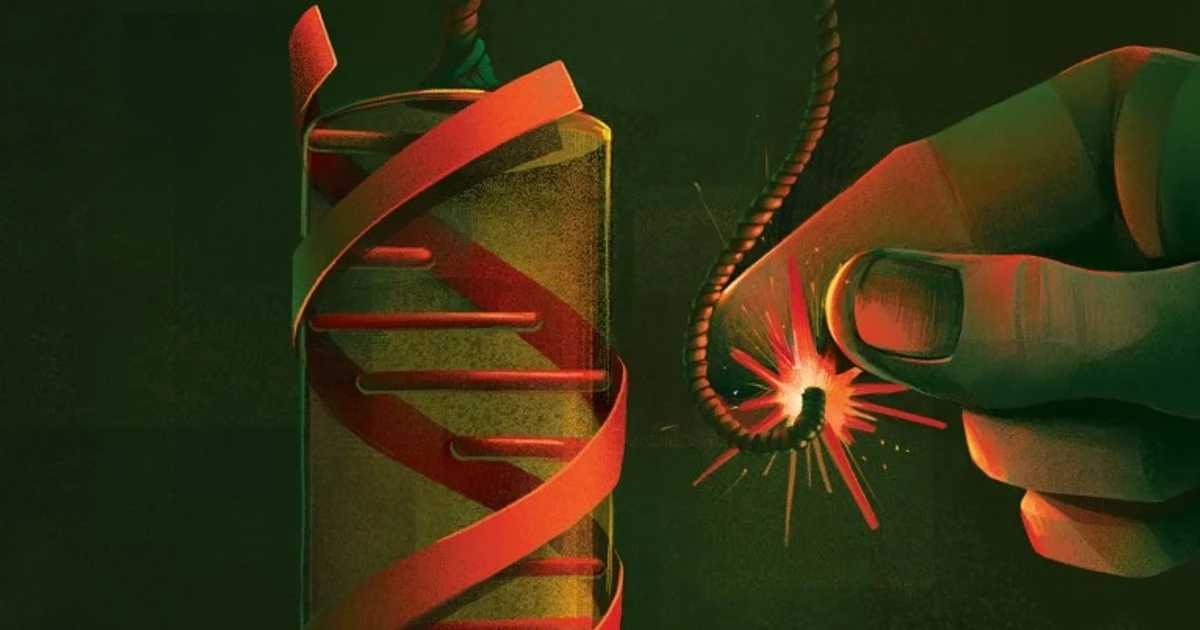
A Nature news feature published June 17, 2026 argues that some proteins act like molecular shock absorbers, masking the damage that dangerous mutations might otherwise cause. That idea matters far beyond basic biology: if the cell’s built-in buffering systems can be strengthened, redirected, or removed at the right moment, they could change how disease is prevented, diagnosed, and treated.
What buffer proteins are doing inside the cell
The central insight is that genes do not act in a vacuum. A mutation can sit quietly for years because other proteins, folding machines, or backup pathways keep the damaged product working well enough for cells to survive. That is why two people with similar variants can have very different outcomes: the mutation is only part of the story, and the surrounding molecular environment can hide or reveal its effect.
This logic is not new. Classic Nature work more than two decades ago described Hsp90 as a “capacitor” for morphological evolution because it can buffer genetic variation until stress exposes it. A 2017 Cell review later sharpened the point for human biology, arguing that HSP90 shapes the consequences of human genetic variation even though its role in human disease was still unclear at that time. The current wave of studies turns that broad idea into something much more concrete.
How cancer has helped reveal the mechanism
Cancer has become a powerful test case because tumors often carry heavy mutational loads and still manage to survive. A 2024 eLife study analyzing 10,295 human tumors found that high mutational-load cancers up-regulate proteostasis machinery tied to protein misfolding. In plain terms, those tumors lean harder on systems that degrade or refold proteins, and their viability becomes strongly dependent on those complexes.
That is important for drug discovery because dependency can be turned into vulnerability. If a tumor is addicted to a buffering system to keep its damaged proteins functional, then blocking that system may expose a weakness the cancer has been hiding. The same biology that lets a cell tolerate genomic chaos can also make that cell unusually fragile when its protective network is removed.
A 2025 Molecular Cell study pushed the idea into a specific disease gene: HSP90 buffers deleterious BRCA1 variants in the BRCT domain. The buffered BRCA1 mutations retained interactions with partner proteins and became strongly dependent on HSP90 for protein stability and for cell survival. That is a striking example of how a “master” protein can soften the blow of a risky mutation, while also creating a point of attack if a therapy can selectively break that support.
Compensation is broader than one chaperone
The protection is not limited to HSP90. A Science paper published February 12, 2026, from MIT and the Whitehead Institute for Biomedical Research described a compensation system in which cells can activate backup genes after some loss-of-function mutations. That work, led by researchers including Mohamed El-Brolosy and Jonathan Weissman, suggests that cells sometimes respond to genetic damage by turning on alternative genes that reduce the impact of the mutation.
That same logic appears in a separate MIT report from January 23, 2026. It found that HSF1, a heat-shock response regulator, can create a “safety net” that helps deleterious dominant-negative p53 variants persist. Those mutant proteins are among the most dangerous in cancer because they can sabotage the function of the normal protein they resemble. In other words, the very systems that stabilize cells under stress can also help aggressive cancer cells endure.
Together, these findings show that mutation buffering is not a single trick but a layered system. Chaperones, proteostasis machinery, RNA-linked compensation, and stress-response regulators all help determine whether a harmful variant becomes disease or stays hidden.
Why the drug idea is credible, and why it is still early
The drug potential is real enough to take seriously because the biology is now supported by multiple independent lines of evidence. There is a clear therapeutic logic in both directions. In healthy tissue, a future treatment might reinforce a buffer so a vulnerable pathway does not collapse. In cancer, a therapy might do the opposite and strip away the masking effect so a tumor reveals its weak point.
Still, the path from mechanism to medicine is long. The biggest unknowns are which buffers are broadly useful, which are tissue-specific, and how to manipulate them without causing collateral damage. A chaperone or stress-response pathway that protects healthy cells could also protect precancerous or malignant cells if it is boosted in the wrong context.
Any real treatment would need to clear several hurdles: • identify the exact buffer that matters for a given disease • show that changing it improves human cell function, not just lab readouts • prove that the effect is selective enough to avoid harming normal tissues • build biomarkers that can tell which patients are likely to benefit
That makes this a plausible but still early therapeutic frontier. The science points toward future drugs that do more than hit broken proteins directly. They may also restore the molecular buffers that keep mutations from turning into disease.
Why this changes the public-health conversation
This line of research also carries real-world consequences for families, clinics, and health systems. If buffering helps explain why the same mutation can lead to different outcomes, then genetic counseling will have to account for more than a variant’s label. Risk will be shaped by the cell’s internal support network, which means interpretation of inherited mutations may become more nuanced, and sometimes more uncertain.
The social stakes are just as important. Access to advanced sequencing, tumor profiling, and future gene-based therapies is already uneven, and a buffering-based medicine could widen those gaps if it remains concentrated in elite academic centers. For that reason, public investment in diverse genomic datasets, equitable testing, and transparent clinical guidance will matter as much as the biology itself. If this field matures as hoped, it should not only explain why some mutations are silent. It should also help build treatments that reach beyond the lab bench and into the communities most burdened by genetic disease and cancer.
Sources
- [1]nature.com
- [2]news.mit.edu
- [3]elifesciences.org
- [4]cell.com