Science
How Cats Master the Art of Landing on Their Feet
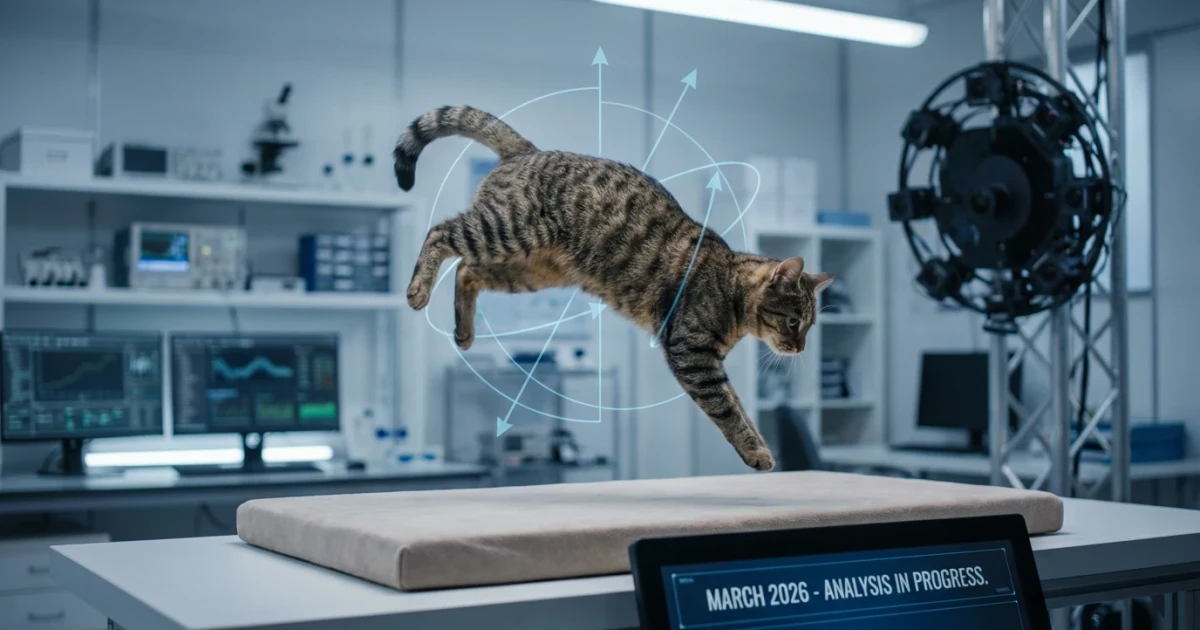
Cats have long fascinated humans with their uncanny ability to land on their feet after a fall—a phenomenon that continues to intrigue both pet owners and scientists. Recent research, including studies highlighted in The New York Times and findings by Japanese researchers, is shedding new light on the biomechanics and instinctual behaviors that enable felines to perform these remarkable aerial maneuvers.
The Righting Reflex: Nature's Built-In Survival Mechanism
One of the key factors driving a cat's ability to land on its feet is the cat righting reflex. This innate response, first observed in the late 19th century, allows kittens as young as three weeks old to orient their bodies during a fall. The process is rapid: within a fraction of a second, a cat twists its spine and repositions its limbs to ensure feet-first contact with the ground.
- High-speed cameras have revealed that cats rely on flexible spines and a lack of collarbone, which lets them rotate their front and back halves independently.
- The tail often acts as a counterbalance, but cats without tails can still perform the maneuver, emphasizing the importance of spinal flexibility and instinct.
Recent peer-reviewed biomechanical analysis provides detailed breakdowns of these movements, noting that the sequence begins with the head, followed by the forelimbs, spine, and finally the hind limbs.
New Insights from Japanese Research
Japanese scientists have contributed fresh insights to this field, as referenced in The New York Times and other outlets. By combining high-speed video with biomechanical modeling, they discovered that cats optimize their landings by adjusting their limb positions and body orientation mid-air. The studies indicate that cats use subtle muscle contractions and rapid spinal rotations to control angular momentum, ensuring a controlled descent.
Additionally, flexible paws and shock-absorbing joints help dissipate the force of landing, which aligns with findings from veterinary medicine. This not only prevents injuries but also allows cats to survive falls from considerable heights—a phenomenon documented as high-rise syndrome in urban environments.
High-Rise Syndrome: When Science Meets Survival
While cats are often seen as miraculous survivors, data from the Journal of the American Veterinary Medical Association and AVMA highlights the realities behind feline falls. Veterinary records show that cats often survive falls from several stories, but injuries still occur—most commonly to the chest and limbs. Interestingly, survival rates may increase with falls from higher stories, as cats have more time to reorient and spread their bodies, increasing air resistance and reducing terminal velocity.
- Studies report survival rates upwards of 90% for cats falling from six stories or higher, though the risk of internal injuries remains significant.
- Veterinarians stress that while the righting reflex is remarkable, it is not a guarantee against harm, and open windows remain a real hazard for urban cats.
Physics and Evolution: A Perfect Partnership
Comprehensive literature reviews and explainers note that the physics of a cat's fall involve more than just agility. By spreading their limbs, cats increase drag and slow their descent—a process similar to a skydiver’s spread-eagle posture. This, combined with their lightweight frame and flexible bodies, reduces the impact of landing.
Evolution has also played a role: cats, as tree-dwelling predators and climbers, have developed these reflexes over generations to enhance survival. Their keen sense of balance, acute spatial awareness, and rapid reaction times all contribute to this unique adaptation.
What Cat Owners Should Know
Despite the impressive science behind the righting reflex, experts urge caution. Open windows and balconies are a significant risk, especially in high-rise apartments. The AVMA recommends window screens and supervision to prevent accidental falls.
Ultimately, the mystery of why cats land on their feet is a blend of physics, instinct, and evolutionary design—offering a window into the remarkable adaptations of our feline companions.