US News
How Frederick Douglass used photography to fight slavery
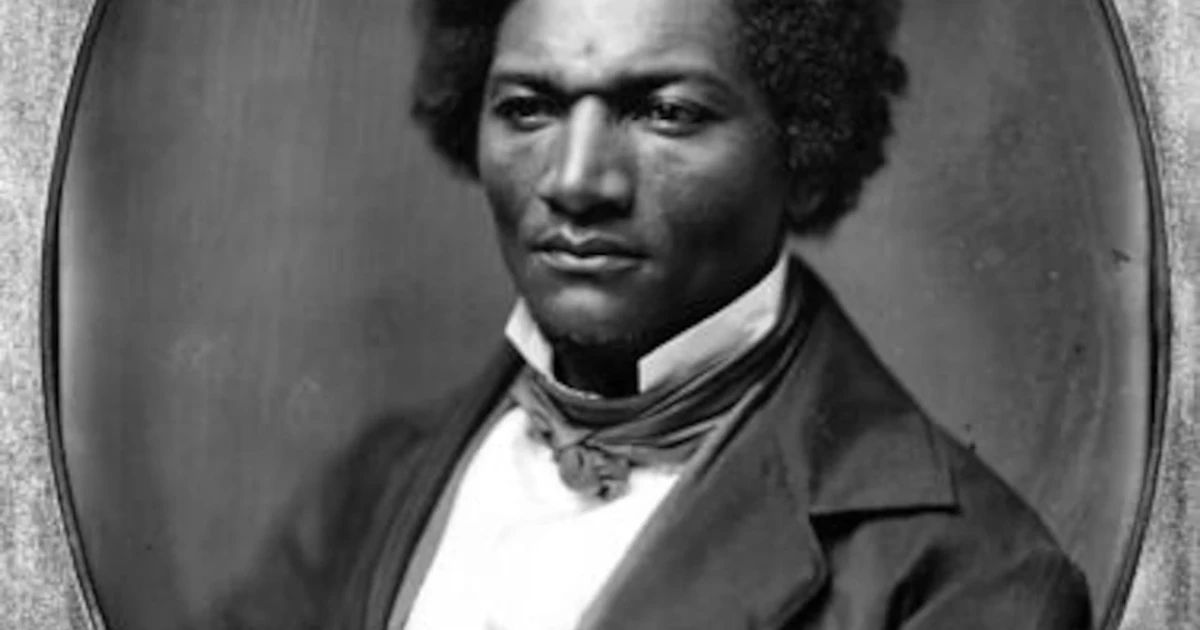
Frederick Douglass understood image as political strategy long before the modern media age. Born into slavery in 1818 in Tuckahoe, Maryland, and escaping on September 3, 1838, he built a public life that made visual self-presentation part of the fight against slavery. By choosing how he appeared in photographs, he challenged racist caricatures, asserted Black humanity, and turned portraiture into an argument for abolition.
A self-made public figure
Douglass rose from enslavement to become one of the foremost African American leaders of the 19th century, a writer, orator, and intellectual whose authority reached far beyond the abolitionist movement. The Library of Congress identifies him as an African American abolitionist and national leader, and that description fits the way he used every available platform to shape public opinion. Photography gave him something new: a way to control how Black leadership looked in a culture that had long relied on demeaning images.
After escaping slavery, he settled in New Bedford, Massachusetts, where he educated himself, joined a black church, and attended abolitionists’ meetings. Those early years mattered because they show how quickly Douglass linked personal reinvention to public cause. His image was never just personal branding. It was part of a larger campaign to make Black citizenship visible and respectable in a country structured to deny both.
Why the camera mattered to Douglass
Douglass was a firm believer in the power of pictures. In an 1861 lecture called “Pictures and Progress,” he argued that photography pioneer Louis Daguerre deserved greater recognition alongside other major inventors of the age. That speech reveals how seriously he thought about visual culture at a moment when photography was still relatively new but already powerful enough to influence public memory.
He saw that photographs could do what racist cartoons and caricatures had done for decades, only in reverse. White stereotypes flattened Black features into objects of ridicule and inferiority. Douglass used his own face, posture, and dress to counter that distortion with something far harder to dismiss: dignity, intelligence, and self-possession. The camera became a political tool because it allowed him to present himself as a thinker and a citizen, not a stereotype.
A portrait campaign with historical scale
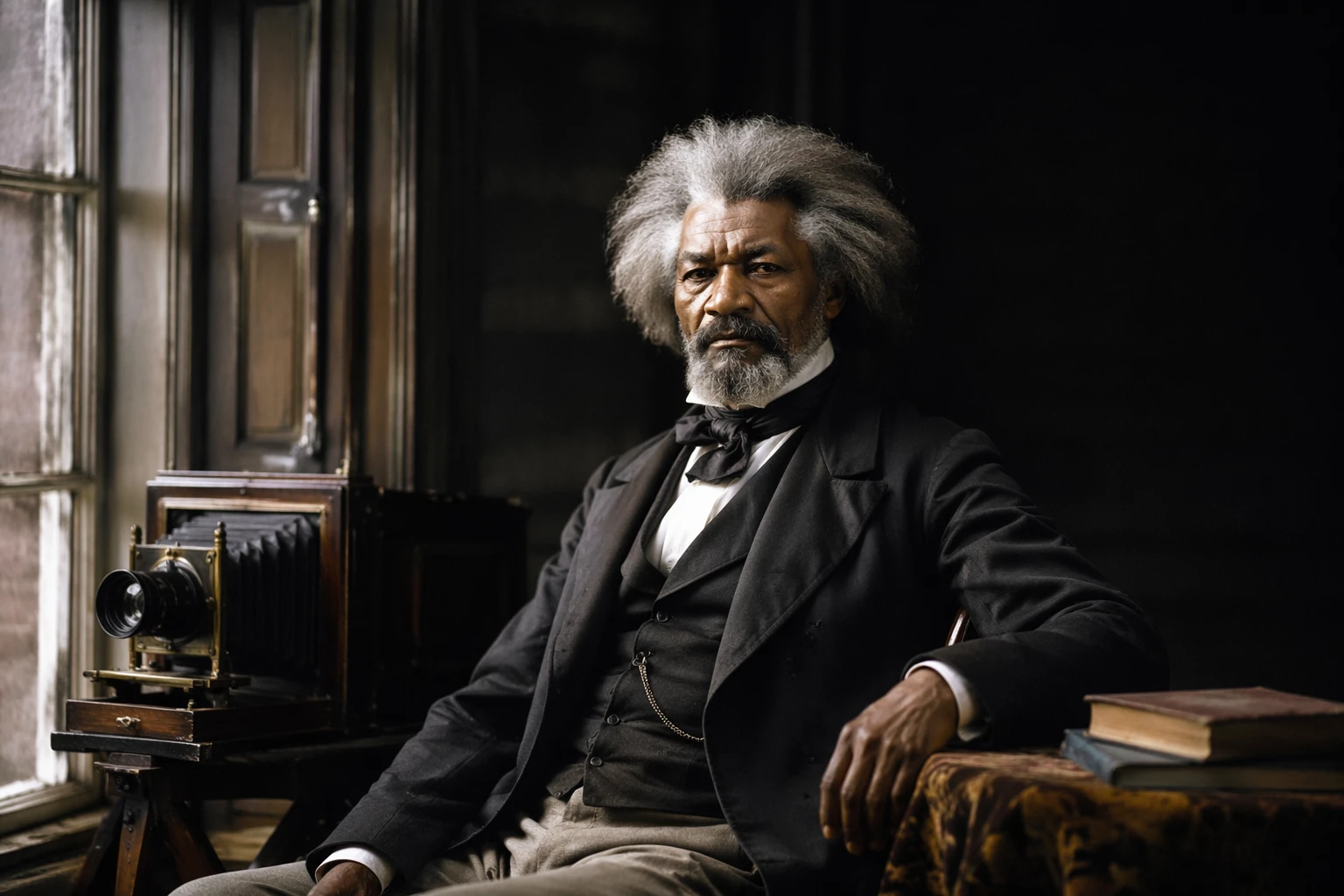
Douglass likely sat for more portraits than any other American of the 19th century. One estimate gives him 168 known photographs, compared with about 130 of Abraham Lincoln. That number matters because it shows how deliberately he worked the medium over time, not as a one-off novelty but as a sustained visual record.
The frequency of those portraits helped create a consistent public image. Each photograph reinforced the same basic message: Douglass was composed, serious, and authoritative. In a period when many white Americans had almost no visual vocabulary for Black leadership except caricature, repetition itself became part of the argument. The more often viewers saw him as he wanted to be seen, the more difficult it became to confine him to racist assumptions.
What Douglass was fighting against
Douglass’s use of photography cannot be separated from the visual culture of slavery. Enslavement depended not only on laws and violence, but also on ideas, especially ideas that justified racial hierarchy. Images that distorted Black features helped sustain those ideas by presenting them as natural or comic rather than political.
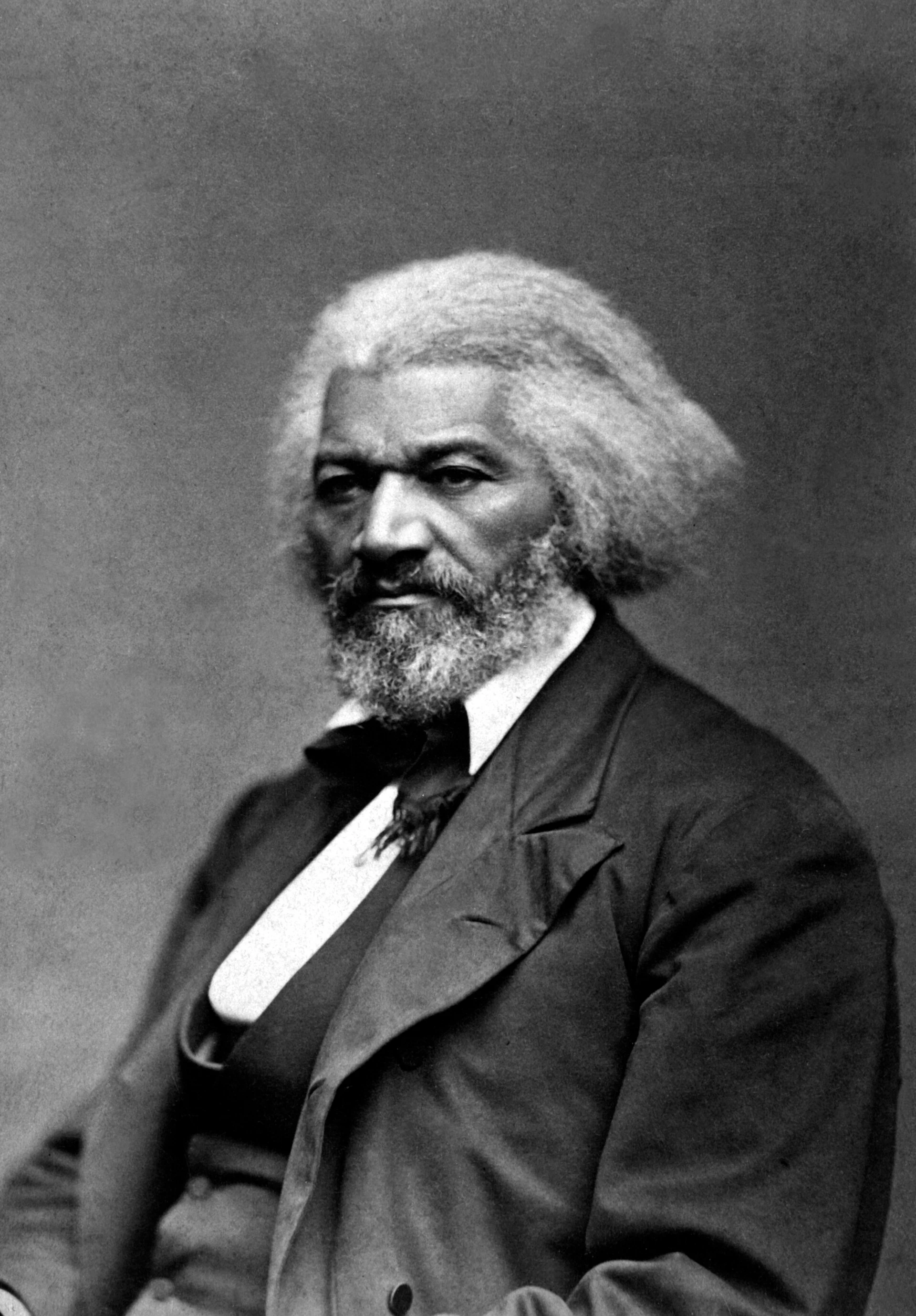
Douglass understood that controlling his likeness meant contesting that machinery directly. His portraits offered an answer to the visual language of white supremacy. They insisted that a Black man could be refined without being exceptional, intellectual without apology, and resolute without aggression. In that sense, the photographs were not decorative artifacts. They were evidence.
The abolitionist message embedded in the image
Photography served Douglass’s abolitionism because it gave his public life a visual authority that matched his speeches and writing. His image did not stand apart from his politics. It helped make them legible. For audiences who might never hear him speak in person, the photograph delivered a compact version of the same message: slavery deformed the nation, while Black self-possession exposed the lie that African Americans were incapable of citizenship.
PBS’s 2023 series Becoming Frederick Douglass and related resources underline the same point. They frame his control of his image as a crucial step in challenging stereotypes and advancing the abolition of slavery. That interpretation aligns with the historical record: Douglass did not treat photography as decoration or vanity. He used it as part of a broader abolitionist and self-fashioning strategy that strengthened his role in the struggle for racial equality.
How to read Douglass’s photographs now
Douglass’s portrait strategy still matters because the fight over representation has not ended. The medium has changed, but the stakes remain familiar: who gets to define public image, who is reduced to stereotype, and who is granted the authority to appear as fully human. Douglass anticipated those battles by insisting that photographs could be instruments of power.
His example also shows that representation is never neutral. A portrait can reinforce hierarchy, or it can challenge it. Douglass made sure his photographs challenged it, one image at a time. That is why his visual legacy endures: he used the camera to claim the dignity slavery tried to deny, and he made that claim in a form the wider public could see.
Sources
- [1]cbsnews.com
- [2]blogs.loc.gov
- [3]smithsonianmag.com
- [4]pbs.org
- [5]loc.gov
- [6]wxxi.org