Sports
How hydration breaks work in CONMEBOL and the 2026 World Cup
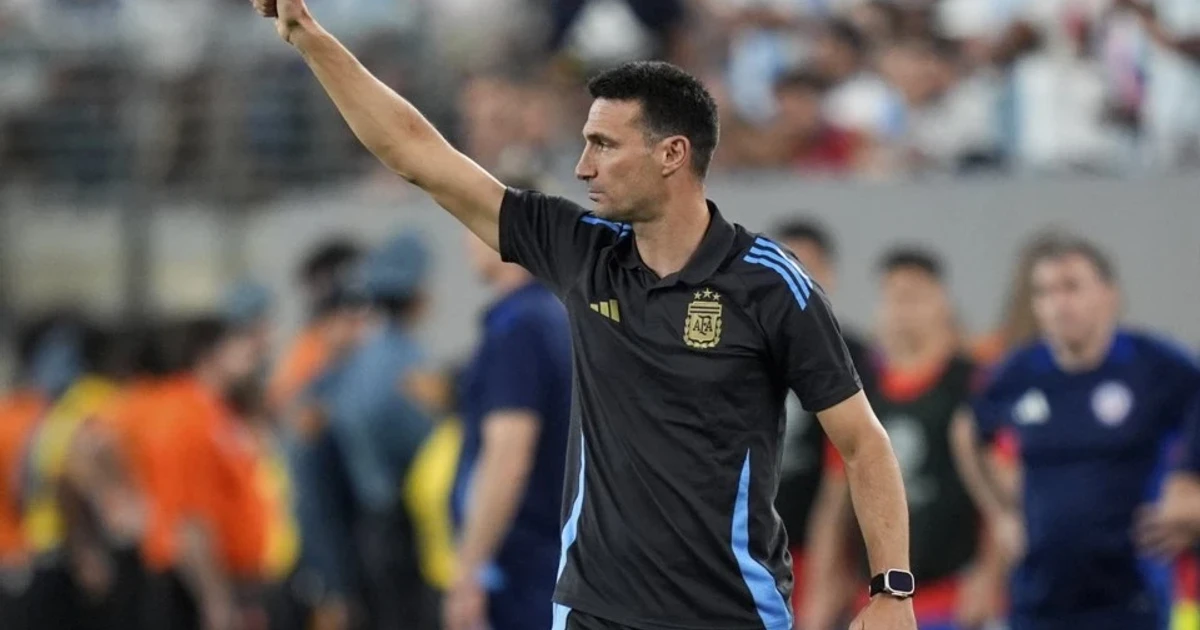
A simple pause for water can expose far more than fatigue. In Argentina’s case, the cooling-break scene, with Lionel Scaloni soaked by the sprinklers while Rodrigo De Paul took charge, showed how the champion manages stress, authority, and communication when the match is interrupted by heat. It also points to a bigger shift in the game: hydration breaks are no longer improvised moments of relief, but regulated tools of player welfare in CONMEBOL and, from the 2026 World Cup onward, in every match FIFA stages.
What a hydration break actually is
A hydration break is a brief interruption built into play so players can cool down and rehydrate in difficult conditions. Under CONMEBOL medical protocols, the pause can last between 90 seconds and 3 minutes, and it is generally available between the 30th and 75th minute of a match. The key point is that the referee controls whether it happens and when it is applied, which makes it part of match management rather than a guaranteed stoppage.
That discretion matters. In South American conditions, especially in heat and humidity, the break is not just a pause for drinks. It becomes a tactical reset, a chance for coaches to adjust shape, for leaders to speak directly to the group, and for players to recover enough to keep the tempo from collapsing.
How CONMEBOL uses the break in practice
CONMEBOL’s framework gives the referee responsibility for implementation and control, which means the stoppage is tied to conditions on the field rather than a fixed timetable. The break may be short enough to feel almost invisible from the stands, yet those 90 seconds to 3 minutes can reshape the rhythm of a half. Teams that organize themselves quickly can use it to recover discipline, while disorganized teams can lose the momentum they had built.
The Argentina scene captures that distinction. When the sprinklers hit Scaloni as he was giving instructions, the moment was more than comic relief. It showed a staff and squad that had to stay verbally connected even as the environment intruded, and it showed De Paul stepping into the space as a conduit between the coach and the players.
Why the Argentina moment matters
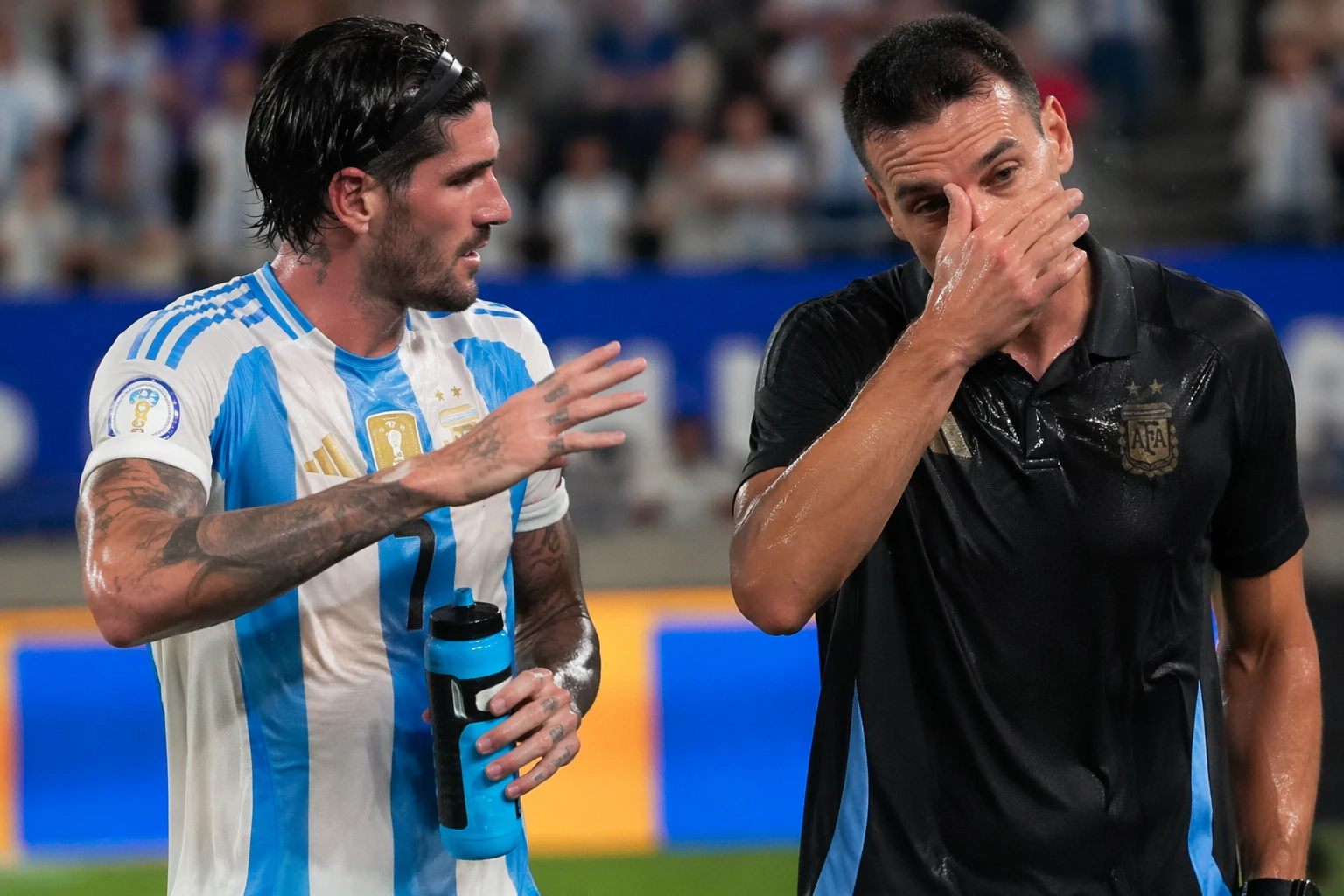
Rodrigo De Paul is not just another midfielder in this setup. Recent reporting has described him as a player with real weight in the national team’s leadership structure and a central part of Scaloni’s inner core. That matters in a cooling break because the pause is too short for elaborate coaching; it depends on trust, speed, and players who can translate instructions instantly.
The soaked-sideline image also reveals how authority is distributed under stress. Scaloni remains the architect, but De Paul is the on-field amplifier, the player who can turn a few urgent instructions into immediate compliance from the group. In a compressed, heat-heavy stoppage, leadership is less about speeches than about clarity, presence, and the ability to keep the team aligned when the game itself loses rhythm.
What FIFA changes at the 2026 World Cup
FIFA has gone further than CONMEBOL. At the 2026 World Cup in Canada, Mexico, and the United States, players will receive three-minute hydration breaks in each half of every match. FIFA framed the decision as a player-welfare policy, and it will be the first World Cup to use this universal structure across the tournament.
That universality is the major shift. In CONMEBOL competition, the break depends on the referee and the conditions. In the World Cup, FIFA is making the pause standard, which means teams can plan around it in advance rather than waiting for the temperature or the match to force a stoppage. For coaches, that changes substitution timing, press patterns, and how much intensity they can demand before and after the interval.
What universal breaks mean for game management
A three-minute break in each half may sound small, but in elite tournament football it can affect several layers of performance. It gives medical staff time to check on players under stress, allows coaches to reset instructions, and helps reduce the risk that heat distorts the final phase of a half. It also creates a predictable break in momentum, which can either help a team regroup or interrupt an opponent that has found its rhythm.

For Argentina, that predictability may suit a group built on cohesion. Scaloni’s squad has already shown it can operate through pressure, and the 2025 campaign ended with early qualification for the 2026 World Cup and a high-level run. In that context, a hydration break is not a novelty. It becomes another stage where a disciplined team can separate itself from a merely talented one.
Why De Paul sits at the center of the story
De Paul’s role is especially revealing because his leadership is not confined to the pitch. He has said he spoke with Scaloni before deciding to join Inter Miami, which shows how closely his career decisions have remained tied to the national-team manager’s view. That kind of relationship is unusual enough to matter, because it suggests that De Paul’s authority inside the Argentina camp is built on more than form alone.
TyC Sports has also described him as recovering ground and moving back toward a starting role, with a strong position to fit the lineup Scaloni imagines for the World Cup debut. The implication is straightforward: when the match pauses, the coach is not speaking into a vacuum. He is working through a trusted intermediary who already understands the system, the stakes, and the tone Scaloni wants the team to project.
What to watch when the whistle blows for water
• Who speaks first: the coach, the captain, or a senior midfielder like De Paul. • How quickly the team reforms its shape after the pause. • Whether the break helps a side regain control or breaks its momentum. • How referee management affects the timing and length of the stoppage under CONMEBOL rules. • How FIFA’s standardized three-minute breaks at the 2026 World Cup change pacing, substitutions, and sideline authority.
The broader lesson is that hydration breaks are no longer a side note. In CONMEBOL they are a referee-managed response to weather and workload, and in the 2026 World Cup they become a fixed part of player protection. In Argentina’s case, the cooling-break scene shows something even more specific: when the heat rises and the spray comes down, leadership is measured by who can keep the team organized, audible, and calm enough to keep winning.
Sources
- [1]telemundo.com
- [2]cdn.conmebol.com
- [3]inside.fifa.com
- [4]tycsports.com
- [5]lanacion.com.ar
- [6]ole.com.ar