Politics
How Lindsey Graham became Trump ally and Washington dealmaker
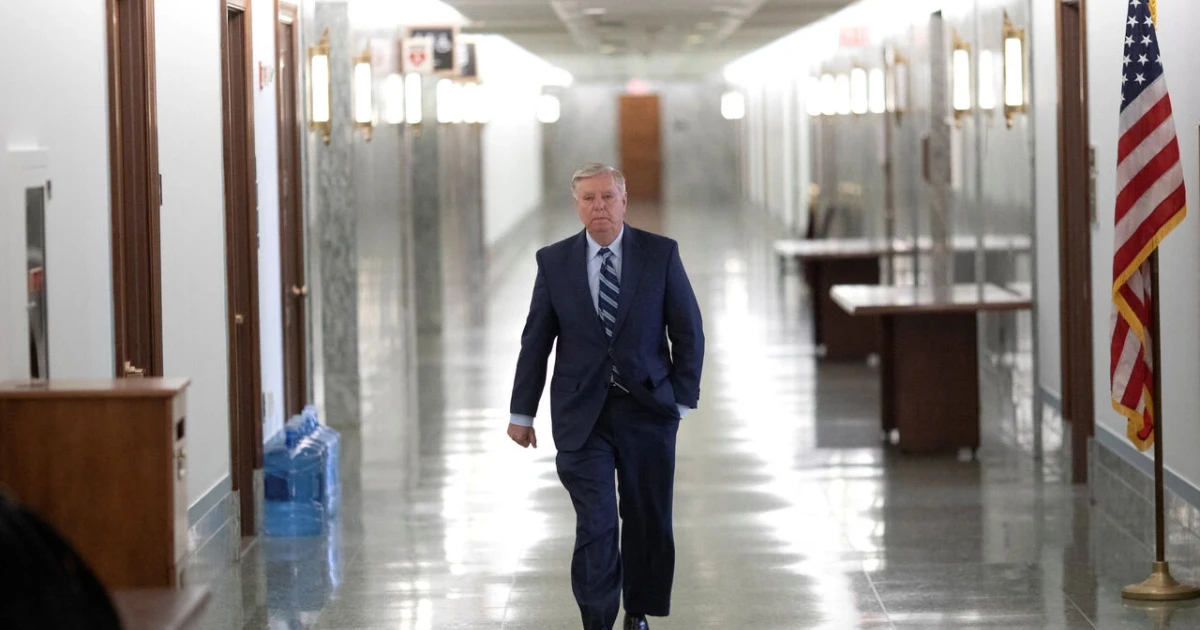
Lindsey Graham stayed central in Washington by making himself useful to people who did not trust each other. He paired a hawkish national-security instinct with a willingness to bargain across the aisle, then used committee power and direct access to Donald Trump to shape fights over spending, borders, defense, and Ukraine.
The method: influence through flexibility
Graham’s political style rested on a simple calculation: stay close enough to power to matter, but loose enough ideologically to move with the moment. NBC News described him as someone with the freedom to disagree with Trump and still remain one of his closest allies, and Graham told the network, “I’m his north star,” while also insisting, “I’m an ally of the White House; I’m not owned by them.” That combination of independence and proximity let him play connector, not just loyalist.
He also understood that influence in Trump-era Washington came from access as much as from votes. NBC reported that he used golf, good humor, and frequent White House visits to keep Trump close, and that he could absorb conflict, drop a hold, and then return to the Oval Office without losing standing. In practical terms, that made Graham one of the few Republicans who could both argue with Trump and still help carry his agenda.
From House newcomer to Senate power broker
Graham’s rise was built over decades, not just through his Trump relationship. He won election to the U.S. House in 1994 as the first Republican from South Carolina’s Third Congressional District since 1877, then entered the Senate after the 2002 election and served there from 2003 onward. That long tenure gave him institutional memory, local political resilience, and the kind of seniority that does not depend on holding leadership titles.
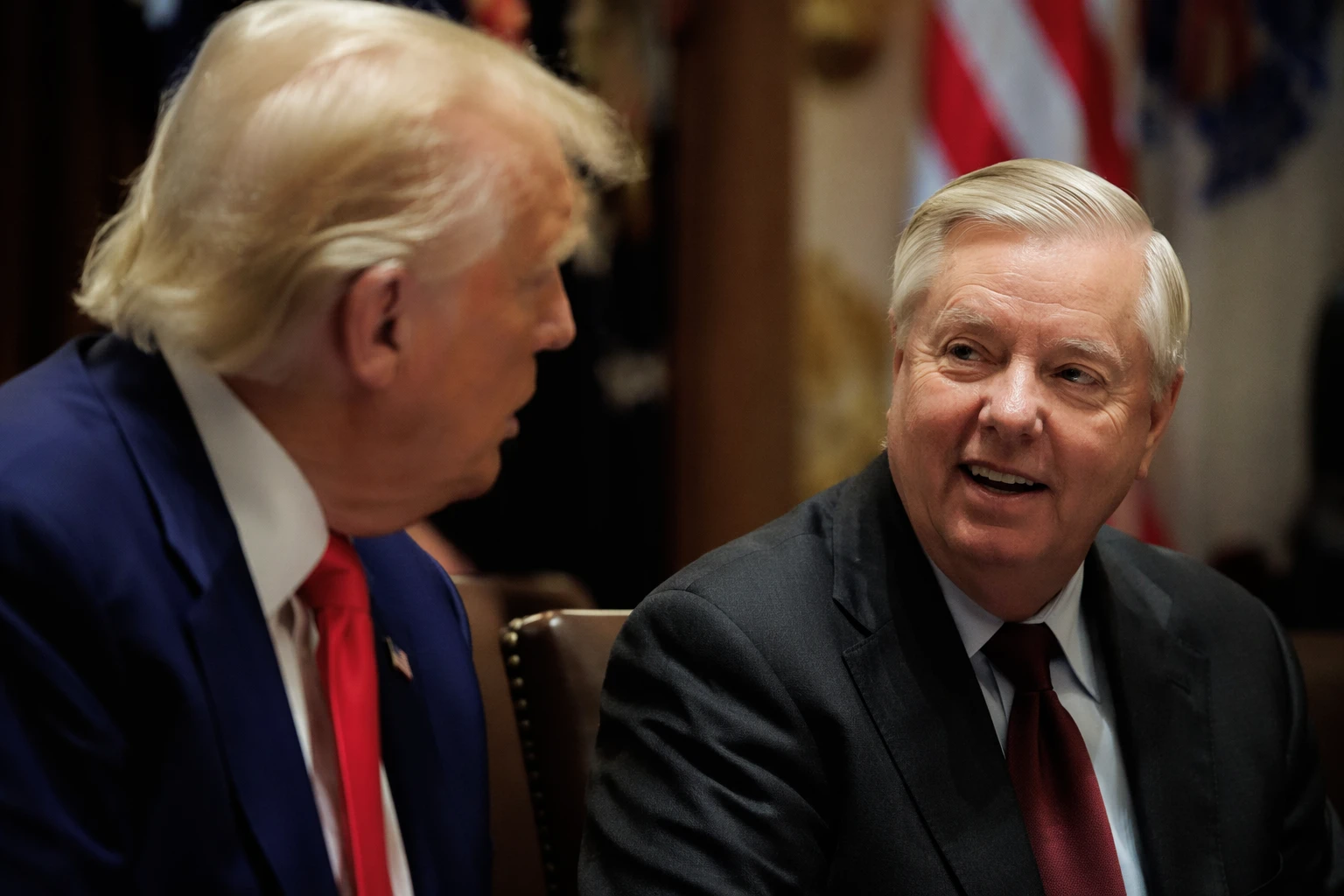
By the 119th Congress, Graham had become chairman of the Senate Budget Committee. He also served on the Senate Committees on Appropriations, Judiciary, and Environment and Public Works, and he had been the Judiciary Committee’s ranking member in the 118th Congress. That portfolio put him in the thick of the fights that shape federal spending, court politics, immigration and border policy, and broader budget negotiations.
Trump, Jan. 6, and the turn from critic to ally
Graham’s relationship with Trump was not static. In 2016, he was among the Republicans who attacked Trump sharply, but after the Jan. 6, 2021 attack on the Capitol, Graham voted to acquit Trump in the Senate impeachment trial and publicly defended that decision. In his statement, he called Jan. 6 “one of the saddest days in American history” and said the impeachment effort was “driven by passion and hatred against President Trump.”
That move mattered because it clarified the method behind the alliance. Graham did not become a Trump ally by abandoning every prior position at once; he recalibrated to preserve access and remain relevant inside the Republican coalition. By doing so, he could align with Trump-backed priorities such as border security and national defense while still keeping enough distance to negotiate when the White House needed a bridge to other senators.
Ukraine, Russia sanctions, and the bipartisan lane

Foreign policy remained Graham’s other durable source of influence. In February 2025, at the Munich Security Conference, he joined Jim Risch, Jeanne Shaheen, and Sheldon Whitehouse in urging the Trump administration and G7 allies to repurpose roughly $300 billion in frozen Russian sovereign assets for Ukraine. The Senate Foreign Relations Committee release made clear that this was not symbolic diplomacy, but a push to convert frozen assets into material support for Kyiv.
That pattern continued in July 2026. On July 9, Graham joined Jeanne Shaheen, Sheldon Whitehouse, Richard Blumenthal, and Roger Wicker in announcing agreement on legislation to hold purchasers of Russian oil accountable. The statement said they had reached an agreement with the Trump administration to move updated Russia sanctions legislation forward, underscoring Graham’s continuing role as a Republican willing to cut a bipartisan deal when Ukraine and sanctions policy were on the line.
Why he still mattered at home
Graham’s Washington power would have mattered less if he could not keep winning in South Carolina. AP called his June 9, 2026 Republican primary and said he won outright, seeking his fifth term in the Senate. That result mattered because it showed he could survive the tension that defined his career: controversial at home, indispensable in Washington, and still strong enough in a solidly Republican state to keep his seat.
The larger story is that Graham built influence by being legible to multiple audiences at once. To Trump, he offered loyalty with enough candor to be useful. To Democrats like Shaheen and Whitehouse, he could still be a partner on Ukraine and sanctions. To Senate institutions, he brought seniority, committee reach, and a habit of inserting himself into nearly every major legislative fight. That is why he remained consequential long after many of his ideological peers had been sorted into simpler camps.
Sources
- [1]nytimes.com
- [2]lgraham.senate.gov
- [3]foreign.senate.gov
- [4]apnews.com