Health
How long people can survive trapped in collapsed buildings
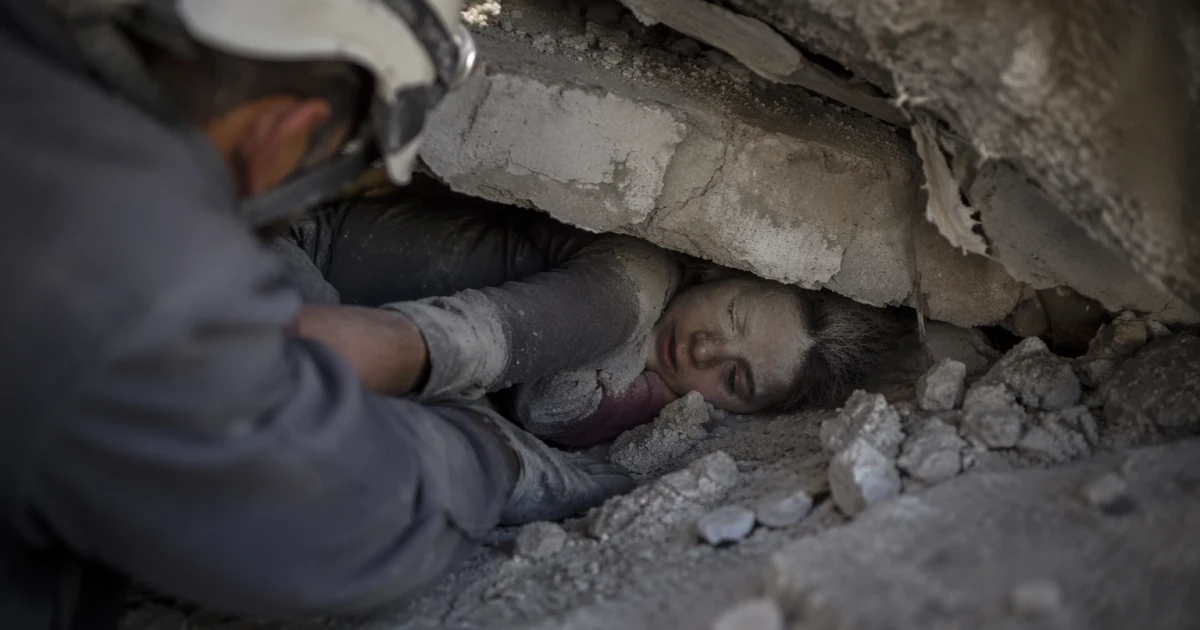
A PubMed-reviewed study of earthquake entrapments documented the longest reliably reported survival under rubble at 14 days. But the margin is brutally narrow. The variables that matter most are simple and unforgiving: whether there is an air pocket, how badly the person is injured, whether water is available, what the temperature is inside the void, and how quickly rescuers can reach them. FEMA’s training materials are blunt: patients may survive for days in entrapment, yet they may also die shortly after rescue if crush syndrome and other complications are not treated immediately.
What decides survival under rubble
The first hours are about oxygen and trauma. A person pinned under concrete may live if there is enough air circulation and if major bleeding, chest injury, or head trauma are not immediately fatal, but dehydration and rising heat or cold can quickly narrow the window. Water matters because a trapped person cannot replace what is lost through breathing, sweating, and shock, and rescue teams know that even a survivable entrapment can turn lethal if medical care arrives too late.
Crush syndrome is one of the most dangerous post-rescue threats. When pressure is finally lifted, injured muscles can release toxins and metabolic waste into the bloodstream, which is why immediate treatment is not optional. FEMA’s guidance is explicit: survival does not end at extraction, because a rescued person can deteriorate rapidly without prompt medical attention.
What the medical evidence shows
The strongest published evidence points to a wide survival range rather than a fixed cutoff. A PubMed-reviewed study of earthquake entrapments found numerous survivors beyond 48 hours under rubble. The same review found that across 18 earthquake events, the average maximum survival time reported was 6.8 days, with a median of 5.75 days.
Some people die within hours from injuries alone, while others remain alive for days because they had an air pocket, partial shelter from the weather, and enough physiological reserve to withstand dehydration and stress. The review also noted outlier reports of survival between 13 and 19 days in extreme cases.
Why the first 72 hours matter, but are not the whole story
The common assumption that survival ends after three days is too rigid. The World Health Organization said Hamzanur Burak Kızıl spent 72 hours trapped beneath debris before rescue, a timeline that sits inside the medically plausible window. During the 2023 Türkiye-Syria earthquakes, some survivors were pulled out after roughly 72 hours, while others were found after nearly seven days.
History shows the same pattern. In the 1980 earthquake in southern Italy, about 80% of trapped people were extricated within two days, and the probability of survival fell sharply the longer rescue took, especially when injuries were severe and access to water or air was limited.
The 2023 Türkiye-Syria earthquakes killed 59,259 people across both countries and caused widespread damage across 350,000 square kilometers, the United Nations Office for the Coordination of Humanitarian Affairs and the International Search and Rescue Advisory Group said.
How rescue systems try to beat the clock
Modern rubble rescue depends on specialized teams, not improvisation. The U.S. National Urban Search and Rescue Response System was established in 1989 and now includes 28 task forces that can be deployed for structural-collapse rescue and immediate medical treatment, FEMA says. Those teams are built to move quickly into dangerous buildings, locate void spaces, stabilize debris, and deliver the kind of early care that can keep a trapped person alive long enough to be extricated.
International responders use the same practical tools. Search teams, sniffer dogs, oxygen, water and rapid medical care are lifesaving assets in collapse rescues. Sniffer dogs can identify victims under dust and broken concrete, oxygen can help when a trapped space is poorly ventilated, and water can buy time when dehydration is the main threat.
The medical logic is straightforward: the rescue operation is not only about digging someone out, it is about sustaining circulation, breathing, and body chemistry until a hospital can take over. That is why survivors found after many hours are still treated as urgent cases even when they are awake and speaking.
Sources
- [1]nytimes.com
- [2]fema.gov
- [3]pubmed.ncbi.nlm.nih.gov
- [4]apps.who.int
- [5]unocha.org
- [6]who.int
- [7]ifrc.org